
Water Leak Sensor Installation
Water Leak Sensor Installation in Troutdale: Alert-Only or Automatic Shutoff?
Honest, reliable plumbing for Troutdale, Oregon & the surrounding Pacific Northwest
CCB# 257405
Licensed · Bonded · Insured
20 Yrs
Experience
Family
Owned & Operated
Troutdale, OR
East County Crew
What's Covered on This Page
- Decide Between an Alert-Only Sensor and a Shutoff-Integrated System
- Identify the Highest-Risk Leak Points in a Troutdale Home
- Weigh Local Flood and Wet-Season Risk Before Choosing Coverage Level
- Know When a Simple DIY Sensor Is Enough
- What Happens During Professional Installation and Testing
- Can I add a shutoff system later if I start with DIY alert sensors?
- Will my water leak sensors work if my phone is on silent or I lose Wi-Fi?
- How long does it take without water during a professional shutoff valve installation?
Need Water leak sensor installation?
Water Leak Sensor Installation
Decide Between an Alert-Only Sensor and a Shutoff-Integrated System
The question isn't which system is better. It's this: when a sensor goes off, who's going to turn the water off, and how soon?
An alert-only sensor is a small device that sits on the floor near something that can leak. When it gets wet, it beeps, sends a phone alert, or both. It's simple and low cost, and it works well if someone is usually home and knows where the main shutoff is. The weak spot is the gap between the alert and the moment someone closes the valve. If you're at work, asleep with your phone on silent, or out of town, water keeps running.
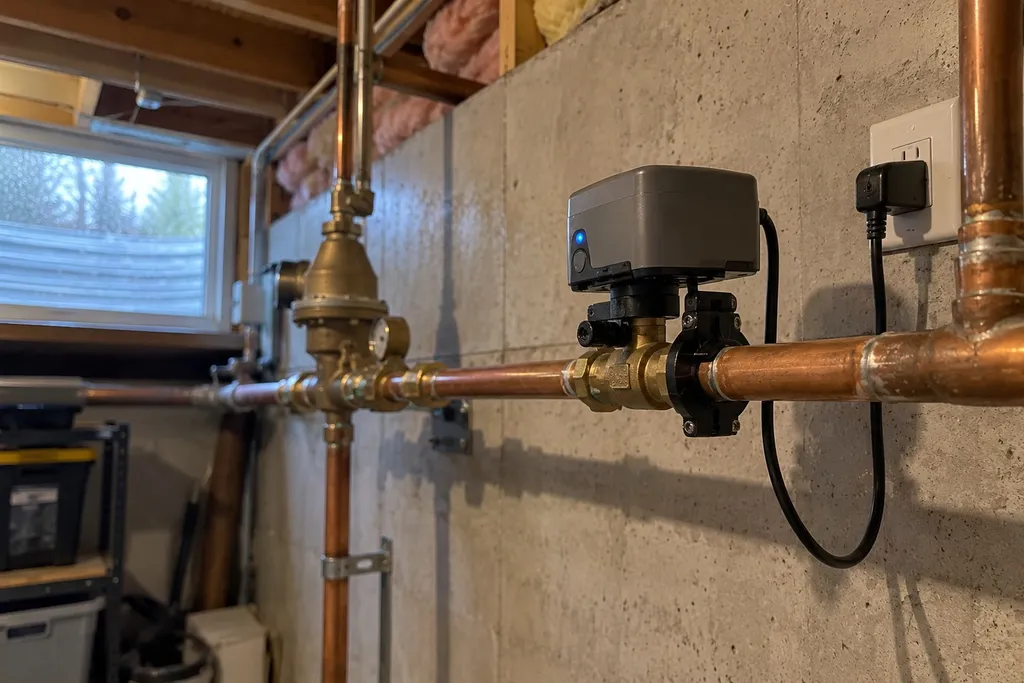
A shutoff-integrated system adds a motorized valve on your main water line. When a sensor detects water, the valve closes by itself. Some systems also watch how water flows through the line, so they can catch a leak in a spot where no sensor sits. This closes the gap. It also means real plumbing work on your main line, not just setting pucks on the floor.
- Alert-only usually fits when someone is home most days, your plumbing is in good shape, and the main shutoff is easy to reach.
- A shutoff system usually fits when the house sits empty during work hours or trips, you have a finished basement or upstairs laundry, your pipes are older, or you own a rental or second home.
Winter matters here too. Troutdale sits at the mouth of the Columbia River Gorge, where cold east winds can drop temperatures fast. Pipes in garages, crawlspaces, and outside walls are the ones most likely to freeze and split. A frozen pipe often doesn't leak until it thaws, and that can happen while you're away for the holidays. That's when an automatic shutoff earns its keep.
On cost, alert-only setups mostly come down to how many sensors you need and whether you want them connected to your phone. Shutoff systems cost more, and the price moves with a few things:
- The size of your main line and the valve it needs
- How easy it is to reach the main line, such as an open garage wall versus a tight crawlspace
- Whether your old main shutoff valve is stuck or worn and should be replaced first
- Whether there's power and a good Wi-Fi signal near the valve location
- How many sensors you add around the house
Before you hire anyone, ask what's included: the valve, the sensors, setup on your phone, and a test to show it really closes. If your current shutoff valve won't turn, that needs fixing no matter which option you choose. We also handle emergency shut-off valve installation on its own if that's all you need.
If a few alert sensors will cover you, we'll tell you so. There's no reason to pay for more system than your home needs.
Water Leak Sensor Installation
Identify the Highest-Risk Leak Points in a Troutdale Home
A sensor only helps if it's sitting where the water will show up first. Most home leaks start at a few spots: anything that holds water, anything with a rubber hose, and any pipe you can't see. Start with those and you've covered most of the risk without buying a sensor for every room.
Here's where we'd put sensors first, roughly in order of how much damage a leak there can do:
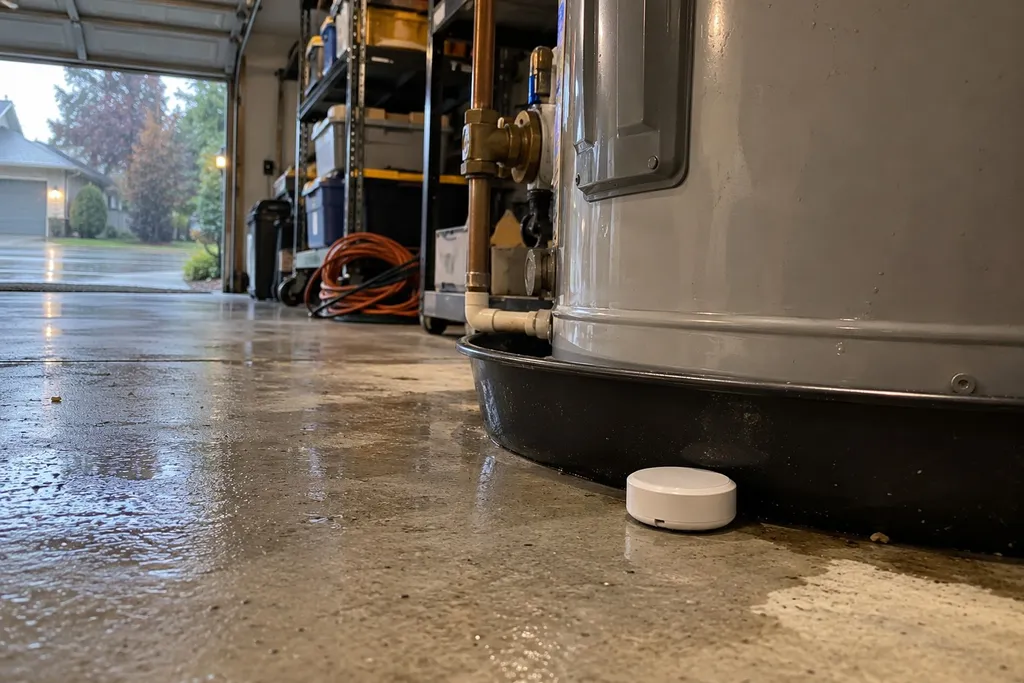
- Next to the water heater. A tank holds a lot of water, and when an old one gives out, it can empty onto the floor. Put the sensor at the base, on the side where water would run, or inside a drain pan if you have one.
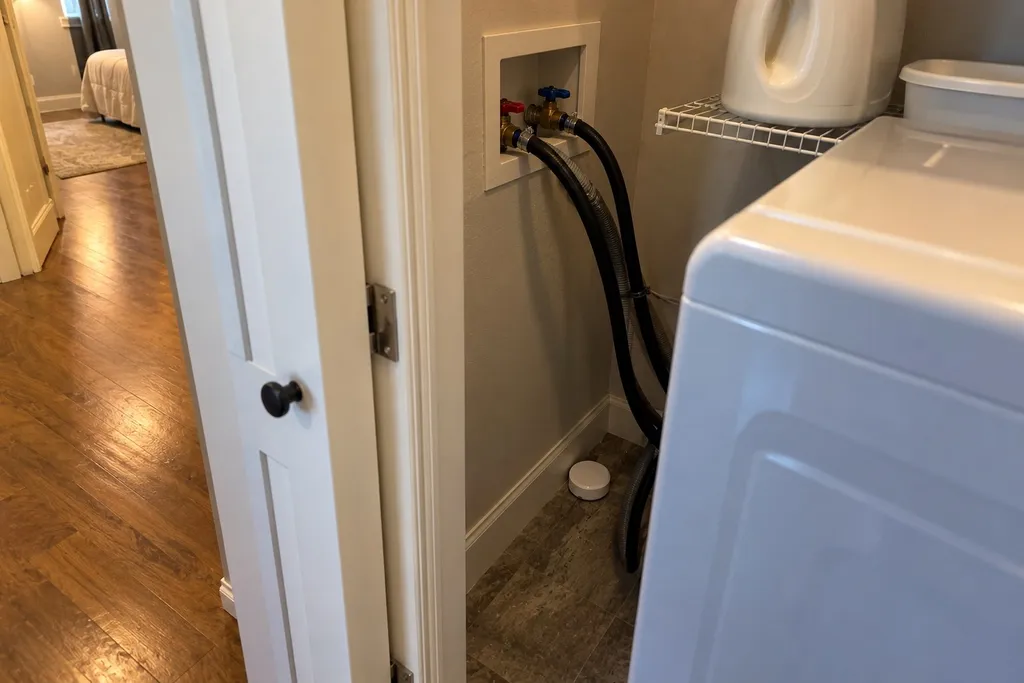
- Behind the washing machine. Rubber fill hoses are under pressure all the time, even when the washer is off. An upstairs or main-floor laundry room is a bigger worry, because the water heads straight down into the ceiling below.
- Under the kitchen sink and near the dishwasher. Slow drips from supply lines and drain fittings can soak a cabinet floor for weeks before anyone opens the door.
- Behind the fridge, if it has an ice maker or water dispenser. That thin supply line gets bumped every time the fridge is pulled out to clean.
- Beside each toilet. A cracked supply line or a failed fill valve can run nonstop.
- Under bathroom sinks, especially in a bathroom you don't use every day.
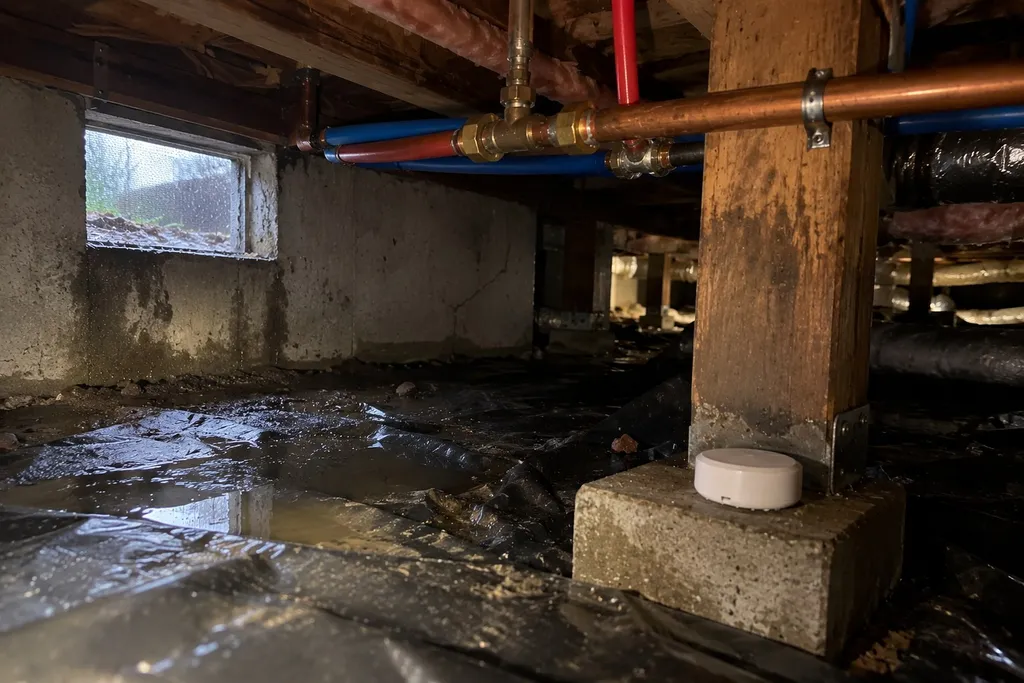
- In the crawlspace, garage, or along exterior walls. These are the pipes most likely to freeze when the Gorge winds blow, and they're also the places you're least likely to check.
Placement matters as much as location. Water runs to the lowest point, so set the sensor flat on the floor where a puddle would form, not up on a shelf or tucked behind a box. Don't put it right under a cabinet door where a foot or a mop will knock it loose. In a crawlspace, put it near the lowest spot or under the plumbing runs, not out by the access hatch just because that's easy to reach.
Think about who's home and when, too. Picture a guest bathroom that only gets used at Thanksgiving. A toilet supply line could drip there for a month, and nobody would know until the floor feels soft. A sensor in that room does more good than one in the kitchen you walk through ten times a day.
Some leaks are hidden inside walls, under slabs, or along a buried line, where no floor sensor can reach. That's where a shutoff system that watches water flow can help, since it can notice water moving when nothing in the house should be running. If you already suspect a hidden leak, have it found and fixed first. Our leak detection and pinhole leak repair services handle that, and then the sensors can protect the house going forward.
A sensor near an aging water heater or worn washer hoses buys you warning time. It doesn't fix the part that's about to fail. If something looks rusty, cracked, or bulging when we're setting sensors, we'll point it out plainly and let you decide what to do about it.
Water Leak Sensor Installation
Weigh Local Flood and Wet-Season Risk Before Choosing Coverage Level
Wet weather changes how you should set up coverage, but maybe not the way you'd think. A leak sensor can't tell where water came from. It only knows the floor got wet. So before you pick how much system to install, ask one more question: does water ever show up in your home that didn't come from your pipes?
Troutdale sits where the Sandy River meets the Columbia, and our rainy season runs long. Plenty of homes here have crawlspaces or low garages that get damp, or even take on a little water, during a stretch of heavy rain. That's groundwater or runoff, not a plumbing leak. It matters for two reasons.
- A sensor sitting where rainwater seeps in will go off for the wrong reason. After a few false alarms, most people start ignoring the alerts, and that's the worst habit to have when a real leak finally happens.
- If that sensor is tied to an automatic shutoff, it can close your main line during a rainstorm. Your house loses water, and the cause was never your plumbing at all.
The fix is usually simple. In a crawlspace that gets wet every winter, set sensors right under the plumbing runs and up off the spots where seepage collects. You might also make the crawlspace sensors alert-only while the ones by the water heater and washer still trigger the shutoff. A system that watches water flow helps here too, since rain on the ground doesn't change how water moves through your pipes.
Here's the honest part. No leak sensor or shutoff valve will stop outside water from coming in. If your crawlspace floods every year, that's a drainage problem. A sensor can tell you it's happening, but it won't keep the water out. We'd rather you know that up front than spend money expecting protection a sensor can't give.
Winter storms bring one more thing to think about: power. The same ice and east winds that freeze pipes in the Gorge can knock out power for hours. A motorized shutoff valve needs power to close, and phone alerts need Wi-Fi. Before you choose a system, ask these questions:
- Does the valve have a battery backup, and how long does it last?
- If the power goes out, does the valve stay open, close, or keep working on battery?
- Do the sensors still beep on their own when the Wi-Fi is down?
These answers count most if you leave home during the winter months. A frozen pipe that thaws during a power outage is exactly when you want the system to work.
So how much coverage do you need? If your home stays dry in the rainy season and someone's around most days, a few well-placed alert sensors may be plenty. If you've got a damp crawlspace, older pipes along outside walls, or a house that sits empty for days in winter, it's worth planning more carefully. That often means a shutoff system with battery backup and sensors placed to ignore seepage.
Water Leak Sensor Installation
Know When a Simple DIY Sensor Is Enough
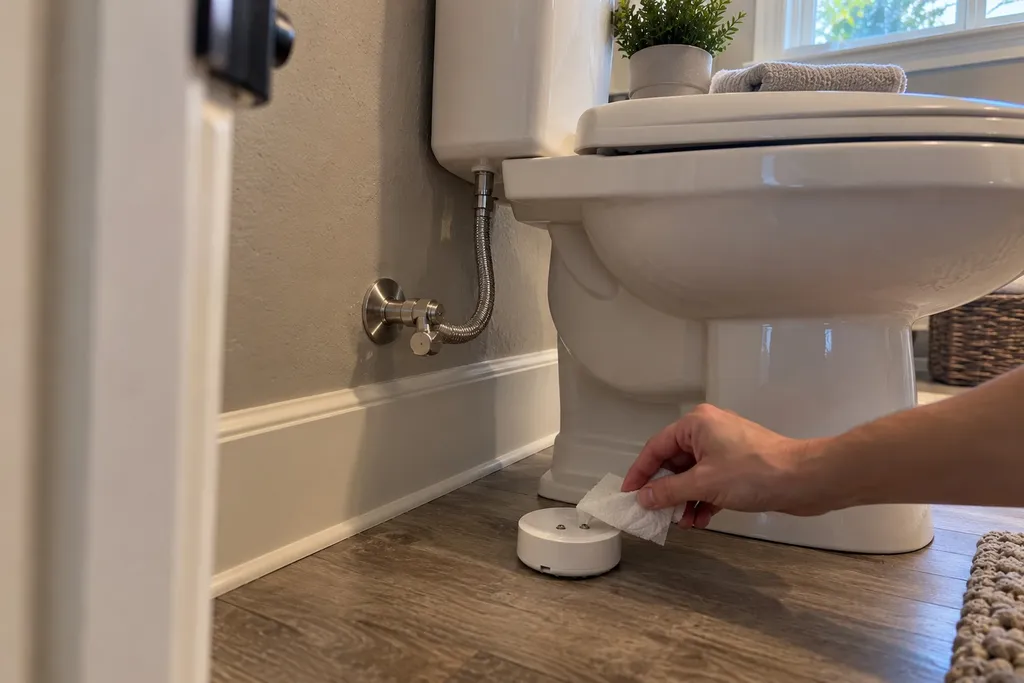
Plenty of homes don't need a plumber for this at all. If all you want is a heads-up when water hits the floor, a few battery sensors from the hardware store can do the job. You set them down, pair them with your phone if they have that feature, and you're done. No tools, no cutting pipe, no service call.
A simple DIY setup is usually enough when most of these are true:
- Someone is home most days and nights and would hear a beep or see an alert.
- You know where your main shutoff valve is, and you can turn it by hand without a fight.
- Your water heater, washer hoses, and supply lines are in decent shape.
- Your laundry and water heater sit on a ground floor or in a garage, not above a finished room.
- You rent, or you live in a condo where you can't touch the main water line anyway.
Renters, that last point is for you. You can't put a valve on a line you don't own, so floor sensors are the tool you've got. Talk with your landlord before you do anything beyond that. A sensor near the water heater still gives you time to save your stuff and call them.
If you go the DIY route, a few habits make it work:
- Test each sensor when you set it out. Touch the contacts with a damp paper towel and make sure it beeps or alerts your phone.
- Write the install date on the back so you know when the batteries are getting old. Swap them on a schedule, like when you change your smoke alarm batteries.
- Find your main shutoff today, not during a leak. Turn it off and back on once so you know it works. Show everyone in the house where it is, kids included.
- Check that phone alerts still come through after app updates or a new router.
That last habit catches a lot of people. A sensor that lost its Wi-Fi months ago looks just fine sitting on the floor.
Here's where DIY stops making sense. Once you want the water to shut off by itself, you're talking about a valve on your main line. That means cutting into pressurized pipe, and a bad joint there can cause the exact flood you were trying to prevent. The same goes if your main shutoff is stuck, crusty, or drips when you turn it. Forcing an old valve can snap it, and then you've got water you can't stop. If you can't turn it with your hand, leave it alone and have it looked at.
Also be honest about your routine. If you travel a lot, sleep with your phone on silent, or have a finished basement under the laundry, an alert you can't act on fast won't save much. That's the gap we talked about earlier, and battery sensors don't close it.
But if your home fits the list above, buy the sensors, set them out, test them, and keep the money in your pocket. That's real protection for a lot of Troutdale homes.
Water Leak Sensor Installation
What Happens During Professional Installation and Testing
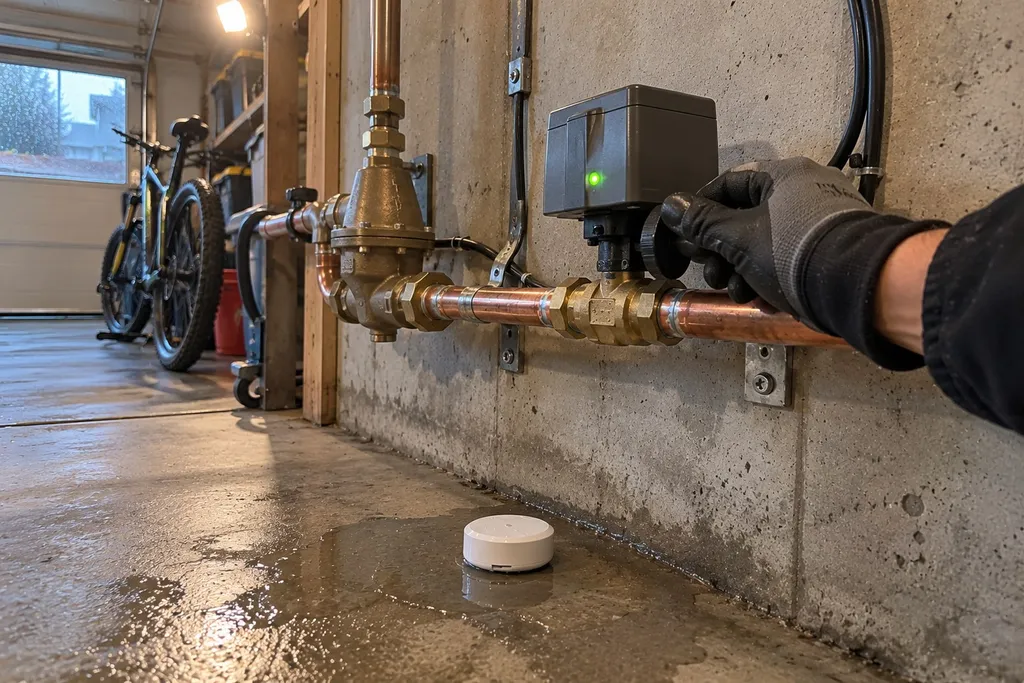
If you've decided an automatic shutoff makes sense, here's what a proper installation looks like. Knowing the steps helps you plan your day. It also helps you spot a rushed job before the installer drives away.
It starts with a look at your main line. The installer should find where water enters the house and check the pipe size and material. They should also check whether your old shutoff valve still works. If that valve is stuck or worn, it usually gets handled first. Then they pick a valve spot with room to work and a way to power it.
Next comes the plumbing part. Your water gets turned off, usually at the street or meter, and the line gets drained. That means no water for part of the visit. Run the dishwasher or fill a few jugs ahead of time. The motorized valve then gets cut into the main line, close to where water enters the house. It should go before the line splits off to the rest of the house, so it can stop water to everything downstream.
Once the water's back on, every new joint should be checked under full pressure. A drip at a new fitting is a small thing to fix right then. It's a big thing to find three weeks later behind a storage shelf.
Then the sensors get paired and placed where your leaks would show up first. The system gets connected to your phone, too. This is also the time to confirm the power and Wi-Fi questions from earlier have real answers, not guesses.
Testing is the part people skip, and it's the part that counts. Before anyone calls the job done, you should see these things happen with your own eyes:
- Each sensor gets wet and sends an alert to your phone.
- A wet sensor makes the main valve close on its own.
- A faucet left running slows to nothing once the valve shuts.
- The valve opens back up when it's told to, and water pressure comes back to normal.
- The manual override works, so you can close or open the valve by hand if the power or app fails.
If the installer doesn't offer to show you these, ask. A system that has never been tested is a system you're only hoping works.
Last, you should get a quick walkthrough before they leave. You'll want to know three things. How do you reopen the valve after a false alarm? How do you shut it off by hand? How often should you test it? Write it down or snap a photo and keep it near the valve. That way your spouse, your kids, or a house sitter can handle it too, even if you're out of town.
Picture this. You're away for a long weekend in January. Your phone buzzes, and the app says the valve closed after the sensor by the washer got wet. A good install means that alert is the whole story. You call when you get home, not while water's running down the stairs.
Common Questions
Frequently Asked Questions
Can I add a shutoff system later if I start with DIY alert sensors?
+
Yes, you can start with battery alert sensors and add a motorized shutoff valve later. The valve install is separate plumbing work on your main line, so it does not depend on which sensors you already have. If your main shutoff valve turns out to be stuck or worn when we look at it, that gets addressed before the new valve goes in.
Will my water leak sensors work if my phone is on silent or I lose Wi-Fi?
+
Most sensors still make a local beeping sound on their own even without Wi-Fi, but a phone alert will not come through if your network is down. That is why checking your alerts after app updates or a new router is a habit worth keeping. For a shutoff-integrated system, ask about battery backup, since power loss during a winter storm can affect both the valve and the Wi-Fi alert.
How long does it take without water during a professional shutoff valve installation?
+
Your water gets shut off at the street or meter for part of the visit while the line is drained and the new valve is cut in. It helps to run the dishwasher or fill a few jugs ahead of time so you are not caught without water mid-task. Once the valve is in, every new joint gets checked under full pressure before the job is called done.
Troutdale, Oregon
Related Troutdale Services
Need Plumbing Help?
Get Help Today from
Bigfoot Plumbing
Troutdale, Fairview, Wood Village, Gresham and the homes east toward Corbett. Call the Troutdale number and talk to someone who does this for a living.
10% Off for Veterans · First Responders · Seniors