
Pinhole Leak Repair
Pinhole Leak Repair in Troutdale: One Hole Or a Bigger Problem?
Honest, reliable plumbing for Troutdale, Oregon and the east side of Multnomah County.
CCB# 257405
Licensed · Bonded · Insured
20 Yrs
Experience
Family
Owned & Operated
Troutdale, OR
East County Crew
What's Covered on This Page
- Spot a Pinhole Leak Before It Spreads
- One Hole Rarely Travels Alone
- When a Leak Isn't a Pinhole Leak
- Why Troutdale Homes See Copper Pipe Pitting
- What Happens During a Pinhole Leak Visit
- Can a pinhole leak get worse if I just keep patching it?
- Is it safe to shower or run water while I wait for a pinhole leak repair?
- Will fixing a pinhole leak mean cutting open my wall or ceiling?
- How long does it take for a wall to dry out after a pinhole leak is fixed?
Need Pinhole Leak Repair in Troutdale?
Pinhole Leak Repair
Spot a Pinhole Leak Before It Spreads
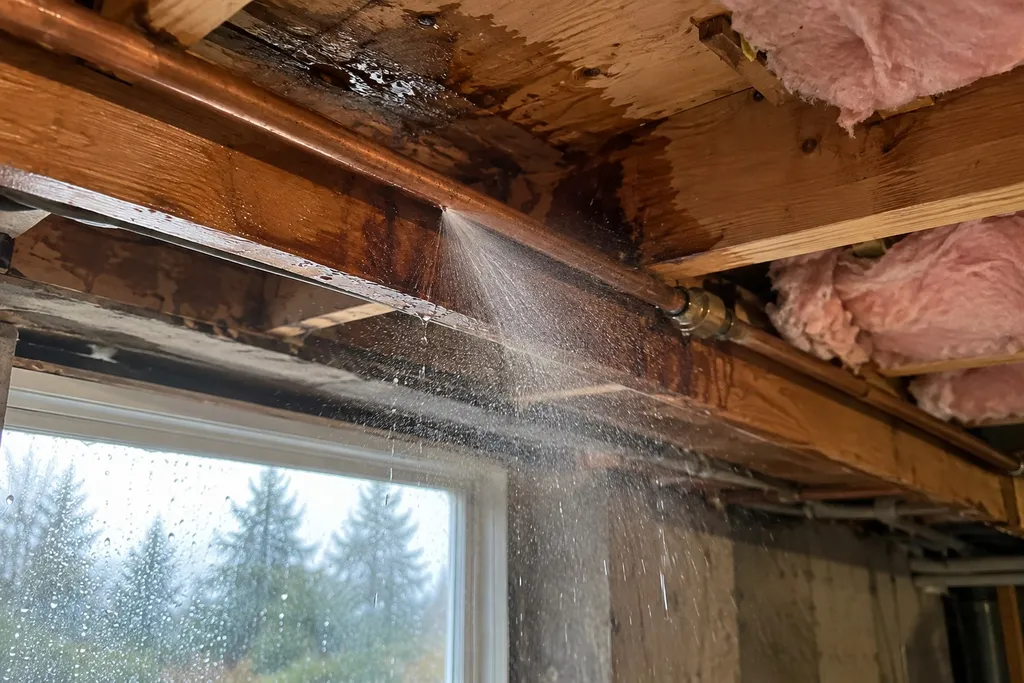
A pinhole leak is exactly what it sounds like. It's a tiny hole in a water pipe, usually copper, that lets out a thin spray or a slow drip. Because the hole is so small, it doesn't flood your house all at once. That's the tricky part. It can leak quietly behind a wall or under a floor for a long time before you see anything.
Some signs are easy to spot if you know where to look. Others hide until the damage is already done. If you can catch it early, pinhole leak repair is a much smaller job.
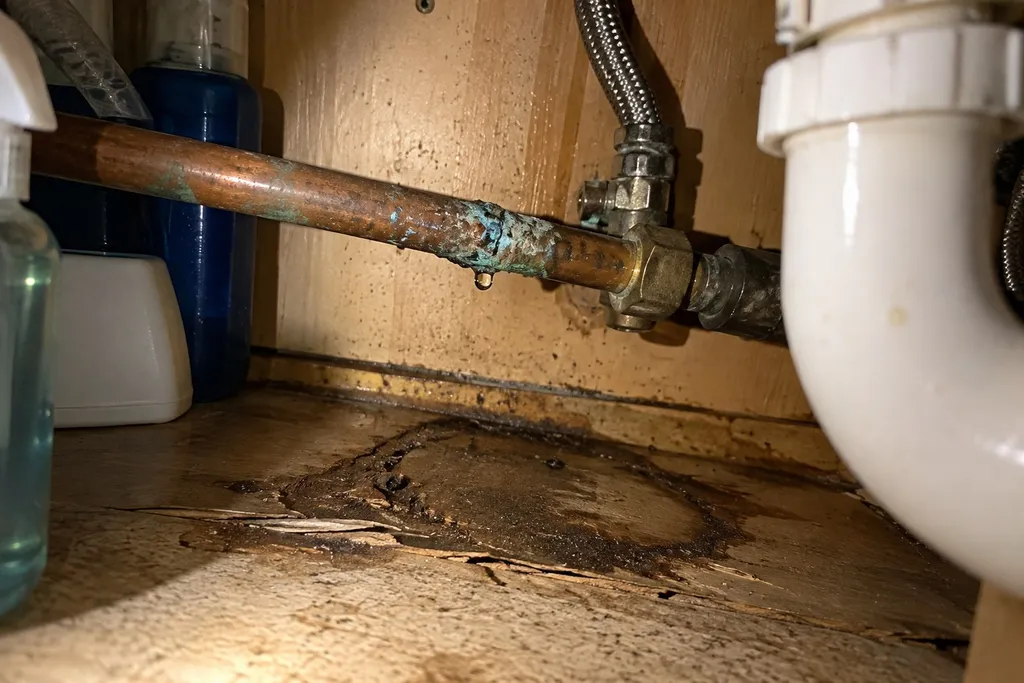
Check any copper pipes you can see, like under sinks, near the water heater, and in a basement or crawlspace. Watch for these signs:
- Green or blue crusty spots on copper pipe. This buildup often forms right where a tiny leak is starting.
- Small beads of water or a fine mist along a pipe, even when nobody's using water.
- A damp or warped cabinet floor under the kitchen or bathroom sink.
- Rust-colored or dark rings on the pipe or the surface below it.
Most of your pipes run inside walls, ceilings, and floors. Pinhole leaks in those spots show up in other ways:
- Water stains or brown rings on a ceiling or wall.
- Paint that bubbles, peels, or feels soft to the touch.
- A musty smell in one room that won't go away.
- Mold or mildew in a spot that shouldn't be wet.
- A faint hissing sound in the wall when the house is quiet.
- A water bill that climbs even though your habits haven't changed.
- Water pressure that drops at one or more faucets.
Picture this. You notice a small yellow stain on the ceiling below an upstairs bathroom. It doesn't drip, so it's easy to ignore. But that stain means water has already soaked through the subfloor and drywall. By the time a stain shows, the leak has usually been going for a while.
Here's the part most folks don't know. A pinhole usually isn't a random accident. It often forms because the inside of the pipe has been wearing thin over time. If one spot gave out, other spots on that same run of pipe may be thin too. That's why one pinhole leak can turn into two or three over the next months.
So when you find one, don't just think about that one hole. Ask what it says about the rest of your pipes. A good plumber should look at the whole picture and tell you whether a simple patch makes sense or whether that section of pipe is nearing the end of its life.
If you see stains or hear water but can't find the source, our leak detection service can track it down without tearing open walls on a guess. If the signs point under your foundation, like warm spots on the floor or water pooling with no clear cause, that's a job for slab leak repair.
Pinhole Leak Repair
One Hole Rarely Travels Alone
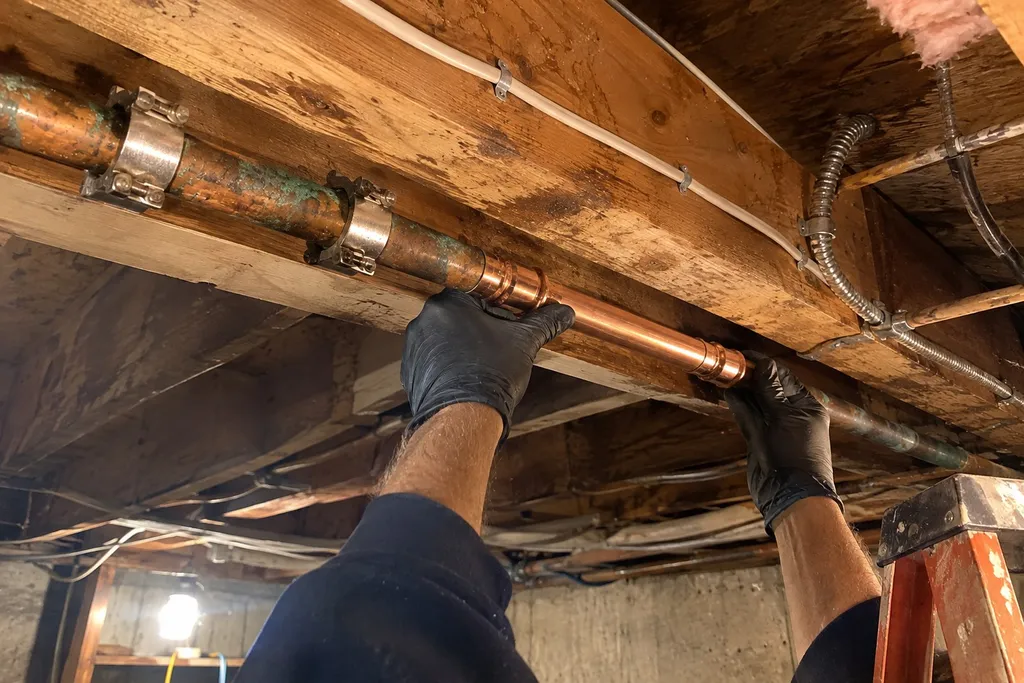
Stopping the drip is the easy part. The real question is how much pipe to fix. You've got three choices, and the right one depends on what your pipes are telling you.
- A clamp or patch. This covers the hole from the outside. It's quick and can buy you time, but it's a stopgap, not a cure. The pipe around it is still thin.
- Cutting out the bad section. We remove the damaged length of pipe and put in new pipe. This is a real repair, and it often makes sense when the leak is a one-off in a spot that's easy to reach.
- Replacing a whole run or repiping. If leaks keep showing up, new pipe for that line or the whole house ends the cycle instead of chasing holes one at a time.
So how do you know which one fits? These are the things that tip the scale:
- How many leaks you've had. One leak in years is different from three in a few months.
- Where they are. Leaks on the same stretch of pipe point to that stretch. Leaks in different rooms point to the whole system.
- What the pipe looks like inside. When a section is cut out, you can see whether the inner wall is smooth or pitted and thin.
- How old your plumbing is. Older copper has had more years to wear down from the inside.
- Your water pressure. Pressure that runs too high puts extra stress on pipes that are already weak. Sometimes a water pressure regulator replacement is part of the fix.
Cost follows the same logic. A patch costs the least today, but more leaks mean paying for each new visit, plus the drywall, flooring, or cabinet repair that comes with every one. Cutting out a section costs more than a patch, and the price climbs if the pipe sits behind a finished wall or ceiling. A repipe is the biggest single job. What drives that price is the size of your home, how many fixtures you have, the pipe material you choose, and how much wall has to be opened and patched. The fair way to compare is the cost of fixing it once against the cost of fixing it again and again.
Before you hire anyone, ask a few plain questions. Is this a temporary fix or a permanent one? What did the pipe look like where it leaked? If more leaks show up, what would you suggest next? A good plumber should answer all three without dodging.
Here's where we stand. If a simple section repair is all you need, we'll tell you that, and we won't push a repipe you don't need. If your pipes are clearly wearing out, we'll tell you that too, because a patch that fails next month isn't doing you any favors. We've been doing this for 20 years, and we're licensed, bonded, and insured in Oregon (CCB# 257405). We treat your home the way we'd want our own family's home treated. That means an honest answer about the hole you found and the pipe around it.
Pinhole Leak Repair
When a Leak Isn't a Pinhole Leak
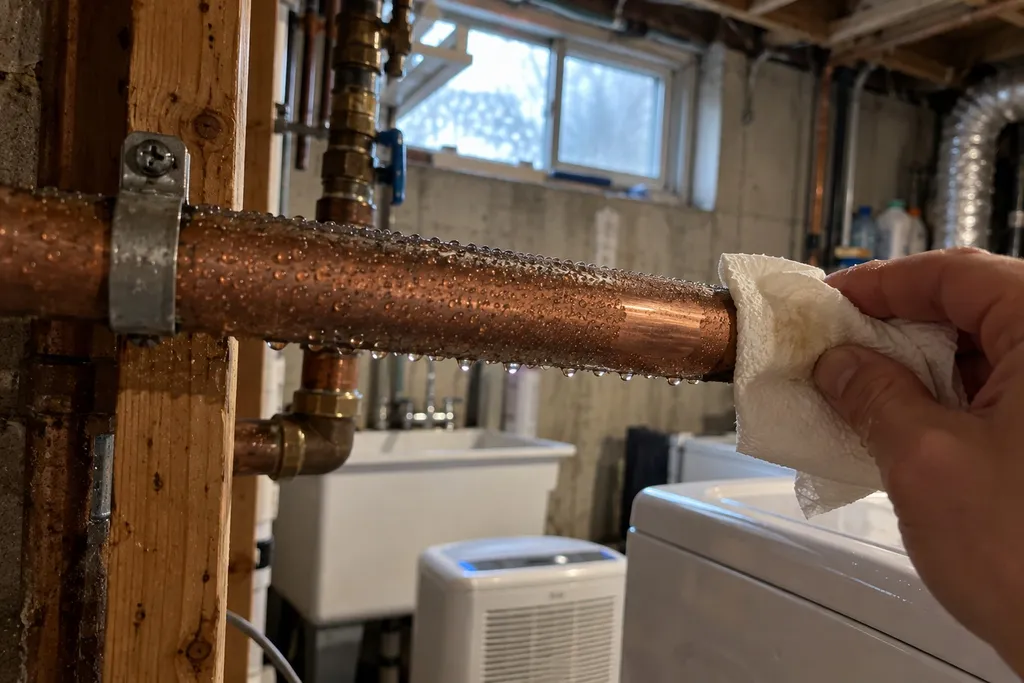
Not every wet spot is a pinhole. Some water problems look the same at first but have a different cause and a different fix. A few you can even handle on your own. Before you call anyone, it's worth ruling these out.
Sweating pipes. Cold water lines can collect drops of water on the outside when the air around them is warm and damp. It looks like a leak, but the pipe is fine. Wipe the pipe dry with a paper towel and check it again in an hour. If the water comes back evenly along the whole pipe, it's probably sweat. If it comes back at one tiny spot, or you see a green crust there, that points to a pinhole.
A loose fitting. Under a sink, the drip often comes from a nut on the supply line or the drain, not from the pipe itself. Run your dry fingers along the pipe and feel where the water starts. If it's at a nut, a gentle snug with a wrench may stop it. Don't crank it hard, because that can crack the fitting. If it still drips, the part may just need to be swapped.
Other look-alikes that have their own fix:
- A dripping faucet or spout. That's a worn part inside the faucet, and faucet repair takes care of it.
- A toilet that runs or leaks at the base. A worn flapper is often a simple DIY swap. A leak at the base is a job for toilet repair.
- Water around the water heater. That's usually the tank, a fitting, or the relief valve, and it calls for water heater repair, not pipe work.
- A stain right under a window or the roof. That water may be coming from outside the house, not your plumbing.
- A pipe that split or sprays hard. A crack or a big break is a burst pipe repair, and it's an emergency. Shut off your main water valve first.
- A soggy patch in the yard. That points to the line running from the street to your house, which is a water line repair.
Here's one more check you can do yourself. Turn off every faucet and appliance that uses water. Then look at your water meter. If the dial or the small leak indicator is still moving, water is going somewhere it shouldn't. That tells you there's a real leak, even if you can't see it yet.
If you tighten a nut and the drip stops, great. You don't need us for that, and we'd rather you save the money. The same goes for a sweating pipe or a toilet flapper. But if you've found a green spot, a fine spray, or a meter that won't stop moving, you're likely looking at a pinhole. And as we covered above, one hole is a reason to check the rest of that pipe.
Pinhole Leak Repair
Why Troutdale Homes See Copper Pipe Pitting
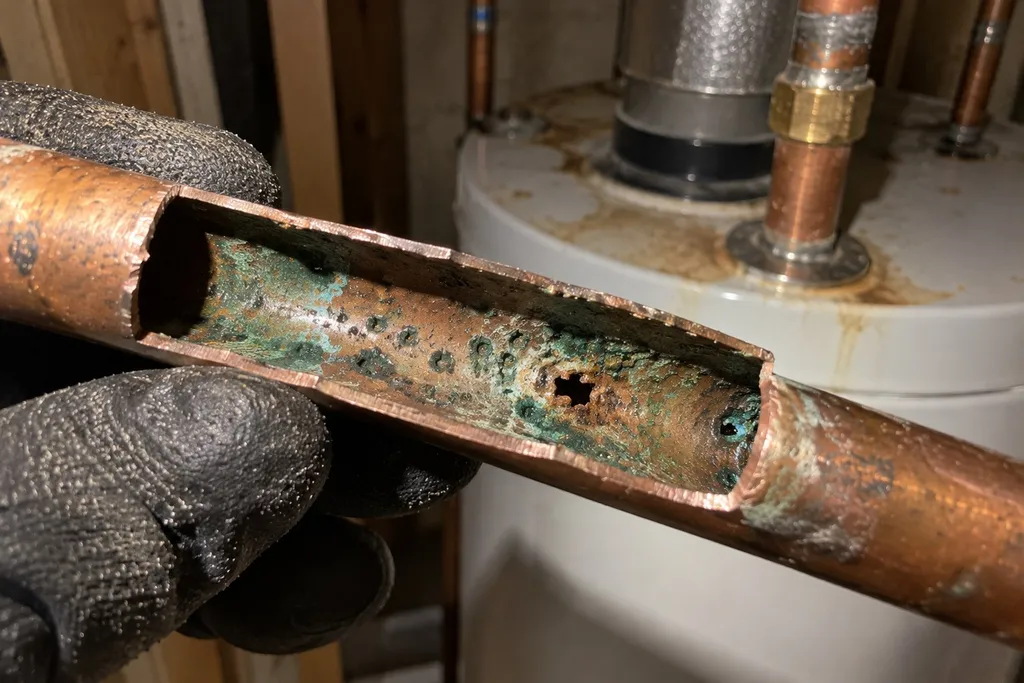
Copper is a great pipe material. It can last a long time. But it doesn't wear out from the outside like a rusty fence. It wears out from the inside, where you can't see it. That inside wear is called pitting, and it's the reason most pinhole leaks happen.
Here's how it works. A tiny spot on the inside wall of the pipe starts to corrode. Instead of spreading out evenly, it digs down, like a small hole being drilled very slowly. Over months or years, that pit gets deeper until it breaks through. That's your pinhole. And if the conditions that started one pit are still there, other pits are likely forming along the same pipe.
There isn't one single reason copper pits. In most homes, it's a mix of a few things:
- Water chemistry. Water that leans acidic, or water with a lot of disinfectant in it, can slowly eat away at copper. You can't taste or see this. A simple water test can show whether your water leans that way.
- Fast or rough water flow. Water that moves too fast, or slams around tight bends and elbows, can wear the inside of the pipe thin. High pressure, which we touched on above, makes this worse.
- Hot water lines. Hot water is harder on copper than cold. Pinholes often show up first on the hot side, like the lines near your water heater or a recirculation pump loop.
- How the pipe was put in. Leftover flux from soldering, or rough edges left inside a cut pipe, can give corrosion a place to start.
- Debris in the line. Grit or sediment can settle in low spots and rub against the pipe wall.
- Age. The longer copper has been in service, the more time any of these things has had to do its work.
So why does this matter to you? Because the cause points to the fix. Where your leaks show up is a clue. Leaks all on the hot line coming off the water heater tell a different story than leaks scattered on cold lines all over the house. A pipe that's clean inside except for one spot near a fitting is different from a pipe that's pitted end to end.
This is also why patching a hole and walking away isn't always enough. If nothing changes about what caused the pitting, the rest of the pipe keeps wearing down the same way. Sometimes the answer is fixing the hole and lowering high pressure. Sometimes it's replacing a worn run of pipe. And sometimes it's looking at your water itself. Whole-house water filtration can be part of that conversation, but only if a water test shows it would help.
We won't guess at the cause, and we won't sell you a fix for a problem you don't have. Our job is to look at the pipe, look at where the leaks are, and give you a straight answer about what's going on inside your plumbing.
If you've found a pinhole in your Troutdale home, give Bigfoot Plumbing a call. We'll fix the leak and tell you what it says about the pipe around it.
Pinhole Leak Repair
What Happens During a Pinhole Leak Visit
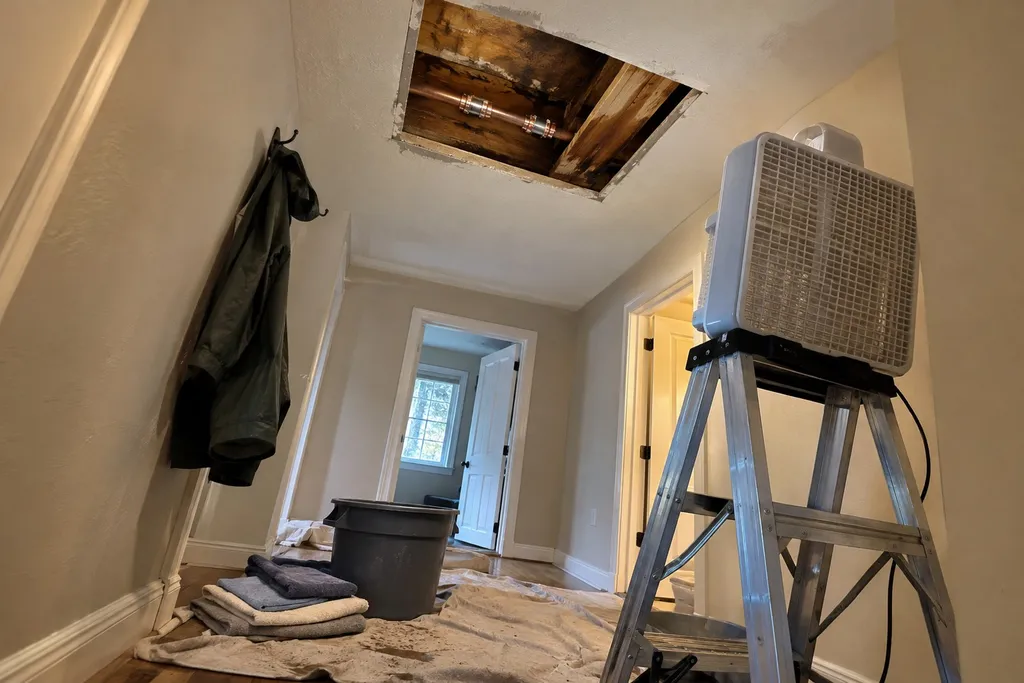
Knowing what to expect takes a lot of the worry out of a leak. Here's what you can do before a plumber shows up, what a solid pinhole leak repair should include, and how to check the work once it's done.
Before the plumber arrives:
- Stop the water. If there's a small shutoff valve on the line under the sink or near the leak, turn it off. If there isn't one, close your main water valve. It's often where the water line comes into the house, such as in the garage, basement, crawlspace, or near the water heater.
- Catch the drip and protect your things. Set out a bucket and towels, and pull stored items out of the cabinet or closet near the leak.
- Clear a path. Make it easy to reach the leak, the main valve, and any crawlspace hatch.
- Jot down the history. Note when you first saw the stain or drip, and list any past leaks and where they were. That history helps the plumber figure out which repair choice from above makes sense for you.
During the repair, a good job usually follows these steps:
- Find the exact spot. A leak on an exposed pipe is easy to see. A hidden one may need leak detection first, so nobody cuts open a wall on a guess.
- Open only what's needed. If the pipe sits behind drywall or a ceiling, the opening should be just big enough to work in. Ask ahead of time who handles patching and painting afterward, because plenty of plumbers don't finish drywall.
- Shut off and drain the line so the work happens on a dry pipe.
- Fix the damaged section the way you agreed on, whether that's a short repair or a longer run of new pipe.
- Show you the old pipe. Ask to see the piece that came out. If the inside is smooth apart from one spot, that's good news. If it's pitted all along, you'll want to know that now.
- Turn the water back on and test it. The new joints should hold under full pressure with no drips, and nearby joints should be checked too.
Once the pipe is fixed, don't rush to close up the wall. Wet drywall, wood, and insulation need time to dry, or mold can start growing in a spot nobody will see for a long while. A fan aimed at the open area helps. Touch the wood and drywall before anything gets patched. If it still feels cool or damp, give it more time.
For the next few days, take a quick look at the repair with a dry paper towel. You can also use the water meter check from earlier on this page to make sure nothing else is leaking out of sight. If the dial holds still with everything off, the leak is fixed.
Common Questions
Frequently Asked Questions
Can a pinhole leak get worse if I just keep patching it?
+
Yes, patching one spot does not stop the rest of the pipe from wearing thin. A patch covers that single hole, but the pitting that caused it is often happening along the same stretch of pipe. If you keep seeing new leaks every few months, that is a sign the whole section or run needs attention, not just another patch.
Is it safe to shower or run water while I wait for a pinhole leak repair?
+
You can usually keep using water if you have shut off the valve closest to the leak, like one under a sink. If the only option is your main shutoff valve, you will need to keep water off until the repair happens. Running water through a pipe with an active pinhole just lets more water soak into your walls or floor.
Will fixing a pinhole leak mean cutting open my wall or ceiling?
+
Only if the leak is hidden behind drywall or a ceiling, and even then, the opening should be just big enough to reach the pipe. A leak on an exposed pipe under a sink or in a crawlspace needs no cutting at all. It is worth asking ahead of time who handles patching and painting the wall back up afterward.
How long does it take for a wall to dry out after a pinhole leak is fixed?
+
It depends on how long the leak was running and how wet the materials got, so there is no single timeline. Wet drywall, wood, and insulation need time to air out before anyone closes the wall back up, and a fan aimed at the open area speeds this along. Touch the wood and drywall before patching; if it still feels cool or damp, it needs more time.
Troutdale, Oregon
Related Troutdale Services
Need Plumbing Help?
Get Help Today from
Bigfoot Plumbing
Troutdale, Fairview, Wood Village, Gresham and the homes east toward Corbett. Call the Troutdale number and talk to someone who does this for a living.
10% Off for Veterans · First Responders · Seniors