
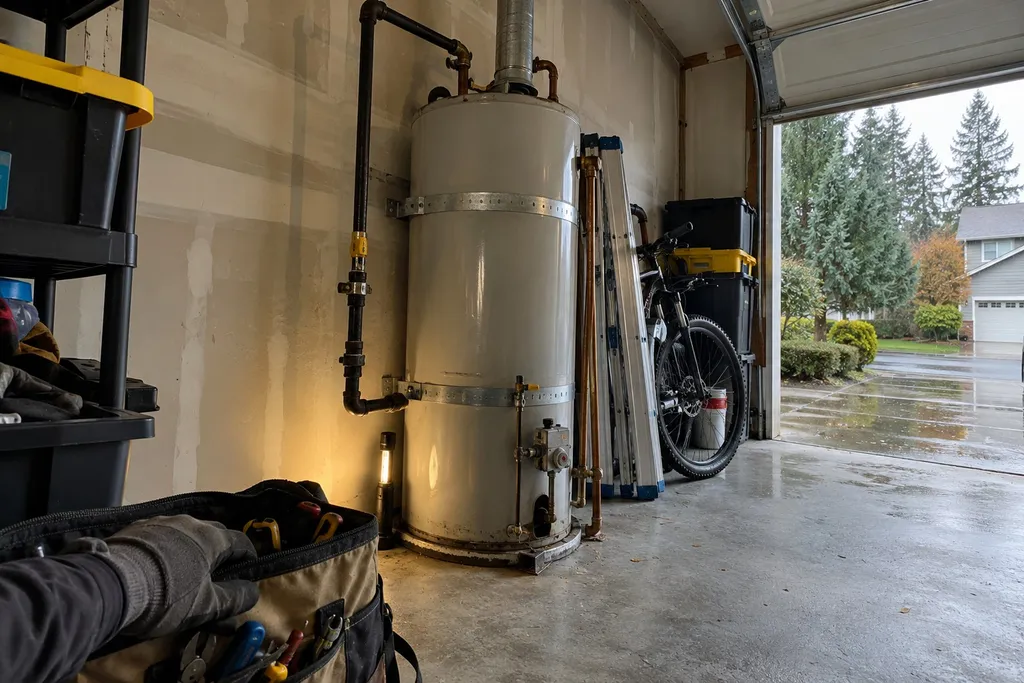
Water Heater Repair
Water Heater Repair in Troutdale: Repair It or Replace It?
Honest, reliable plumbing for Troutdale, Oregon and the east side of Multnomah County.
CCB# 257405
Licensed · Bonded · Insured
20 Yrs
Experience
Family
Owned & Operated
Troutdale, OR
East County Crew
What's Covered on This Page
- Repair Or Replace: How The Decision Gets Made
- Signs Your Water Heater Needs Repair Now
- Checks You Can Safely Do Before Calling A Plumber
- Gas Water Heater Venting Problems Are A Safety Call, Not A Maintenance Item
- Permits And Code Requirements For Water Heater Repair Work
- My gas water heater vents through a crumbling chimney. Should I replace the chimney or just the vent pipe?
- Can I just swap a water heater part myself instead of calling a plumber?
- How do I know if my water heater problem is a gas supply issue and not the heater itself?
Need Water Heater Repair in Troutdale?
Water Heater Repair
Repair Or Replace: How The Decision Gets Made
Nobody wants to buy a new water heater if they don't have to. We get that. So here's how the decision really works, in plain terms. That way you can judge any advice you get, including ours.
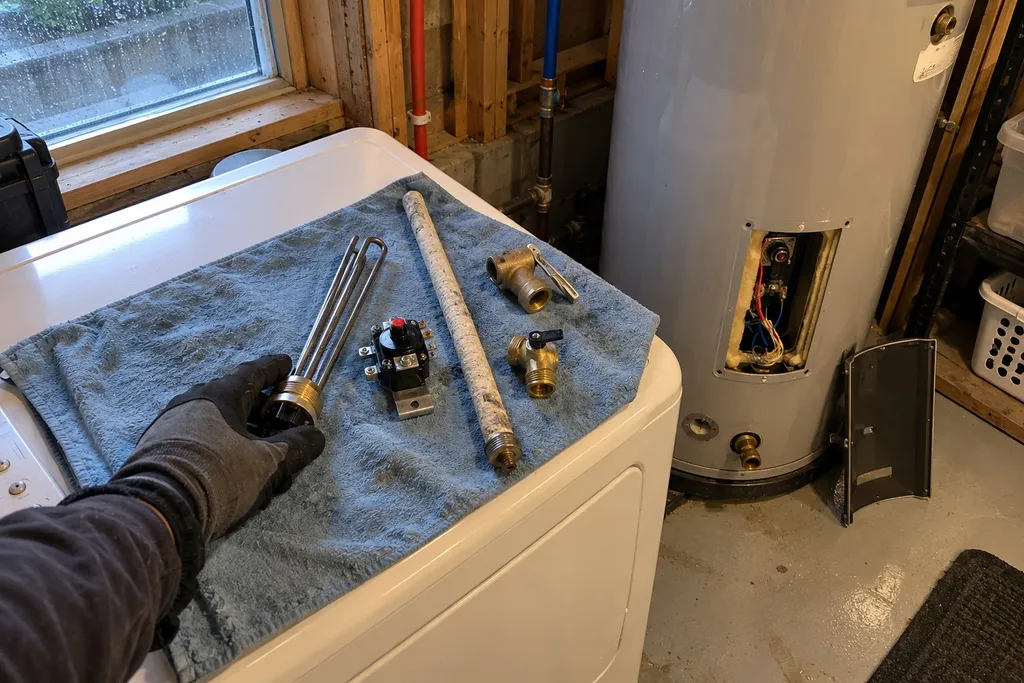
The first question is simple. Is the problem in a part, or in the tank itself? A water heater is mostly a steel tank with parts bolted on. Many of those parts can be swapped out:
- Heating elements and thermostats on electric heaters
- The thermocouple, pilot assembly, or gas control valve on gas heaters
- The temperature and pressure relief valve
- The drain valve
- The anode rod, which helps protect the tank from rust
- The dip tube, which sends cold water to the bottom of the tank
If one of those has failed and the tank is sound, repair is usually the smart call. Say you've got lukewarm water that runs out fast on an electric heater. That often points to a bad element or thermostat. That's a part, not a tank.
The tank is a different story. If water is seeping from the tank body or pooling underneath with no loose fitting to blame, the steel has likely rusted through. You can't patch that in a way that lasts. Rusty hot water from the tap can be an early warning of the same thing. So can loud popping or rumbling from heavy sediment in an older unit.
Age is the second factor. A standard tank heater often lasts around 8 to 12 years, depending on use, water conditions, and care. Your heater's age is usually printed on the label, sometimes coded into the serial number. A repair on a 4-year-old heater can buy you years. The same repair on a 14-year-old heater may just be the first of several.
The third factor is the math. Compare the repair cost to what a new heater costs, then weigh it against how much life is left. A small fix on a younger heater is easy. A pricey part on an old heater that's already needed work is harder to justify. Ask each plumber these three questions: What exactly failed? How old is the tank? What else is likely to go soon?
This is where honesty matters most. A repair is a smaller ticket than a new heater. That's exactly why you should be able to trust the person making the call. Bigfoot Plumbing was built on honest work and fair pricing. Kevin Brain brings 20 years of plumbing experience, and we're licensed, bonded, and insured under CCB# 257405. If a part swap will fix your heater, that's what we'll tell you. If the tank is done, we'll show you why. Then the choice is yours.
If replacement does make sense, you've got options. We handle water heater installation in Troutdale. We also install tankless and heat pump water heaters if you'd like to look at something different. Each of those has its own page with the details.
Water Heater Repair
Signs Your Water Heater Needs Repair Now
Not every water heater problem is an emergency. Some can wait a few days. Others shouldn't wait at all. Here's how to tell the difference, so you're not up at night wondering.
These signs mean something has failed or is about to. They're worth a call soon.
- No hot water at all. On an electric heater, that often means a tripped breaker, a burned-out element, or a bad thermostat. On a gas heater, it's often the pilot, the thermocouple, or the gas control valve.
- Water that's suddenly scalding hot. If your shower is hotter than it's ever been and you haven't touched the setting, a thermostat or control may be stuck. That's a burn risk, especially with little kids or older family members in the house.
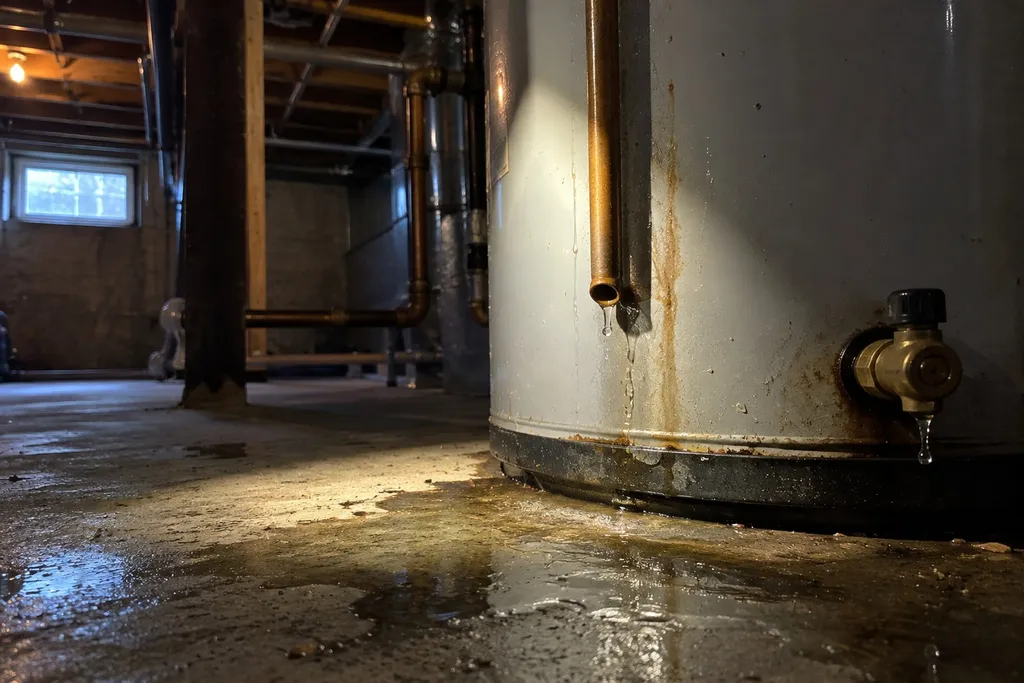
- Water dripping or spraying from the relief valve. That valve is the pipe that usually runs down the side of the tank. It's there to let out pressure or heat when something's wrong. If it's letting water out, either the valve has failed or the heater is building up too much pressure. Both need a plumber.
- A pilot light that won't stay lit. Relighting it once is one thing. If it keeps going out, a part like the thermocouple is likely failing.
- A breaker that keeps tripping. Flipping it back on might work for a day. But a breaker that trips again and again is telling you something inside the heater has a problem.
- Water around a fitting or valve. A drip at a pipe connection or the drain valve is usually a part problem, not a dead tank. It's often an easy fix, but drips grow. Catch it early before it soaks your floor or a wall.
Some signs are real but less urgent. Hot water that smells like rotten eggs is one. It often comes from a reaction inside the tank and the anode rod, and it's fixable. It's unpleasant, but it usually isn't dangerous. Hot water that runs out faster than it used to, which we covered above, is another. Both are worth a look, just not a panicked one.
Then there are the signs from the repair-or-replace section: water coming from the tank body itself, rusty hot water, or loud rumbling in an older unit. Those point toward the tank, not a part. They still need attention soon, because a tank that's started to leak won't get better on its own.
One more thing. You don't need to diagnose it yourself before you call. Just tell us what you're seeing, hearing, or smelling, and how old the heater is if you know. That alone helps narrow things down. And if it can wait, we'll say so. Emergency plumbing is available when it can't.
Water Heater Repair
Checks You Can Safely Do Before Calling A Plumber
Sometimes the fix is simple and you don't need us at all. We'd rather you know that up front. Here are a few checks that are safe for most folks to do. None of them mean opening up the heater or touching wiring or gas lines.
- Check the breaker on an electric heater. If it's tripped, flip it all the way off, then back on. If hot water comes back and stays, you may be done. If it trips again, leave it off and call, for the reason we covered above.
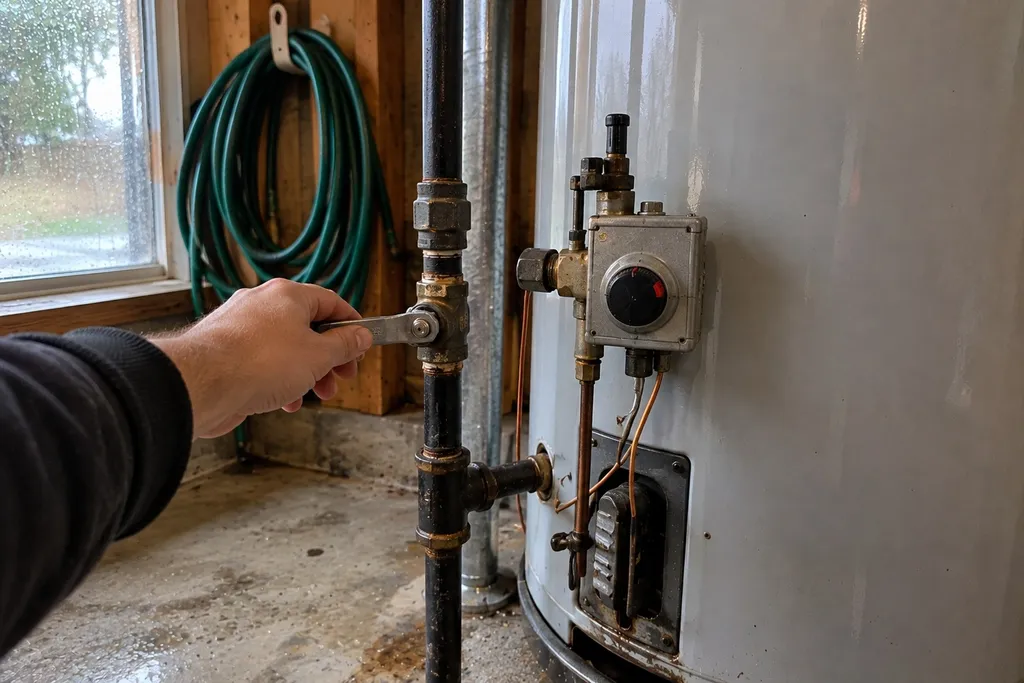
- Make sure the gas is on for a gas heater. Look at the gas valve on the line going into the heater. The handle should run the same way as the pipe. If other gas appliances in the house aren't working either, the problem may be your gas service and not the heater.
- Look at the temperature setting. On many gas heaters it's a dial on the front of the control. Someone may have bumped it, or a kid may have turned it. Set it back to where it was and give the heater an hour or so to catch up.
- Read the label on the tank for relighting steps. Many gas heaters print them right there. If your heater has those instructions and you feel okay following them, go ahead. If you're not sure, don't guess.
- Find the age. The label or serial number will usually tell you how old the heater is. Write it down. It's one of the most useful things you can tell a plumber.
If water is leaking, your first job is keeping it off your floors. Find the cold water shutoff valve on the pipe that feeds the top of the heater and turn it off. That stops more water from flowing into the tank. Then turn the heater off. On an electric heater, use the breaker. On a gas heater, set the control to off or pilot. Move boxes, rugs, and anything else you care about away from the water. A few towels or a shallow pan can buy you time.
While you're looking, note where the water seems to come from. Is it a fitting at the top? The drain valve near the bottom? The relief valve pipe? Or the tank itself? You don't have to be right. A rough idea just helps us bring the right parts the first time.
There are also a few things we'd ask you not to do. Please don't remove the access panels on an electric heater. There's live power behind them. Don't try to test or force open the relief valve on an older tank, because it may not close again. And don't drain a heater that's still hot. That water can burn you badly.
If you've done these checks and you're still taking cold showers, that's useful information too. It tells us the easy stuff is ruled out. It also means we can skip straight to finding the part that's failed.
Water Heater Repair
Gas Water Heater Venting Problems Are A Safety Call, Not A Maintenance Item
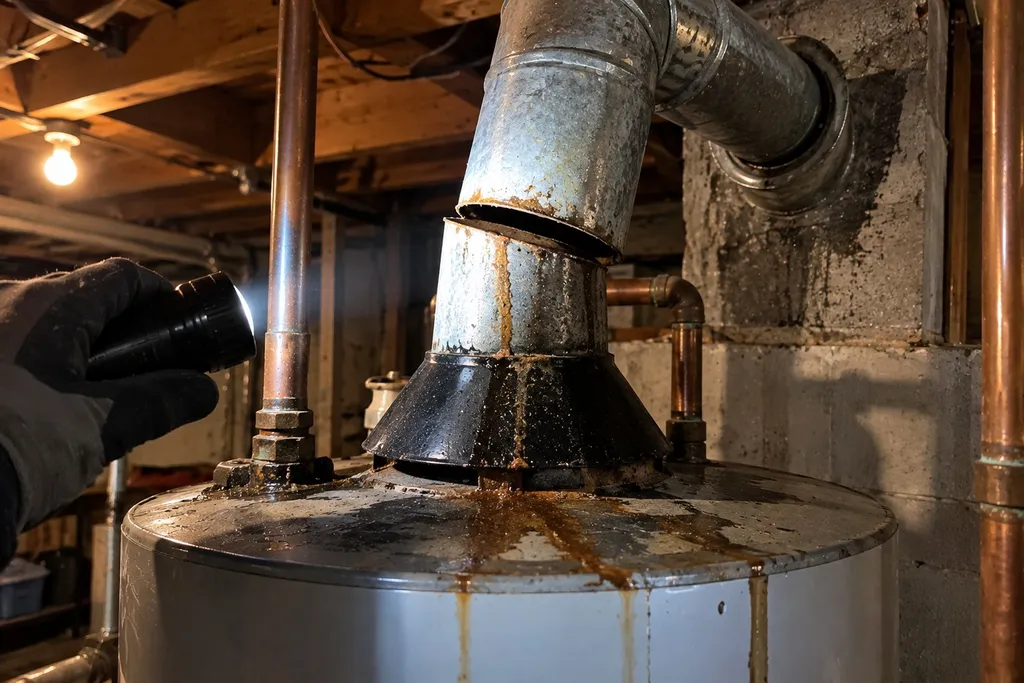
Most of what we've covered so far is about comfort and cost. Venting is different. A gas water heater burns fuel to heat your water. The vent pipe on top carries the exhaust, including carbon monoxide, up and out of your house. If that vent isn't working right, the exhaust can spill back into the room. You can't see carbon monoxide or smell it. That's why a venting problem is a safety issue first and a repair second.
A gas heater can keep making hot water just fine while it vents badly. So don't judge it by your showers. Look at the heater itself. Here's what to watch for:
- Black soot or scorch marks around the top of the heater, near where the vent pipe connects.
- Soot or burn marks near the opening at the bottom where the burner sits.
- A vent pipe that's loose, tilted, rusted through, or pulled apart at a joint.
- Heavy moisture, drips, or rust running down the outside of the vent or the top of the tank.
- Air near the heater that feels unusually hot or stuffy, or a sharp, stale exhaust smell.
- Headaches, dizziness, or nausea at home that ease up when you leave the house.
Vents get knocked loose more easily than you might think. Someone stacks boxes on top of the heater. A remodel moves a wall or closes in a closet. A heater in the garage gets bumped by the car or a bike. Each of those can pull a joint apart or cut off the air the burner needs. Nobody did anything wrong. It just happens over time in a busy home.
If you smell gas, follow the steps from the safety section above. That's a separate problem from venting, and it comes first.
So what should you do if you see one of the warning signs but no alarm is going off? Turn the heater's gas control to off or pilot. Then call a plumber soon. Please don't push a loose vent back together and call it good. The pipe has to slope the right way, seal at every joint, and connect properly at the top of the heater. A vent that looks fine can still let exhaust leak back in.
This is one spot where we'll be direct with you, even though our whole approach leans toward easy fixes and no upselling. Sometimes a venting problem really is small, like a loose joint or a pipe that's slipped out of place. When it is, we'll fix it and tell you that's all it was. Other times the soot and scorching point to a burner or draft problem inside an older heater. That brings you right back to the repair-or-replace questions from earlier on this page. Either way, you'll get a straight answer about what's wrong and why it matters. A heater that's sending exhaust into your home isn't something we'll ever tell you to just live with.
Water Heater Repair
Permits And Code Requirements For Water Heater Repair Work
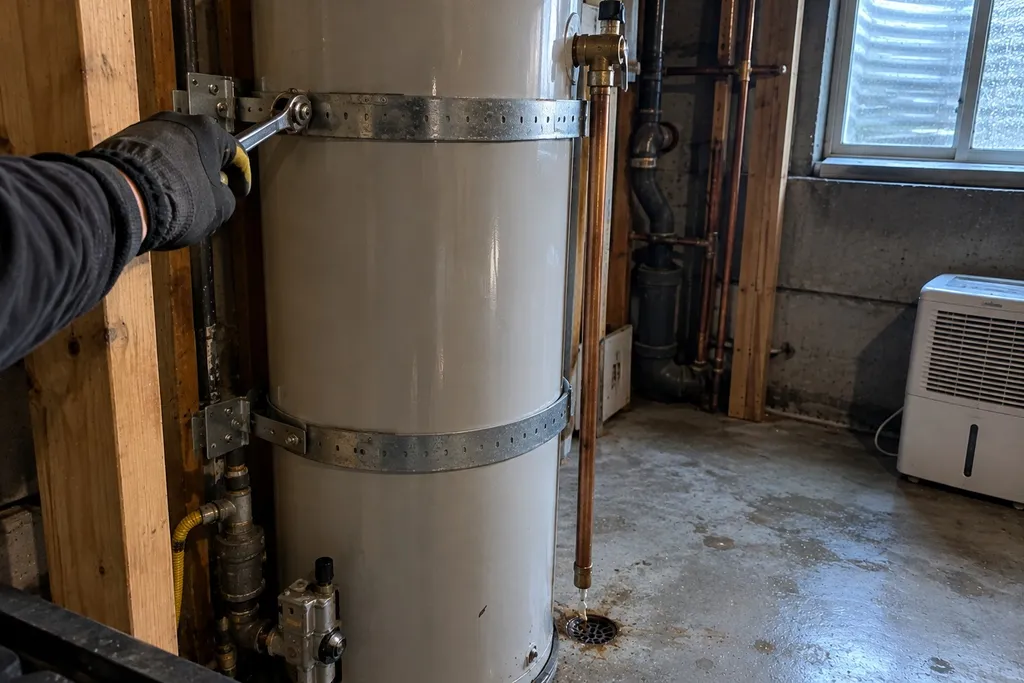
Permits are one more place where the repair-or-replace line matters. The rules treat those two jobs very differently. Knowing which one you're dealing with tells you a lot about what to expect.
Swapping a failed part on a heater that stays put usually doesn't need a permit. That covers things like a heating element, a thermostat, a thermocouple, or a drain valve. It's treated as normal upkeep. Replacing the whole water heater is a different story. In most of Oregon, a new heater usually needs a plumbing permit and an inspection. That's true even when it goes in the same spot as the old one. The same goes for moving a heater or changing its gas line or venting. Rules can vary by city and job, so it's worth asking up front. A good plumber can tell you whether your job needs a permit before any work starts.
Why should you care about a permit on a job you can't even see? Because the inspection is a second set of eyes on the parts that keep your family safe. Those are the venting, the gas connection, and the relief valve setup. It can also matter later. When you sell your home or file an insurance claim, unpermitted water heater work can raise questions you'd rather not answer.
Even a simple repair can bring an older heater's setup into view. A few code items come up often:
- Earthquake straps. Oregon expects water heaters to be strapped so they can't tip over in a quake. A falling tank can break gas and water lines. Older installs sometimes have no straps or loose ones.
- The relief valve drain line. The pipe from the relief valve should run down to a safe spot, not stop high in the air or get capped off.
- Expansion tanks. Some homes have a closed plumbing system, where water can't push back into the city line. In those homes, an expansion tank helps take up the extra pressure as water heats. We install these, and there's more on that service's own page.
- Venting and clearances. As covered above, gas venting has to be set up right. Heaters in garages may also need to sit up off the floor.
Finding one of these during a repair doesn't mean you have to replace your heater. Most can be fixed on their own. Some aren't urgent. If one is a real safety issue, we'll tell you why. If it's something that can wait, we'll say that too. Either way, you decide.
One check is worth doing before you hire anyone. In Oregon, contractors doing this kind of work need to be licensed with the Construction Contractors Board. You can look up any contractor's number on the board's website in a couple of minutes. Ours is CCB# 257405. We're licensed, bonded, and insured, and Kevin brings 20 years of plumbing experience to every call. If a plumber can't give you a license number, keep looking.
Common Questions
Frequently Asked Questions
My gas water heater vents through a crumbling chimney. Should I replace the chimney or just the vent pipe?
+
That depends on what's failing, so a plumber needs to look at both the chimney and the connector pipe before deciding. A crumbling chimney liner can let exhaust leak into your home even if the metal vent pipe connecting to it looks fine. Since venting problems are a safety issue, not just a repair choice, it's worth having someone check the whole path from the heater to the roof, not just one piece of it.
Can I just swap a water heater part myself instead of calling a plumber?
+
Some checks are safe to do yourself, but actual part swaps are not something we'd recommend doing on your own. You can safely reset a tripped breaker, check that the gas valve is open, or read the age off the label. But opening access panels on an electric heater exposes live power, and gas parts like the thermocouple or control valve need the right know-how to replace safely.
How do I know if my water heater problem is a gas supply issue and not the heater itself?
+
Check whether other gas appliances in your home are also out, like your stove or furnace. If everything gas-powered has stopped working at once, the problem is likely your home's gas service, not the water heater itself. If only the water heater is affected, the issue is more likely with the unit's pilot, thermocouple, or gas control valve.
Troutdale, Oregon
Related Troutdale Services
Need Plumbing Help?
Get Help Today from
Bigfoot Plumbing
Troutdale, Fairview, Wood Village, Gresham and the homes east toward Corbett. Call the Troutdale number and talk to someone who does this for a living.
10% Off for Veterans · First Responders · Seniors