
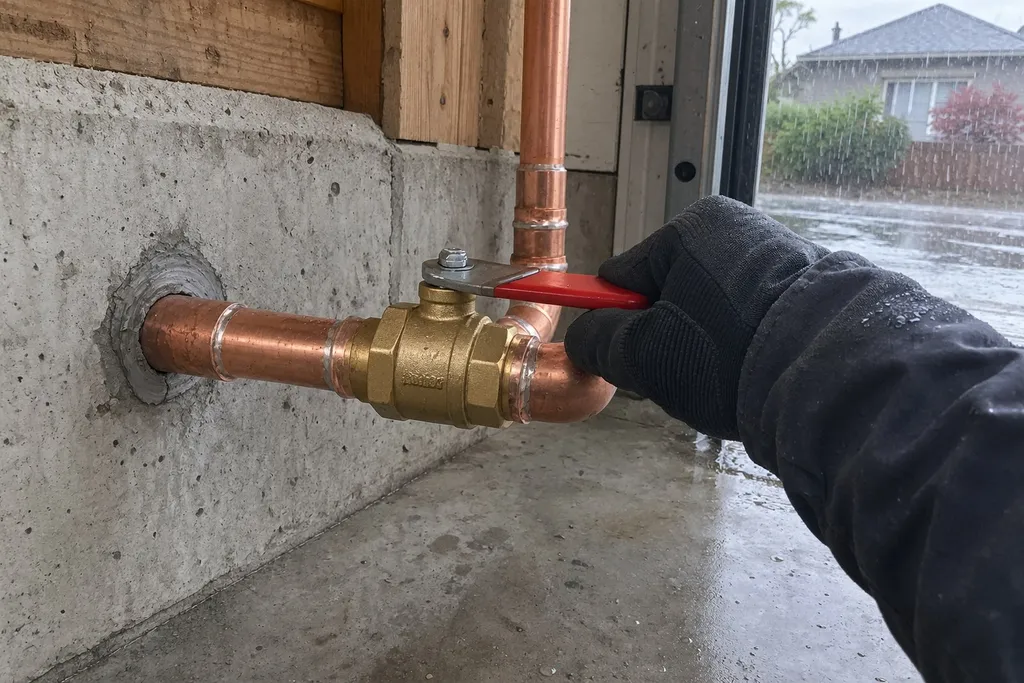
Emergency Shut-Off Valve Installation
Emergency Shut-Off Valve Installation in Troutdale: Know When It's Urgent
Honest, reliable plumbing for Troutdale, Oregon and the east side of Multnomah County.
CCB# 257405
Licensed · Bonded · Insured
20 Yrs
Experience
Family
Owned & Operated
Troutdale, OR
East County Crew
What's Covered on This Page
- Test Your Current Shut-Off Valve Before You Call
- Signs Your Shut-Off Valve Needs Replacing Now
- Main Shut-Off Valves vs. Fixture-Level Shut-Offs
- Why This Is a Licensed Plumber's Job, Not a DIY Fix
- What Happens During a Shut-Off Valve Installation
- How long will my water be off during a shut-off valve installation?
- Can I still use water in the house while the valve is being replaced?
- Is it normal for water to look cloudy or rusty right after a new valve is installed?
Need Emergency Shut-Off Valve Installation in Troutdale?
Emergency Shut-Off Valve Installation
Test Your Current Shut-Off Valve Before You Call
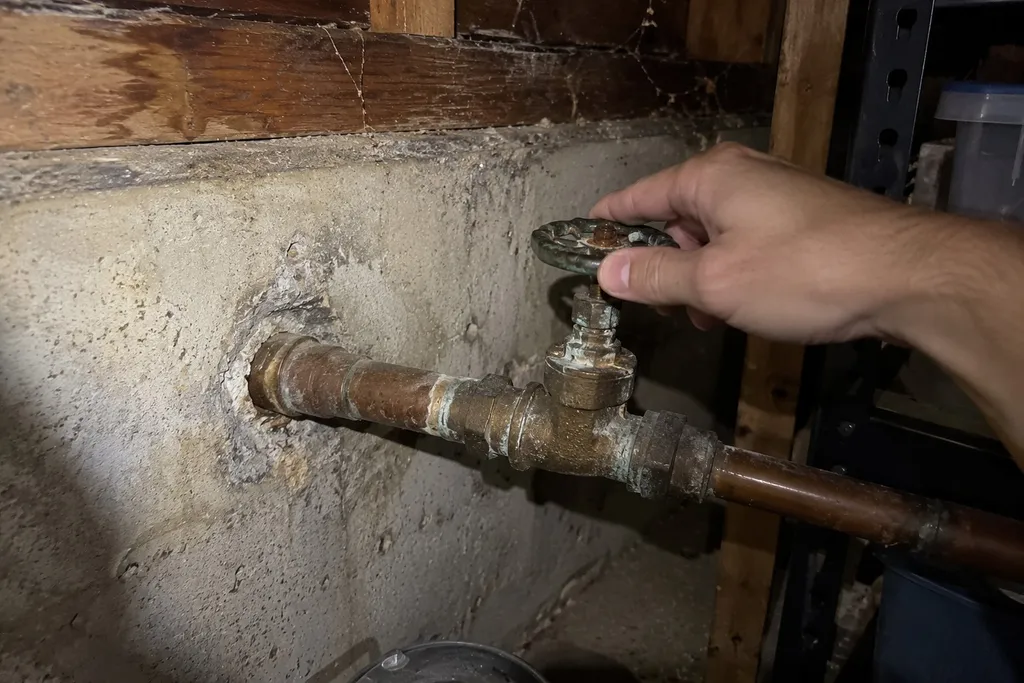
Not every home needs a new shut-off valve. Some old valves still work just fine. So before you call anyone, us included, it's worth taking a few minutes to see how yours is doing. Here's how to check it.
First, find it. Your main valve is usually where the water line comes into the house. Look in the garage, the basement, a crawlspace, near the water heater, or on an outside wall. Once you find it, look at the handle. A round wheel you twist many times is usually an older gate valve. A straight lever that turns a quarter of the way is a ball valve.
Next, give it a simple test:
- Turn on a faucet somewhere in the house, like the kitchen sink.
- Go back to the valve and slowly close it. Use your hand, not a wrench or a cheater bar.
- Check the faucet. The water should slow down and then stop all the way within a minute or so.
- Open the valve again slowly. Then watch the handle and stem for a few minutes to see if any water seeps out.
Go easy. If the handle won't budge, stop there. Older wheel-style valves can get stiff with mineral buildup after years of sitting still. If you force one, the stem can snap or start leaking. Then you've got a bigger problem than you started with. A stuck valve already tells you what you need to know.
Here's how to read what you find:
- It turned smoothly, the water stopped, and nothing dripped. Good news. You likely don't need a new valve right now. Just turn it closed and open again once or twice a year so it doesn't seize up.
- It turned, but the water kept trickling. The valve isn't sealing all the way. In a burst pipe, a trickle can still soak floors and walls while you wait for help.
- It drips at the handle after you use it. Sometimes this is a small packing issue. Keep an eye on it, and don't ignore it if it keeps going.
- It wouldn't move at all, or the handle spins without doing anything. It won't help you in an emergency. This is the clearest sign it's time for a replacement.
While you're at it, check the small valves under your sinks and behind your toilets too. Those let you shut off one fixture without turning off water to the whole house. They wear out the same way, and they're easy to forget about until a supply line lets go.
If your main valve passed every step, we'd rather you keep your money. A working valve doesn't need to be replaced just because it's old. But if it failed any part of this test, now is a calm time to fix it. During a leak, you won't get to choose when.
Emergency Shut-Off Valve Installation
Signs Your Shut-Off Valve Needs Replacing Now
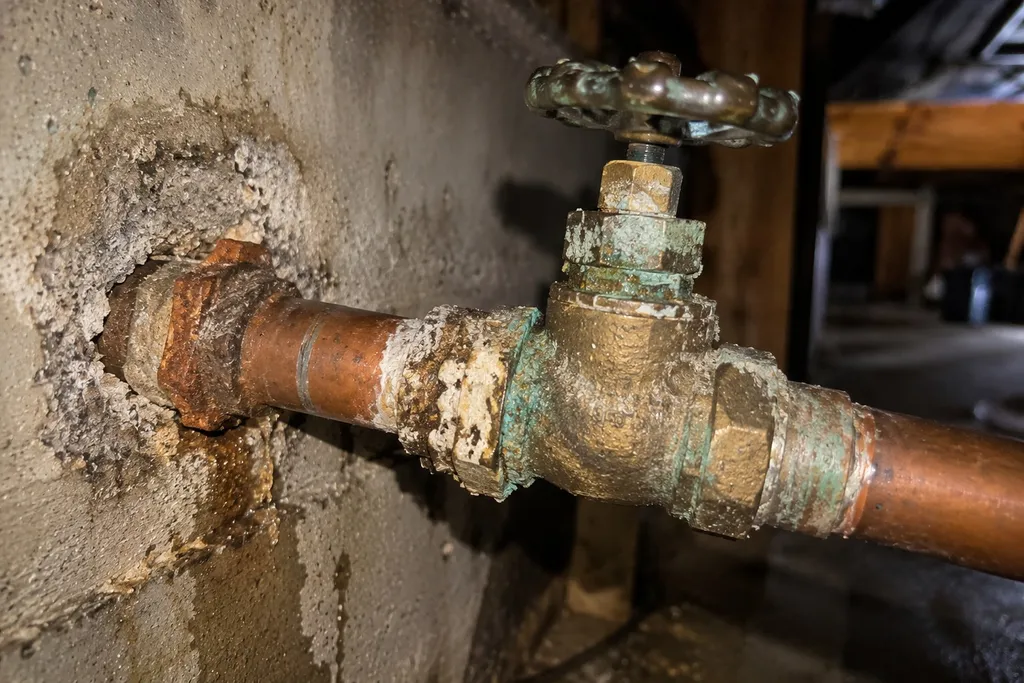
The test above tells you whether your valve works. Some valves show trouble before you ever touch them, though. And some moments in a home's life make "someday" the wrong timeline. Here's what to look for.
- Green or white crust on the valve or where it meets the pipe. That's corrosion and mineral buildup, and it often means a slow leak has already started.
- Rust or flaking on the valve or the fittings right next to it. Older metal parts can wear thin from the outside in.
- A damp spot, water stain, or small puddle under the valve, even if you've never seen it drip.
- A cracked, bent, or missing handle. If you'd need pliers to turn it, it won't help you in a hurry.
- A valve you can't reach quickly. If it's behind storage boxes, sealed behind drywall, or deep in a crawlspace, it isn't much of an emergency valve.
Corrosion deserves a closer look. A crusty valve might still turn today. But that crust means water has been sneaking out a little at a time. A corroded valve is most likely to break when you're forcing it in a panic, with water running across the floor. It's much better to replace it on a calm afternoon when nothing is wet.
Sometimes the valve looks fine, but the timing is right anyway. These are good moments to deal with it:
- You're replacing your water heater. The water is already off and a plumber is already there, so it's a natural time to look at the main valve too. We handle water heater installation as well.
- You're planning a repipe or a kitchen or bath remodel. If walls or pipes are opening up anyway, a new valve adds very little extra disruption.
- You just bought the house. You don't know how old the valve is or whether anyone has ever turned it. Find it and test it in your first week, before you need it.
- You're adding leak sensors. A sensor can warn you about a leak, but the warning only helps if your valve closes when you run to it. We offer water leak sensor installation too.
- Your water pressure runs high. Strong pressure puts steady strain on valves and fittings. If you hear banging pipes or see leaky faucets, water pressure regulator replacement may be worth a look.
Picture packing the car for a holiday trip. You'd like to turn off the water so a frozen or broken line can't flood the house while you're gone. If the valve won't close, you're leaving with your fingers crossed. A working valve gives you that choice.
Here's the honest version. If your valve passed the test and none of these signs fit, you don't need to do anything right now. If one of them does fit, don't panic. Just don't let it sit until a burst pipe makes the decision for you.
Emergency Shut-Off Valve Installation
Main Shut-Off Valves vs. Fixture-Level Shut-Offs
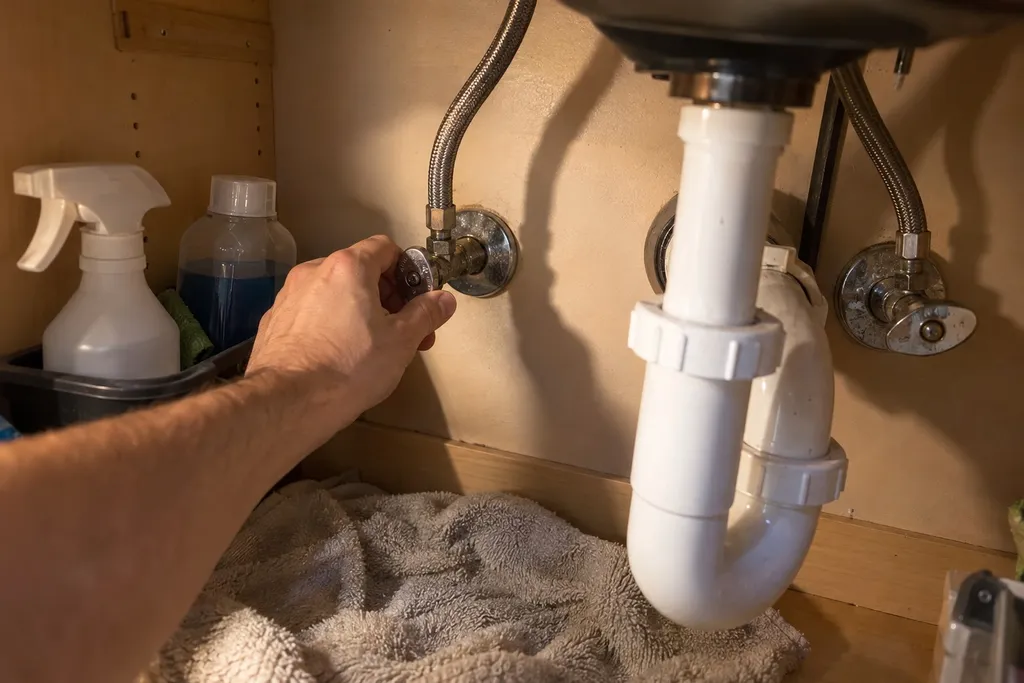
Your home has two kinds of shut-offs, and each one does a different job. The main valve stops water to the whole house. The small fixture valves stop water to one sink, one toilet, or one appliance. You need both. But they don't fail at the same time, and you don't always need to replace both at once.
Think of the main valve as your backstop. It's the one that matters when the leak is somewhere you can't reach, like a pipe inside a wall, above a ceiling, or under the floor. Use the main valve for:
- A burst pipe anywhere in the house
- Water coming through a ceiling or down a wall
- A leak you can't trace to one fixture
- Leaving the house empty for a trip
- Big plumbing work that touches more than one room
Fixture valves are your first line of defense for one spot. When a toilet won't stop running, or a supply hose under the bathroom sink splits, you close that one valve. The rest of the house keeps its water. The kids can still shower and you can still make dinner while the problem gets fixed.
You'll usually find these small valves in a few places:
- Under each bathroom and kitchen sink
- Behind or beside each toilet
- Under the kitchen sink for the dishwasher line
- Behind the washing machine, with one valve for hot and one for cold
- Behind the fridge, if it has an ice maker or water dispenser
Here's how the two work together in real life. Say a toilet supply line lets go late at night. If the toilet's valve works, you reach down, turn it, and go back to bed. If that valve is stuck, you're running to the main with water spreading across the bathroom floor. And if the main is stuck too, you're stuck. That's why a good main valve matters most. It covers you when everything else fails.
So which one should you fix first? If your main valve failed the test, start there. It protects the whole house. If the main is fine but one or two fixture valves are stiff or dripping, those are the only ones that need attention. You don't need a full set of new valves just because one is bad.
There is one good reason to do several at once. If you're already replacing the main, or a plumber is already there for a repipe or a remodel, it can make sense to swap out any fixture valves that also failed. The water's already off, so it's less disruption for your household. That should be your call, based on what you found when you tested them, not something you get talked into.
One last thing, and it costs nothing. Once you know where your main valve is, show everyone in the house who's old enough to turn it. A good valve only helps if someone can get to it fast when water starts running.
Emergency Shut-Off Valve Installation
Why This Is a Licensed Plumber's Job, Not a DIY Fix
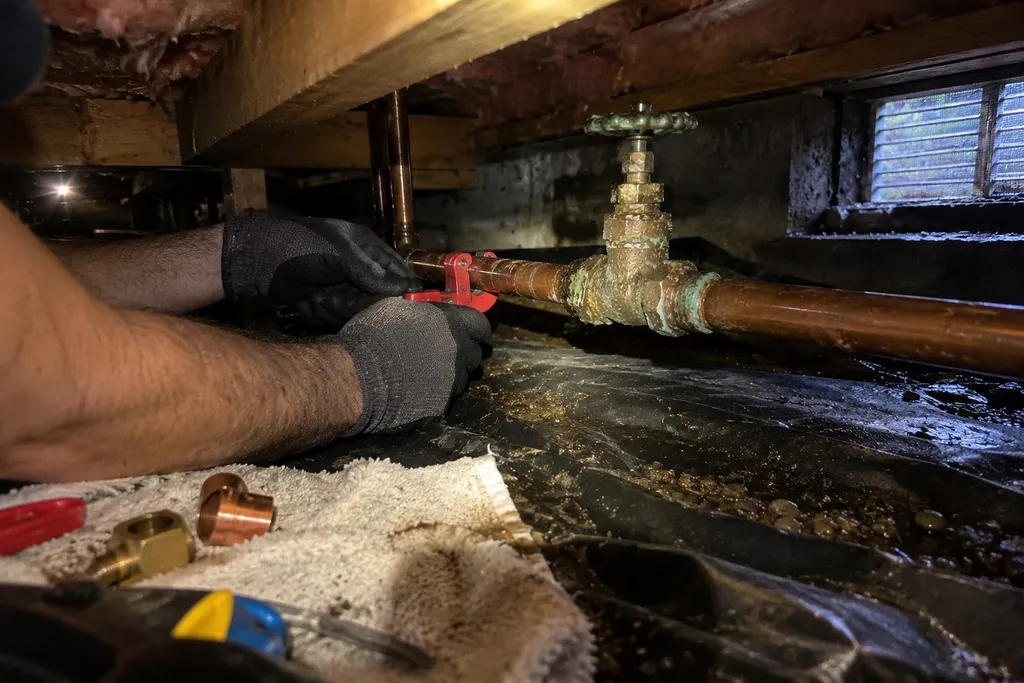
We'll be straight with you. Some shut-off work is fine to do yourself. Replacing the main valve usually isn't. The hard part isn't the valve. It's everything around it.
To swap a main valve, the water has to be off upstream of it. That often means closing a valve at the meter or the street, and that valve is often older, stiffer, and harder to reach than the one you're replacing. If it won't close all the way, you're cutting into a pipe that's still under pressure. Water doesn't wait while you figure out plan B.
Then there's the pipe itself. The main valve sits on the oldest, most-used part of your plumbing. Pipes that have been still for decades can crack or start leaking the moment you put a wrench on them. A small job can turn into a bigger repair in about two minutes. A plumber expects that and comes ready for it. Most weekend projects don't.
Here's what a main valve job can involve that's easy to miss:
- Matching the new valve to your pipe type and size, which may mean joining two kinds of pipe.
- Cutting, fitting, or soldering in a tight spot like a crawlspace or a garage wall.
- Checking the pipes right next to the valve so you aren't putting a new part on a worn-out line.
- Testing the new valve under full water pressure and making sure every joint stays dry.
- Doing it all in one visit so your family isn't without water overnight.
Now the other side. If you're handy, swapping a small fixture valve under a sink or behind a toilet is a job plenty of homeowners do themselves. Those valves have their own easy shut-off upstream, the main, and a mistake stays in one spot. If that's you and your main valve works, go for it. You don't need us for that.
If you do hire someone for the main valve, check that they're licensed in Oregon. Every licensed contractor here has a CCB number, and you can look it up before anyone shows up at your door. A license means the contractor is accountable. Bonding and insurance mean you're protected if something goes wrong in your home.
Bigfoot Plumbing is licensed, bonded, and insured, CCB# 257405. We're a family-owned company based right here in Troutdale, and our owner, Kevin Brain, has 20 years of plumbing experience. We'll tell you what your valve needs. If only the main failed, we'll replace the main. If your fixture valves passed your test, we won't push you to replace them.
The best time to replace a failing valve is before you need it. If you're already dealing with a leak, we offer emergency plumbing too.
Emergency Shut-Off Valve Installation
What Happens During a Shut-Off Valve Installation
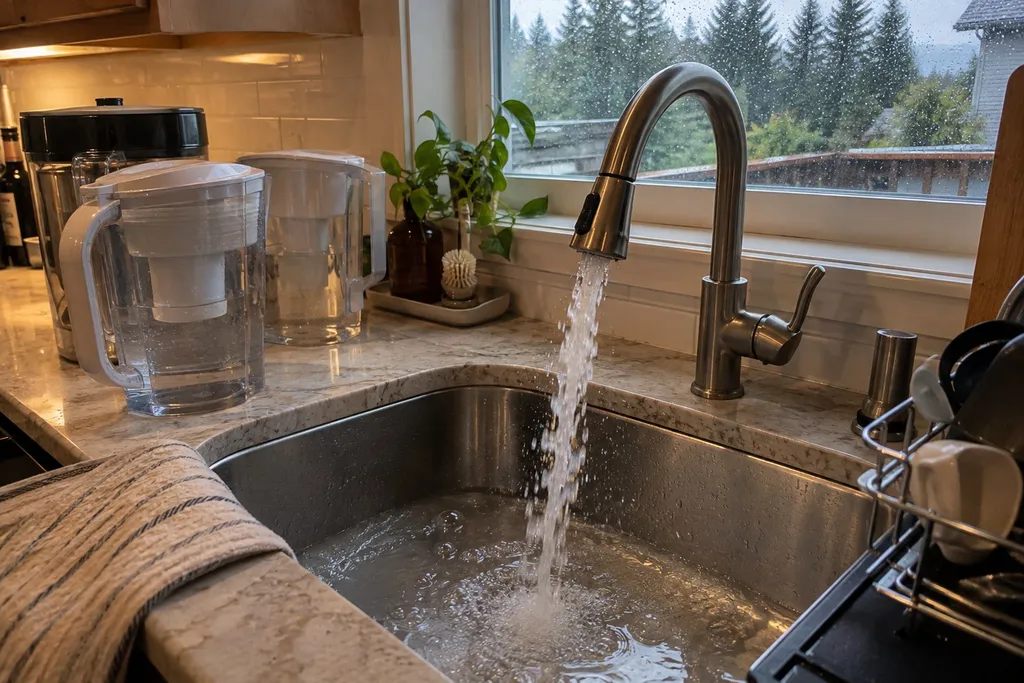
For most homes, replacing a main shut-off valve is a short, planned job. The water goes off, the old valve comes out, a new one goes in, and the water comes back on. Knowing what to expect makes the day easier on your family.
A little prep goes a long way. Before your plumber arrives:
- Clear the area around the valve. Move storage boxes, bikes, or anything stacked in front of it so there's room to work.
- Fill a few pitchers for drinking and cooking, and flush toilets ahead of time.
- Hold off on laundry, the dishwasher, and showers until the water is back on.
- Tell everyone at home when the water will be off, so nobody is caught mid-shower.
- Keep pets out of the work area, especially if the valve is in a garage or crawlspace.
On the day itself, the plumber shuts off water ahead of the valve, as described above. Then they drain the line, cut out the old valve, and fit the new one. Most homeowners get a quarter-turn ball valve. You can close it with one quick motion, which helps when you're in a hurry. Once it's in, the water comes back on slowly and every joint gets checked for drips.
Sometimes the job grows a little. The pipe on either side of the old valve may be too worn to connect to, so a short section gets replaced. A good plumber will show you what they found and explain why before doing extra work. You should never be surprised by it on the bill.
When the water comes back on, you may notice a few things. Faucets can sputter or spit air for a few seconds. The water might look cloudy or a bit rusty at first. Run the cold tap in the kitchen and a bathtub for a minute or two and it should clear. If it doesn't, mention it.
Before the plumber leaves, check the work yourself. Run the same test you did on the old valve: open a faucet, close the new valve, and make sure the water stops all the way. Look at the joints on both sides for any wetness. Then ask them to show everyone at home how the new handle works.
Cost depends on the job, not just the part. A few things push the price up or down:
- Where the valve sits. A valve in an open garage is quicker to reach than one in a tight crawlspace or behind drywall.
- Your pipe type, and whether the new valve has to join two different kinds of pipe.
- The shape of the pipe on either side of the valve.
- Whether the shut-off upstream works well or needs extra steps.
- Whether you're adding fixture valves to the same visit.
- Whether it's a scheduled job or an after-hours emergency.
Before you hire anyone, ask what the quote includes, what could change it, and how they'll handle it if they find a bad pipe. A straight answer to those three questions tells you a lot about who you're letting into your home.
Common Questions
Frequently Asked Questions
How long will my water be off during a shut-off valve installation?
+
Most main valve swaps keep your water off for a few hours, not all day. Your plumber shuts off water upstream, drains the line, fits the new valve, then turns water back on and checks every joint. If worn pipe on either side needs replacing too, it can take a bit longer, but you'll be told about that before any extra work starts.
Can I still use water in the house while the valve is being replaced?
+
No, you won't have water anywhere in the house during the swap, since the whole line has to be shut off upstream of the valve. That's why it helps to fill a few pitchers, flush toilets, and skip the dishwasher or laundry until the work is done and water is back on.
Is it normal for water to look cloudy or rusty right after a new valve is installed?
+
Yes, this is common right after the water comes back on. Air and loose mineral bits in the pipes can make water sputter or look cloudy or rusty for a minute or two. Running the kitchen cold tap and a bathtub faucet for a couple minutes usually clears it up.
Troutdale, Oregon
Related Troutdale Services
Need Plumbing Help?
Get Help Today from
Bigfoot Plumbing
Troutdale, Fairview, Wood Village, Gresham and the homes east toward Corbett. Call the Troutdale number and talk to someone who does this for a living.
10% Off for Veterans · First Responders · Seniors