
Water Heater Installation
Water Heater Installation in Troutdale: Know When It's Time to Replace
Honest, reliable plumbing for Troutdale, Oregon and the east side of Multnomah County.
CCB# 257405
Licensed · Bonded · Insured
20 Yrs
Experience
Family
Owned & Operated
Troutdale, OR
East County Crew
What's Covered on This Page
- Signs Your Water Heater Needs Replacing, Not Repairing
- When You Don't Need a Full Installation
- Choosing Between Tank, Tankless, and Heat Pump Water Heaters
- What Happens During a Water Heater Installation
- Permits and Licensing for Water Heater Installation in Troutdale
- How long does a water heater installation take?
- Can I install a water heater myself to save money?
- Do I need to turn off my water before a plumber arrives?
- What size water heater do I need for my family?
Need Water Heater Installation in Troutdale?
Water Heater Installation
Signs Your Water Heater Needs Replacing, Not Repairing
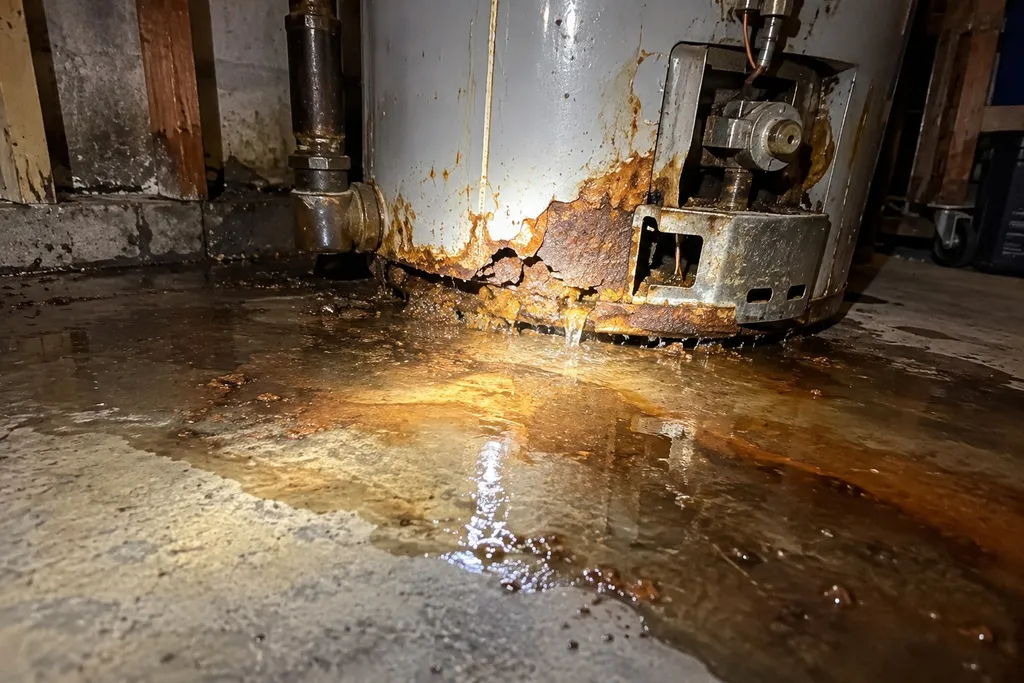
Here's the honest truth. A lot of water heater trouble can be fixed. But some problems can't, and putting money into a tank that's on its way out just delays the bill. The trick is telling the two apart.
These are the signs that usually point to a new water heater:
- Water pooling under the tank itself. If the leak is coming from the tank body and not a fitting or valve, the inside is likely rusted through. Tanks can't be patched.
- Rusty or brown hot water. If your cold water runs clear but your hot water looks rusty, the tank may be corroding from the inside.
- Rumbling, popping, or banging. That's often sediment that's built up and hardened in the bottom of the tank. Once it gets bad, it wears the tank down and makes it work harder to heat.
- Age. Most standard tank heaters are built to last somewhere around 8 to 12 years. If yours is in that range and starting to have problems, a repair may only buy you a little time.
- Repairs keep piling up. One service call is normal. Calling for help every few months is a sign the whole unit is wearing out.
- You never have enough hot water anymore. If your household has grown, or showers go cold faster than they used to, the tank may be too small or too worn to keep up.
Not sure how old your heater is? Check the label on the side of the tank. The serial number often has the build date worked into it, and that alone can answer a lot.
Now the other side. You probably don't need a new water heater if:
- Your heater is fairly young and this is its first real problem.
- The water is lukewarm or doesn't get hot at all. That's often a bad thermostat or heating element on an electric unit, or a pilot or gas valve issue on a gas unit.
- The leak is coming from a valve, fitting, or pipe connection, not the tank.
- The pressure relief valve is dripping. That valve can be replaced on its own, though it's worth having someone check why it's releasing.
In those cases, our water heater repair service is usually the right call, and that's what we'll recommend. A good fix on a healthy tank is money well spent.
Picture this. You walk into the garage and see a small puddle by the heater. Your stomach drops, and you start thinking about the cost of a new one. But if that water traces back to a loose connection, it might be a quick fix. If it's seeping from the bottom of a 13-year-old tank, that's a different conversation.
Kevin and our team have spent years learning that people just want a straight answer. We're a family-owned company, and we'd rather earn your trust with an honest call today than sell you something you didn't need. If a repair makes sense, we'll say so. If it's time to replace, we'll show you why.
Water Heater Installation
When You Don't Need a Full Installation
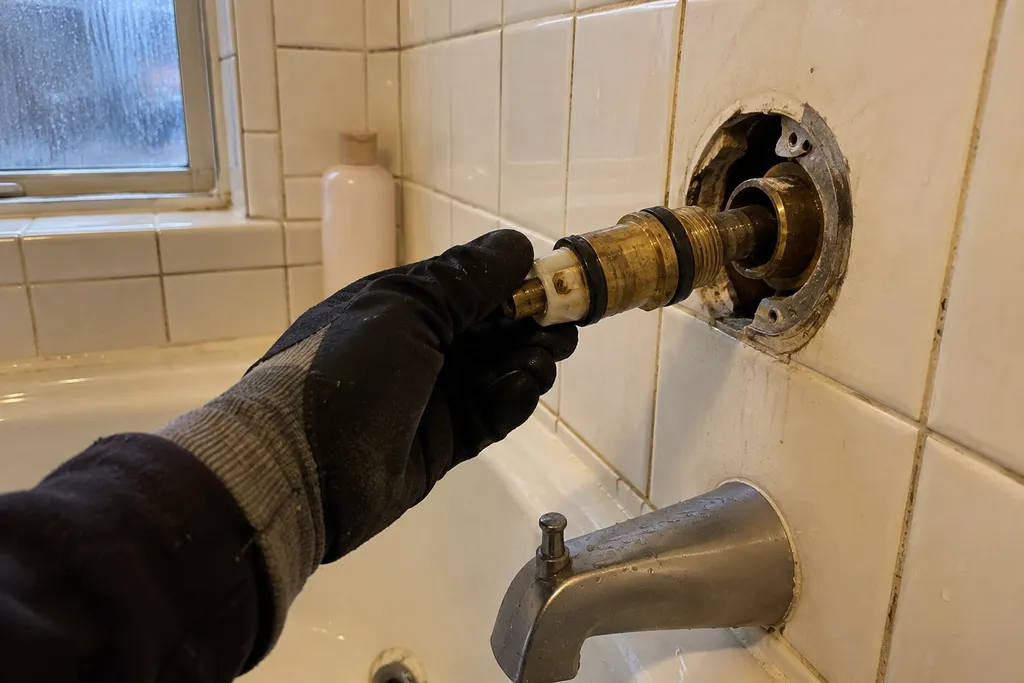
Not every hot water problem ends with a new heater. Sometimes the heater is doing its job just fine, and the trouble is somewhere else in your plumbing. Swapping out a good tank won't fix that. You'd spend the money and still have the problem.
Here are the cases where a full installation usually isn't the answer.
- Only one faucet or shower is acting up. Say your kitchen sink gets plenty of hot water, but the upstairs shower runs lukewarm. The heater is making hot water, so the issue is more likely the valve inside that one fixture. A faucet repair is often all it takes.
- You wait a long time for hot water at a far bathroom. This one is about distance, not your heater. Water sitting in a long pipe run cools off, and you have to run it out before the hot water shows up. A recirculation pump keeps hot water moving closer to your taps, so you're not standing there waiting.
- The pressure in your home runs high. High water pressure puts strain on your tank, your valves, and your fixtures. It can be one reason that relief valve we mentioned keeps dripping. A water pressure regulator replacement or an expansion tank installation may solve it and help your current heater last longer.
- The tank is sound but it needs some care. If sediment is just starting to build and the tank isn't leaking or rusting, water heater maintenance can keep it running well for a while longer.
There's one more case people don't always think about. Your heater might be getting up there in age but still working without any trouble. You don't have to replace it today just because of the number on the label. It's okay to wait.
Waiting works best when you plan for it. Here's what that looks like:
- Know where your water shutoff is, so a leak doesn't turn into a flooded garage.
- Set aside some money now, so a failure doesn't hit your budget all at once.
- Think ahead about what kind of heater you'd want next and how much hot water your family really uses.
That way, if the old tank quits on a cold morning, you're making a choice you already thought through. You aren't scrambling to pick something in a hurry with no hot water in the house.
We'd rather tell you the truth than sell you a tank. A new water heater is a real investment for your home. It should fix the problem you have. If your heater is healthy and the trouble is a fixture, a long pipe run, or high pressure, that smaller fix is the one that makes sense.
Water Heater Installation
Choosing Between Tank, Tankless, and Heat Pump Water Heaters
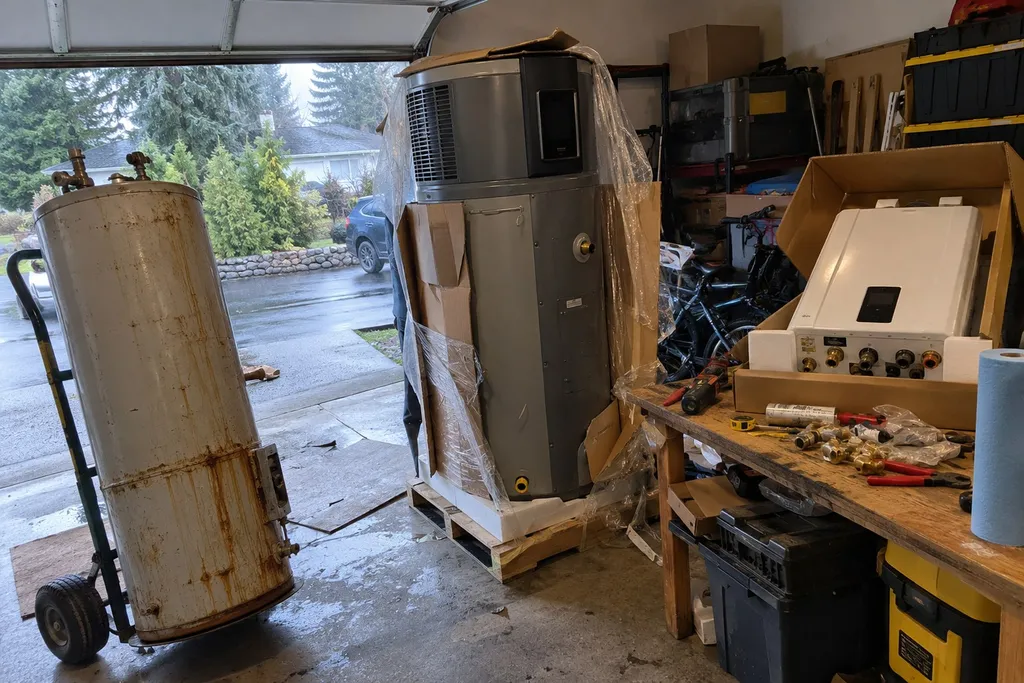
Once you know it's time for a new heater, the next question is what kind. There are three main choices. Each one is a good fit for some homes and a poor fit for others. The best pick depends on how your family uses hot water, where the heater sits, and what kind of power or gas your home already has.
A traditional tank heater holds a set amount of hot water and keeps it warm until you need it. It's the most familiar option and usually costs the least up front. If you already have a tank, putting in a new one of the same type is often the simplest job, because the gas line, venting, and wiring are already set up for it. The downside is that once the tank runs dry, you wait for it to heat back up. A tank also uses some energy keeping water hot even when nobody's using it.
A tankless heater warms water only when you turn on a tap. You don't run out partway through a shower, and the unit hangs on the wall, which frees up floor space. Keep a few things in mind:
- It can only heat so much water at one time. Two showers and the dishwasher all at once can push it past what it can handle.
- Switching from a tank often means bigger changes, like a larger gas line, new venting, or an electrical upgrade.
- It costs more up front and needs regular flushing to keep mineral buildup from slowing it down.
If that sounds like a fit, our tankless water heater installation page goes into more detail.
A heat pump water heater is an electric tank that pulls warmth from the air around it to heat the water. That makes it very efficient to run. It needs the right spot, though. It has to have enough open air around it, a place to drain the water it pulls from the air, and room that won't mind getting a little cooler. A roomy garage or basement often works. A tight closet usually doesn't. It also heats water more slowly than a standard electric tank and costs more to buy. Some utilities offer rebates on these units, so it's worth asking yours. Our heat pump water heater installation page covers the details.
So how do you choose? These questions narrow it down fast:
- What do you have now? Staying with the same type and fuel keeps the job simpler.
- How many people use hot water at the same time in the morning?
- Would you rather pay less now, or pay more now to save on energy over the years?
- Where will the heater go, and how much space is there?
Here's the honest part. For a lot of families, a new tank that matches the old one is the right answer. It's reliable and familiar, and it doesn't come with surprise upgrade costs. A tankless or heat pump unit can be a great choice, but only if it truly fits your home and how you live. We'll walk you through the trade-offs in plain words, and we won't push the pricier option just because it's pricier.
Water Heater Installation
What Happens During a Water Heater Installation
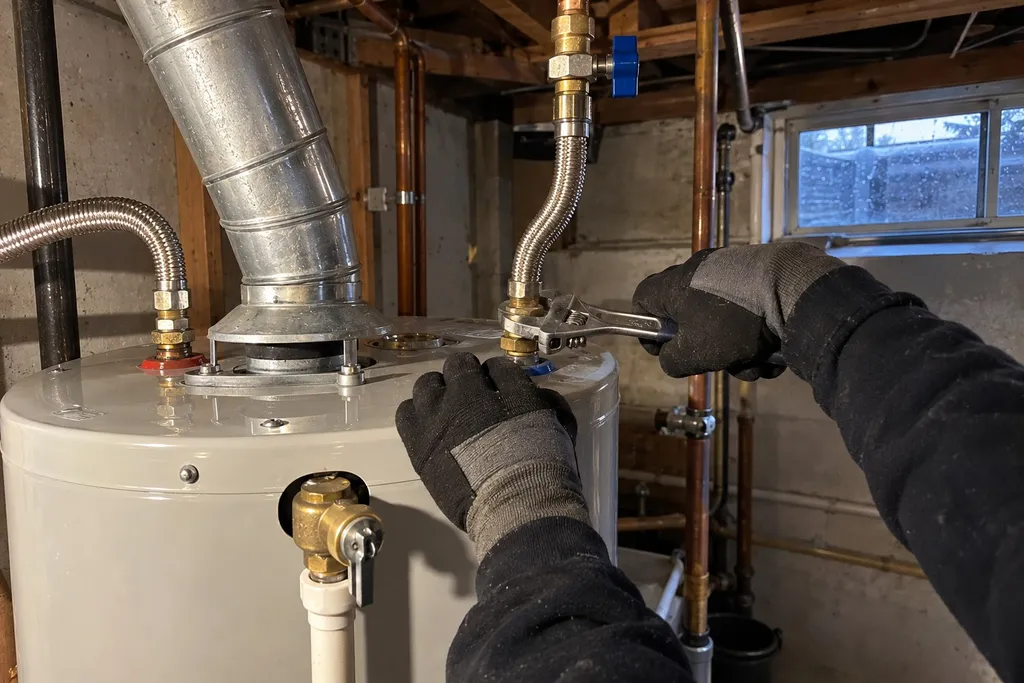
A water heater installation is more than pulling out the old tank and setting in a new one. The tank is the easy part. What really counts is everything connected to it: the water lines, the gas or power, the venting, and the safety parts that keep the whole thing from causing trouble down the road.
A straight swap of a tank for the same kind of tank is often done in part of a day. If you're switching to tankless or a heat pump unit, plan for more time, since those jobs can mean new gas lines, venting, or wiring.
Here's what a careful installation usually covers:
- Shutting off the water and the gas or power, then draining the old tank so it can be moved out safely.
- Disconnecting the old unit and checking the shutoff valve and pipe connections. A worn valve is much easier to replace now than later.
- Setting the new heater in place and connecting the water lines, plus the gas line and venting on a gas unit or the wiring on an electric one.
- Installing the pressure relief valve with a discharge pipe that runs to a safe spot, so hot water can't spray where someone's standing.
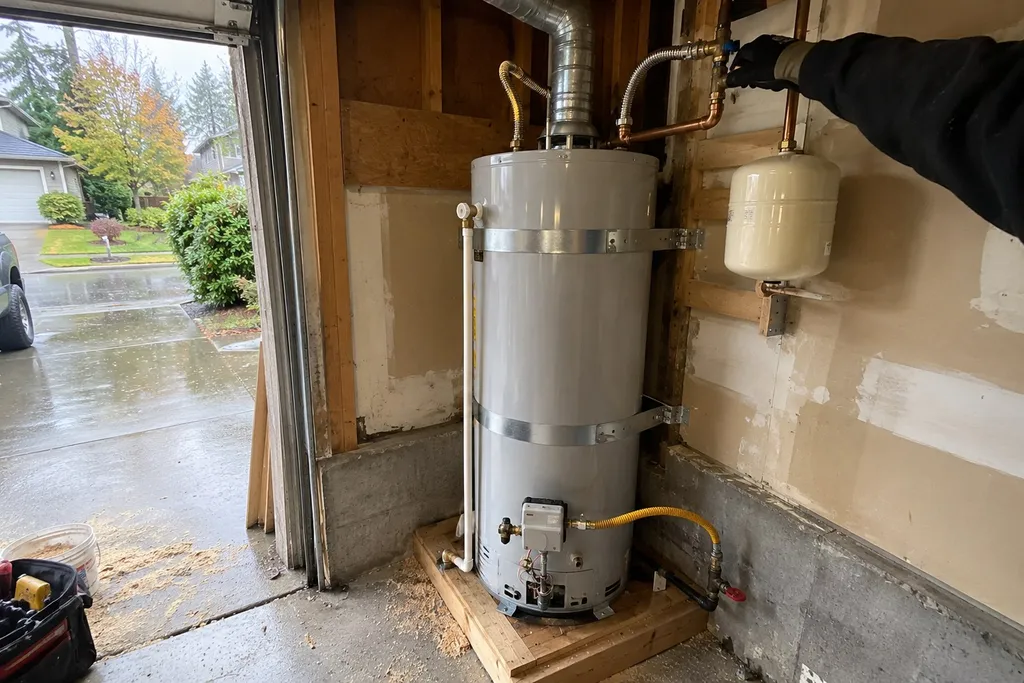
- Strapping the tank to the wall. Here in the Pacific Northwest, earthquakes are a real risk, and a full tank of water is heavy enough to tip and break a gas or water line.
- Filling the tank before turning on the heat, then checking every joint for leaks.
- Setting the temperature and making sure hot water reaches your taps.
A good installer also looks past the tank. If your home's water pressure runs high, or the plumbing has no room for water to expand as it heats, those problems will wear down a brand-new heater too. That's why an expansion tank or pressure check often comes up during an install. It isn't an add-on for the sake of it. It protects the money you just spent.
You don't have to do much to get ready. A few small things help the day go smoothly:
- Clear a path to the heater, and clear some space around it, especially if it's tucked behind boxes in the garage.
- Plan to go without hot water for a few hours. Run the dishwasher or take showers before the work starts.
- Keep pets and little ones out of the work area.
- Ask ahead whether a permit is needed and who takes care of it.
Once the work is done, take a quick look before the plumber leaves. Is the tank strapped? Does the relief valve pipe run down toward the floor or to a drain? Are the connections dry? Do you know where the shutoff is and how to set the temperature? A good plumber will be glad you asked.
Who does the work matters too. In Oregon, check that your plumber holds a Construction Contractors Board license. Bigfoot Plumbing is licensed, bonded, and insured under CCB# 257405, and Kevin brings years of hands-on plumbing know-how to every job. The goal is a heater that's put in the right way the first time, so you can stop thinking about hot water and get back to your family.
Water Heater Installation
Permits and Licensing for Water Heater Installation in Troutdale
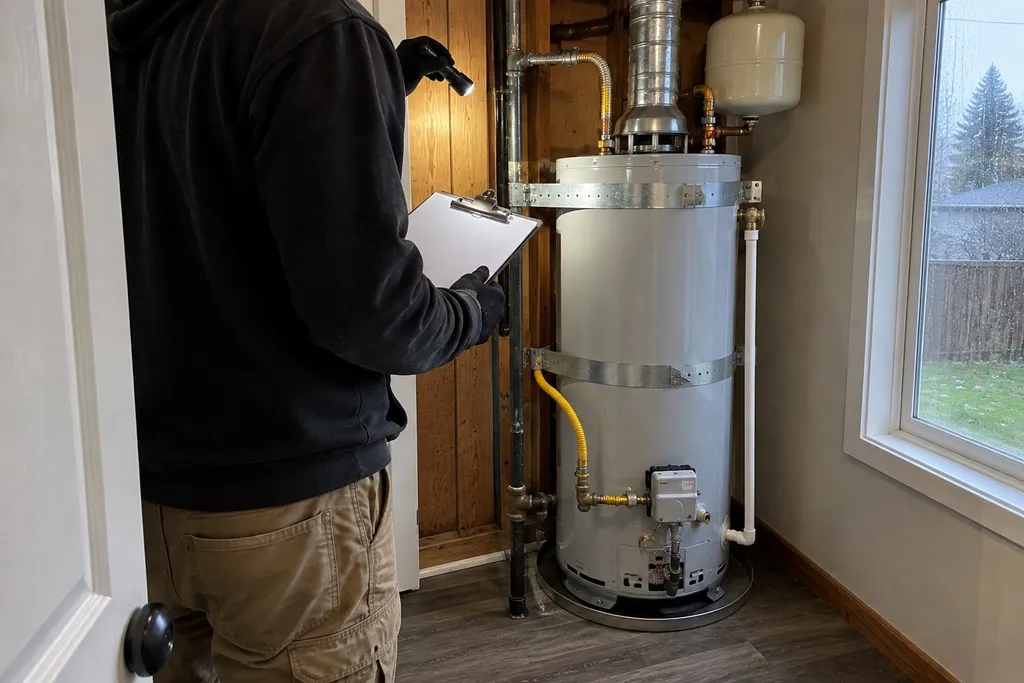
Replacing a water heater usually isn't just a swap. In most cases it's work that needs a plumbing permit and an inspection, even when the new tank goes in the exact same spot as the old one. In Troutdale, the city's building department is the place to check what's required for your address.
We know a permit can sound like red tape. But it's really a second set of eyes on the parts of the job that matter most for safety. An inspector looks at the same things we talked about earlier: the earthquake strapping, the relief valve and where its pipe drains, the gas line and venting on a gas unit, and the wiring on an electric one. If something got missed, the inspection is how you find out before it becomes a problem in your home.
A permit also protects you later. Here's how it can come back around:
- Selling your home. A buyer's inspector may ask about a newer water heater. A finished permit shows the work was done and checked.
- Insurance claims. If a heater leaks or a gas connection fails, an insurer may ask whether the work was permitted and inspected.
- Peace of mind. Gas lines, venting, and hot water under pressure aren't the places to guess. An inspection takes the guessing out.
Picture a family a few years after an install, getting ready to sell their Troutdale house. The buyer's inspector spots a newer gas water heater and asks for the permit. If nobody pulled one, that small detail can turn into a hold-up right when they want things to go smoothly. A permit filed at the time of the install avoids that whole headache.
Before you hire anyone, ask a few plain questions. A good plumber won't mind answering them:
- Does this job need a permit, and who's going to get it?
- Is the permit cost included in the quote, or is it separate?
- When will the inspection happen, and do I need to be home for it?
- Is the person doing the work a licensed plumber, and what's your CCB number?
Be careful if someone offers to skip the permit to save you a little money or time. That saving is small, and it moves the risk onto you and your home. A quote that looks cheaper because it leaves out the permit isn't really a better deal.
You already know to check the CCB license. That number tells you the contractor is registered, bonded, and insured in Oregon. Ours is CCB# 257405, and Kevin brings 20 years of plumbing experience to every job. We're a family-owned company right here in Troutdale, and we'd rather do the job the right way once than cut a corner on a neighbor's home.
If your heater is showing its age, or you're not sure whether it needs a repair or a replacement, we'll give you a straight answer. That includes the permit question, so you know what to expect before any work starts.
Common Questions
Frequently Asked Questions
How long does a water heater installation take?
+
A straight swap of one tank for the same type usually takes part of a day. If you're switching to a tankless or heat pump unit, plan for more time, since those jobs often need new gas lines, venting, or wiring. Your plumber can give you a better time estimate once they see your setup.
Can I install a water heater myself to save money?
+
We don't recommend it, since gas lines, venting, and earthquake strapping all have to be done a certain way to pass inspection. In Troutdale, most water heater replacements need a permit and inspection, even in the same spot as the old tank. A licensed plumber knows what the inspector will check, like the relief valve pipe and the strapping, so nothing gets missed.
Do I need to turn off my water before a plumber arrives?
+
No, your plumber will shut off the water, gas, or power and drain the old tank as part of the job. You don't need to do this yourself. It helps to clear a path to the heater and plan to go without hot water for a few hours during the work.
What size water heater do I need for my family?
+
It depends on how many people use hot water at the same time, especially during busy mornings. A good installer will ask about your household's hot water habits before recommending a tank size or a tankless unit. If you've noticed hot water running out faster than it used to, that's a sign your current tank may be too small.
Troutdale, Oregon
Related Troutdale Services
Need Plumbing Help?
Get Help Today from
Bigfoot Plumbing
Troutdale, Fairview, Wood Village, Gresham and the homes east toward Corbett. Call the Troutdale number and talk to someone who does this for a living.
10% Off for Veterans · First Responders · Seniors