
Water Pressure Regulator Replacement
Water Pressure Regulator Replacement in Troutdale: Know Before You Call
Honest, reliable plumbing for Troutdale, Oregon and the east side of Multnomah County.
CCB# 257405
Licensed · Bonded · Insured
20 Yrs
Experience
Family
Owned & Operated
Troutdale, OR
East County Crew
What's Covered on This Page
- High or Erratic Water Pressure Usually Points to the Regulator
- Oregon Plumbing Code Explains Why This Part Exists
- Rule Out These Causes Before Replacing the Regulator
- What Happens During a Regulator Replacement
- Is This an Emergency or Can It Wait
- Is 100 psi of water pressure normal for my house?
- Do I need a plumber to adjust my water pressure, or can I do it myself?
Need Water Pressure Regulator Replacement in Troutdale?
Water Pressure Regulator Replacement
High or Erratic Water Pressure Usually Points to the Regulator
Your pressure regulator sits where the city water line enters your house. Its job is to take the strong pressure from the street and turn it down to a level your pipes, fixtures, and appliances can handle every day. Inside, a spring and a rubber diaphragm do that work. After years of use, those parts wear out, and the valve can't hold a steady setting anymore.
When that happens, the problems don't show up all at once. They show up in small ways around the house that are easy to blame on something else.
- Pipes that knock or bang when you shut off a faucet or the washer finishes filling
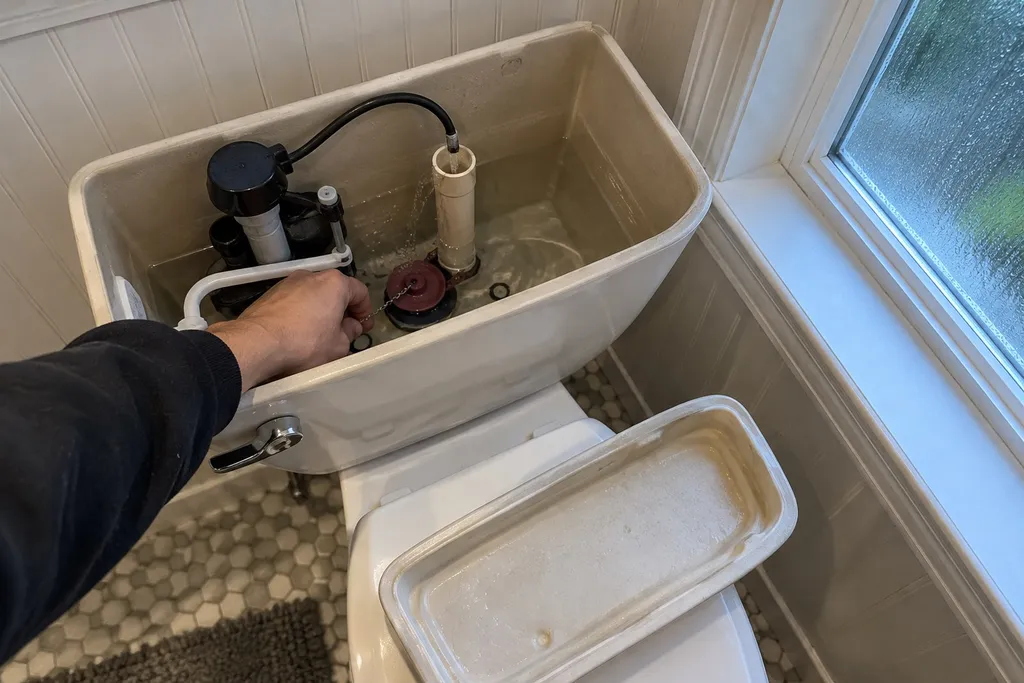
- A toilet that runs or refills on its own, even after you've swapped the flapper
- Faucets and shower heads that start dripping sooner than they should
- The relief valve on your water heater dripping or spitting water
- Pressure that feels fine one day and blasts out the next, or is stronger late at night
- Pressure that slowly fades over months, which can mean the valve is sticking closed
Any one of these can have another cause. But when you see two or three together, the regulator is the most likely link between them. It's one part that touches every fixture in the house.
You can check it yourself. Pick up a basic water pressure gauge at a hardware store and screw it onto an outdoor hose spigot. Make sure nothing inside is running, then turn the spigot on and read the number. Most homes do well somewhere in a moderate middle range. If your number is high, or if it swings when you check it at different times of day, your regulator isn't doing its job. Some gauges have a second needle that marks the highest reading. If you leave one on overnight, it can catch spikes you'd never see during a quick check.
There's one thing that can fool the test. If your pressure only spikes right after your water heater runs, the cause may be thermal expansion. Hot water takes up more space, and in a closed system it has nowhere to go. That's a job for expansion tank installation, not a new regulator, and sometimes a home needs both. On the other side, if your pressure is low everywhere, the regulator is only one possible cause. Our low water pressure repair page covers the others.
Here's why this matters. A worn regulator doesn't usually fail with a big flood. It lets too much pressure push on everything downstream, day after day. That strain shows up as worn washers, leaky toilet valves, and stressed supply lines. Replacing that one valve takes the strain off the whole house. If you put it off, you'll likely end up paying to fix the things it was supposed to protect.
Water Pressure Regulator Replacement
Oregon Plumbing Code Explains Why This Part Exists
A pressure regulator isn't an extra part someone talked your builder into. Oregon's plumbing code sets a limit on how much pressure the water inside a home should carry. When the pressure coming from the street runs higher than that limit, the code calls for a regulator to bring it down. So if your house has one, there's a good chance it was put there because your supply pressure needed taming.
That's the part that matters most for you. The pressure at the street doesn't go away when your regulator wears out. It's still out there, pushing on the valve every second of the day. Once the valve can't hold back, the full force reaches your fixtures, your toilet valves, and your water heater. Taking the regulator out, or leaving a worn one in place, doesn't fix anything. It just moves the strain onto parts that cost more to replace.
Street pressure isn't the same for every house, either. It depends on where your home sits in the water system, including how high or low it is compared to the lines feeding it. Two neighbors on the same block can see different numbers. That's why a gauge reading at your own spigot tells you more than any general rule.
There's one more code-related piece to keep in mind. A regulator can stop water from flowing back toward the street. That's the closed system that makes thermal expansion a concern, as covered above. When a regulator gets replaced, it's a good time to make sure that side of things is handled too.
A good replacement does more than swap one valve for another. In general, it should cover these basics:
- A new regulator sized to match your main water line, so you don't lose flow when two or three fixtures run at once
- A working shutoff near the regulator, so the water can be turned off for future repairs without a trip to the street
- The new valve set to a safe, steady pressure and then checked with a gauge, not just guessed at
- A look at how your home handles thermal expansion, since the new valve keeps the system closed
- A check for leaks at every connection before the job is called done
Before you hire anyone, it's fair to ask a few simple questions. Are you licensed in Oregon? Will you test the pressure before and after, and show me the numbers? Does this job need a permit where I live? A plumber who does the work right won't mind any of these. If you get vague answers, that's worth noticing.
In Oregon, plumbing contractors are licensed through the Construction Contractors Board. Ours is CCB# 257405. You can look it up yourself, and we'd encourage you to do that with any plumber you're thinking about calling. We'll tell you what your gauge says, what the code expects, and whether the regulator is really the problem. If it isn't, we'll say so.
Water Pressure Regulator Replacement
Rule Out These Causes Before Replacing the Regulator
Not every pressure problem means you need a new regulator. Some look the same but cost much less to fix, and a few you can handle yourself. Before you replace the valve, check these.
Is it just one fixture? A worn regulator affects the whole house. If only the kitchen faucet sputters, or only one shower is weak, the cause is almost always at that fixture. A clogged aerator, a worn cartridge, or mineral buildup in a shower head is the usual cause. Unscrew the aerator, rinse it out, and see if things change. A toilet that keeps running when every other fixture behaves fine usually needs a new fill valve, not a new regulator.
Was the main shutoff fully opened after recent work? If your pressure dropped right after a repair or a winter shutoff, someone may have left the main valve partway closed. Open it all the way and test again. That's a free fix.
Is the whole street affected? Ask a neighbor or two. If their pressure dropped at the same time as yours, the cause may be on the utility side, like a main break or line work nearby. Your regulator can't fix pressure that isn't reaching it.
Does the regulator just need to be adjusted? Most regulators have an adjustment screw on top. If your gauge shows pressure that's steady but a little higher or lower than you'd like, a small turn may be all it takes. The key word is steady. Adjusting won't help a valve that swings around or creeps up overnight, because the parts inside are worn. If you try this yourself, make small turns and recheck with the gauge each time.
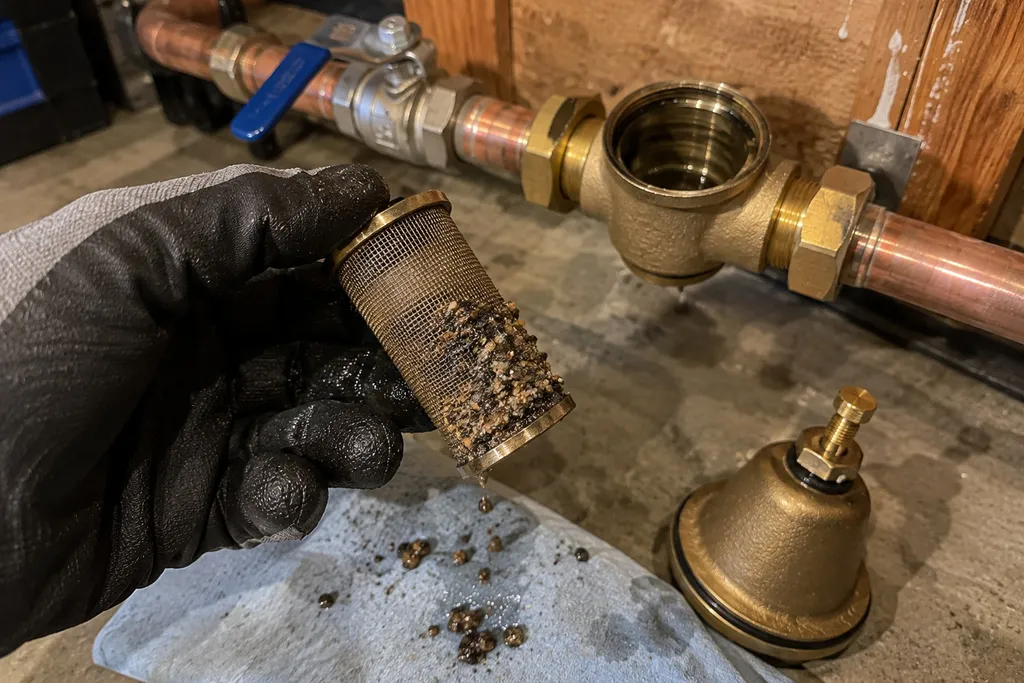
Is the strainer clogged? Some regulators have a small screen inside that catches grit from the water line. When it fills up, pressure drops across the house. Cleaning that screen can bring your flow back without a new valve. If your pressure is low and the regulator is fairly new, this is worth checking first.
Is the banging coming from fast-closing valves? Washing machines and dishwashers shut their valves off very quickly. That can make pipes knock even when your pressure reads normal. If your gauge looks fine and the noise only happens when an appliance stops filling, the regulator probably isn't to blame. Loose pipe straps can make the knocking worse, too.
Is the water heater relief valve the real problem? A dripping relief valve can mean high pressure. It can also mean thermal expansion, as covered above, or a relief valve that's simply worn out. Check your pressure with the heater off and again after it runs before you blame the regulator.
Could a leak be pulling the pressure down? A hidden leak can make pressure feel weak and steady at the same time. Turn off every fixture and watch your water meter. If it still moves, you likely have a leak, and leak detection comes before any valve work.
If you've checked all of these and your gauge still reads high, swings during the day, or won't hold an adjustment, the regulator is worn out. At that point, replacing it is the right call.
Water Pressure Regulator Replacement
What Happens During a Regulator Replacement
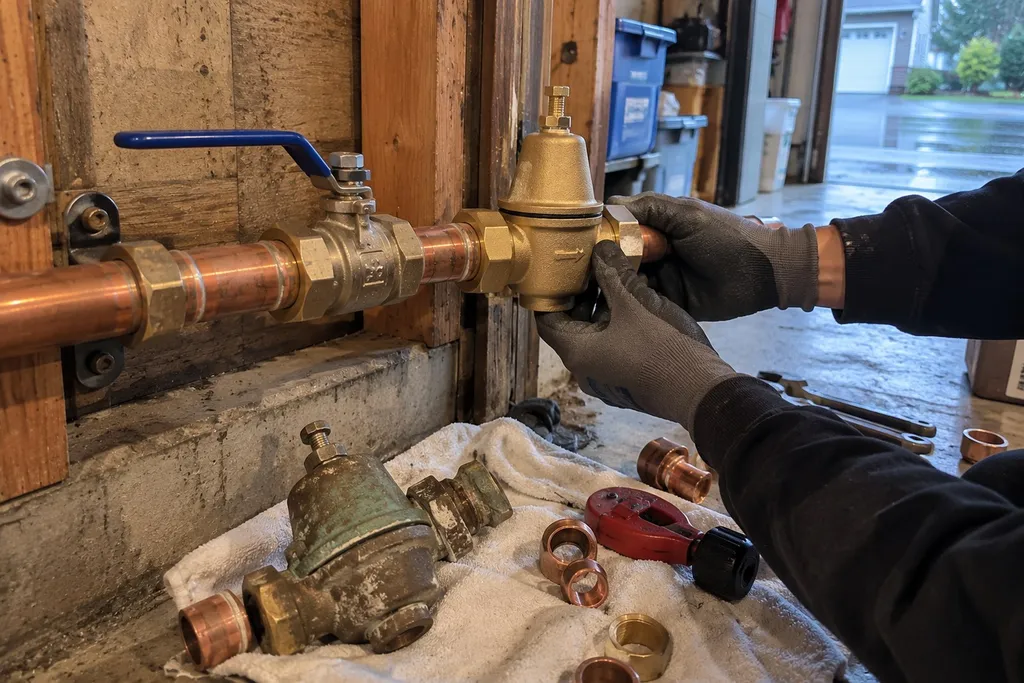
Once you know the regulator is worn out, the job itself is pretty simple. It's one valve on one pipe. Most of the work is getting to it, swapping it cleanly, and making sure the new one holds steady. Here's what to expect, so nothing about the day surprises you.
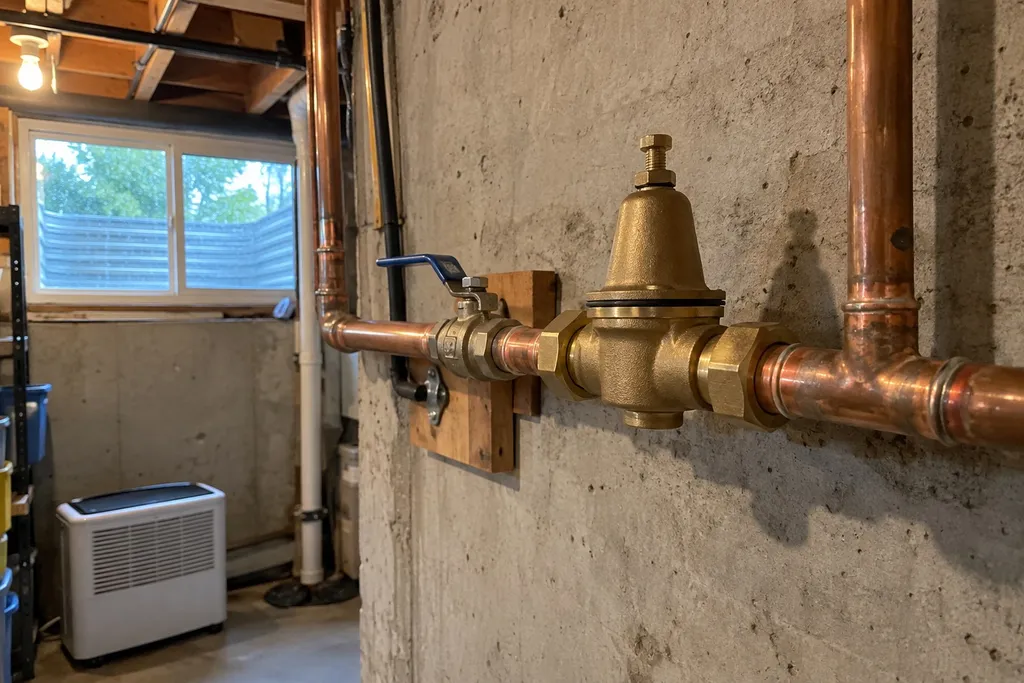
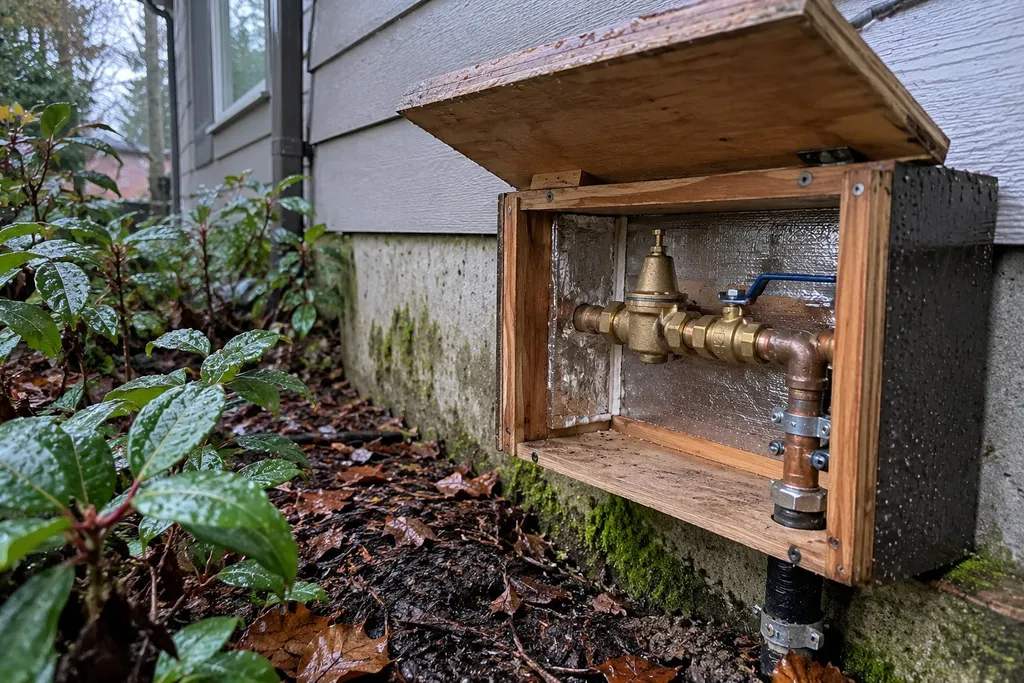
First, find where it lives. The regulator is usually close to where your main water line comes into the house. That might be in the garage, a basement, a crawlspace, or near the outside wall by a hose spigot. In some homes it sits outside, near the meter. If you know where it is, great. If you don't, that's fine too. Just clear a path to the spot where the main line enters so it's easy to reach.
Next, the water goes off. The whole house will be without water while the valve is out. Before work starts, fill a pot for cooking, run the dishwasher early, and hold off on laundry. On a simple swap, the water is often off for only part of the visit. It can take longer if the old fittings fight back.
Here's what a typical replacement looks like, step by step:
- The main water is shut off, and a faucet is opened to drain the pressure out of the lines.
- The old regulator is taken out. Some unscrew at fittings on each side. Others have to be cut out of the pipe.
- The new valve goes in facing the right way. Regulators have an arrow showing which way the water flows, and putting one in backward means it won't work.
- The water is turned back on slowly, so air and loose grit don't slam through the pipes all at once.
- The pressure is set and read on a gauge, and every connection is checked for drips.
Some jobs take more work. Older homes may have corroded fittings that won't come apart cleanly, so a short section of pipe gets replaced along with the valve. A regulator tucked into a tight crawlspace or buried in a meter box takes longer to reach. If there's no shutoff near the regulator, adding one is part of doing the job right, as covered above. None of this is a reason to worry. It's just why two regulator jobs don't always take the same amount of time.
When the water comes back on, your faucets may sputter and spit air for a minute. The water might look cloudy at first, too. That's just air in the lines, and it clears on its own if you let the faucets run for a bit. Check your aerators the next day, since grit stirred up during the work can catch in those little screens.
After that, you should notice a difference. The banging gets quieter. Toilets stop refilling on their own. The shower feels the same in the morning as it does late at night. That steady feel is the whole point.
Give it a few days, then test it yourself. Use the same spigot gauge from before, and leave it on overnight if yours has a high-reading needle. A good regulator should show close to the same number every time you look. If it creeps up again, something isn't right, and it's worth a call back while the work is still fresh.
Water Pressure Regulator Replacement
Is This an Emergency or Can It Wait
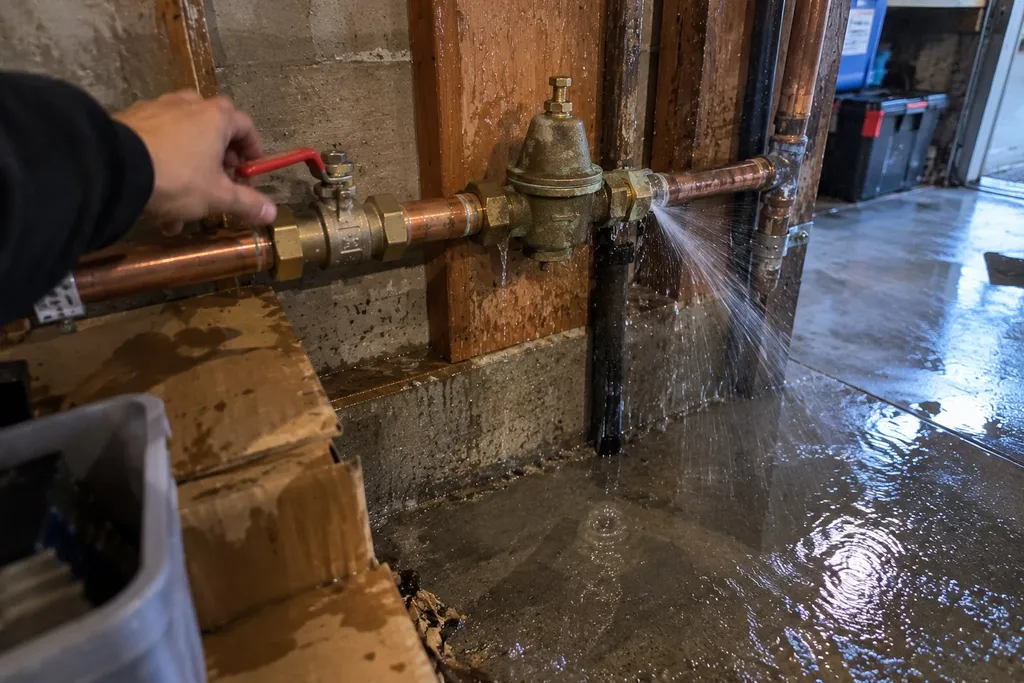
Most of the time, a worn regulator isn't an emergency. It's a slow problem. It wears on your home a little more each day, but it rarely floods a room overnight. That means you usually have time to test, think it over, and book a visit that works for your schedule.
There are a few times when you shouldn't wait, though. Call for help the same day if you notice any of these:
- Water is leaking from the regulator itself, or from the pipe right next to it.
- A supply line under a sink or behind a toilet has burst or is spraying.
- Your water heater's relief valve is letting out a steady stream, not just a drip now and then.
- Your water has dropped to almost nothing across the whole house, and the main shutoff is fully open.
- Your gauge reads very high and the pipes bang hard every time a faucet shuts off.
If water is leaking, turn off the main shutoff first. That stops the damage while you wait. If you don't know where your main shutoff is, now's a good time to find it, before you need it in a hurry.
Other signs can wait a few days. Steady pressure that's a bit high, a toilet that refills once in a while, or a slow drip at one fixture are all worth fixing. They're just not reasons to pay for an after-hours visit. Keep your gauge on the spigot, watch the number, and call during the week.
Here's the honest catch. Waiting a few days is fine. Waiting a few months usually isn't. A regulator that's slipping doesn't fix itself. The longer high pressure runs through your pipes, the more you'll spend on toilet parts, faucet cartridges, and supply lines down the road. Saving the visit now can mean paying for more repairs later.
If you're not sure which group you're in, just call and tell us what you're seeing. We'll help you figure out if it needs someone today or if it can wait for a regular visit. We won't push you into an emergency call you don't need. If it can wait, we'll tell you.
Bigfoot Plumbing is a family-owned shop based on Historic Columbia River Hwy in Troutdale. We're licensed, bonded, and insured in Oregon (CCB# 257405), and Kevin Brain brings 20 years of plumbing experience to the job. Emergency plumbing is available when you really need it. Veterans, first responders, and seniors get 10% off. We treat every home like our own, and that includes giving you a straight answer about your regulator.
Common Questions
Frequently Asked Questions
Is 100 psi of water pressure normal for my house?
+
No, 100 psi is too high for a home plumbing system. Oregon's plumbing code sets a limit on safe household pressure, and most homes run well in a moderate middle range. A reading that high usually means your regulator has failed or is missing. Left alone, that pressure strains toilet valves, faucet cartridges, and supply lines every day until something gives out.
Do I need a plumber to adjust my water pressure, or can I do it myself?
+
You can try adjusting it yourself if your pressure is steady but just a bit off from where you want it. Most regulators have an adjustment screw on top for small changes. Make small turns and recheck with a gauge each time. But if your pressure swings around or keeps creeping up no matter what you do, the parts inside are worn out, and adjusting won't fix that. At that point it's time to call a plumber for a replacement.
Troutdale, Oregon
Related Troutdale Services
Need Plumbing Help?
Get Help Today from
Bigfoot Plumbing
Troutdale, Fairview, Wood Village, Gresham and the homes east toward Corbett. Call the Troutdale number and talk to someone who does this for a living.
10% Off for Veterans · First Responders · Seniors