
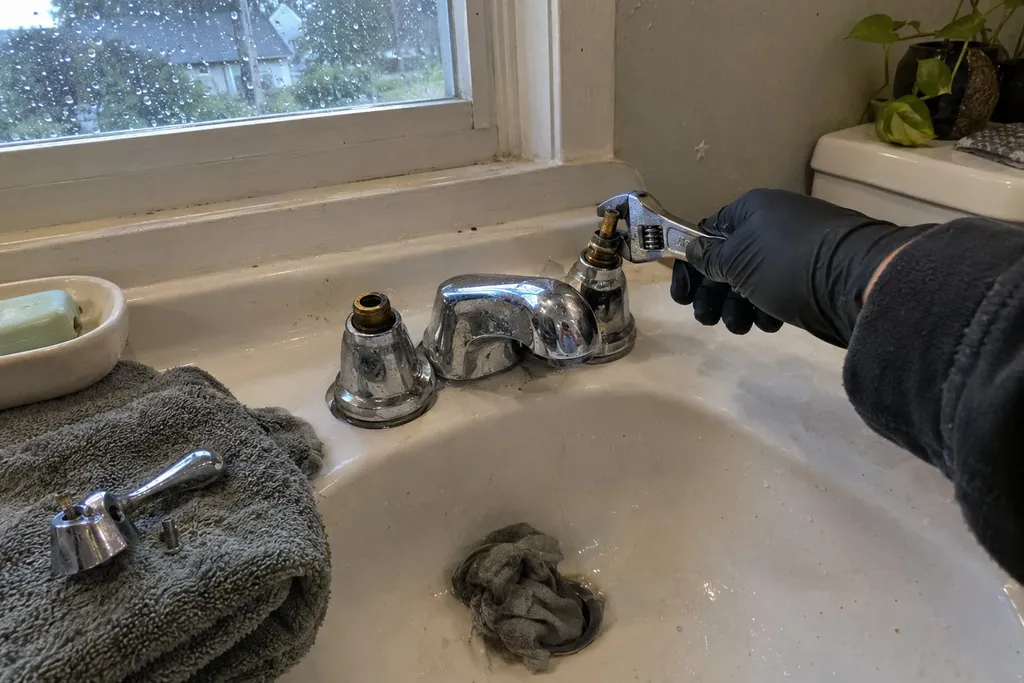
Faucet Repair
Faucet Repair in Troutdale: Know If It's a Quick Fix or a Call
Honest, reliable plumbing for Troutdale, Oregon & the surrounding Pacific Northwest
CCB# 257405
Licensed · Bonded · Insured
20 Yrs
Experience
Family
Owned & Operated
Troutdale, OR
East County Crew
What's Covered on This Page
- Signs a Faucet Needs Professional Repair
- When You Can Fix It Yourself First
- Repair or Replace: How the Decision Gets Made
- Why Faucets Wear Out in Troutdale Homes
- What Happens During a Faucet Repair Visit
- Is it normal for faucet repair to take more than one visit?
- Can I keep using the faucet while I wait for repair?
- Why does my faucet drip worse after I tighten the handle?
Need Faucet repair?
Faucet Repair
Signs a Faucet Needs Professional Repair
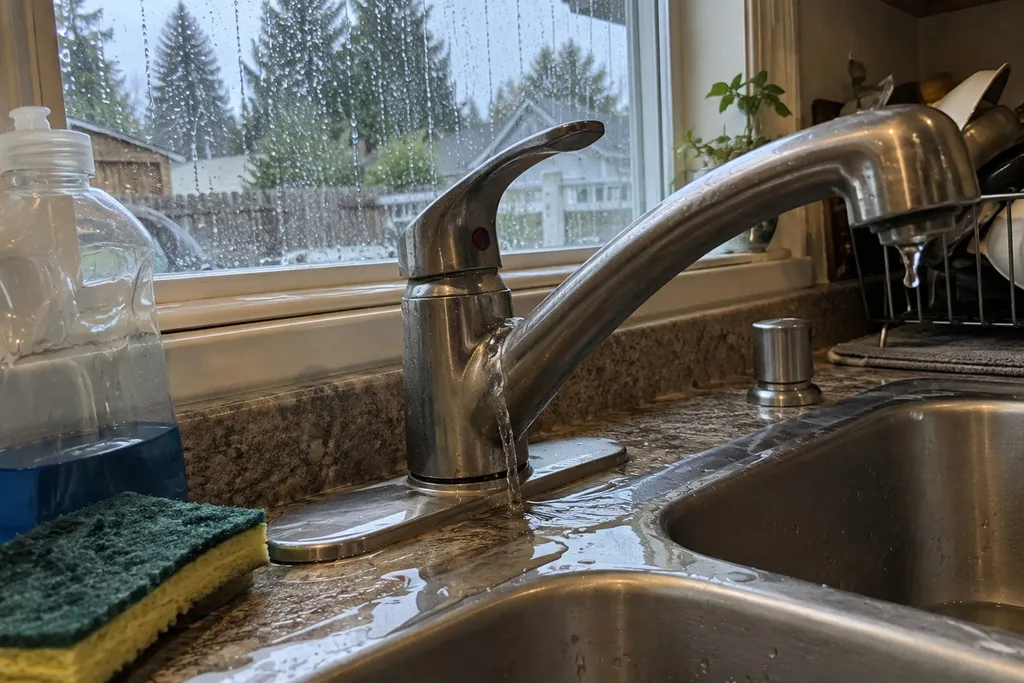
A faucet usually tells you something's wrong well before it fails. The trick is knowing which signs mean tighten it and move on, and which mean a part inside has worn out. Here's what to watch for.
- A drip that keeps coming back. If you shut the handle firmly and it still drips, a washer, O-ring, seal, or cartridge has likely worn down. Cranking the handle harder won't fix it.
- Water around the base of the spout. When water seeps out where the spout meets the sink, an internal seal has usually failed. That water can work its way into the cabinet.
- A handle that's stiff, loose, or wobbly. A handle that grinds or won't stay put often points to a worn cartridge or loose parts underneath.
- Hot and cold that won't mix right. If the temperature jumps around, the valve inside may be wearing out.
- Squealing or chattering when the water runs. Noise at the faucet can come from loose or worn parts inside it.
- Dampness, stains, or a musty smell under the sink. This one matters most, because the leak is hidden and it doesn't stop on its own.
Not every faucet problem needs a plumber. If only one faucet has weak or sputtering flow, unscrew the aerator at the tip of the spout and rinse out the grit. That fixes it more often than you'd think. A handle that's only a little loose can often be snugged up by tightening the set screw under the cap. If the problem goes away and stays gone, you're done. Don't call us for that.
It's time for faucet repair when the drip comes back after you've tightened things, when water shows up anywhere it shouldn't, or when you've opened the faucet and can't tell which part is worn. Parts vary a lot from one faucet to the next. A seal or cartridge that's even a little off won't stop the leak, and forcing old fittings can crack them.
Treat water under the sink as the urgent sign. A dripping spout is annoying, but you can see it. A slow leak inside the cabinet can soak the floor for weeks before you notice. If the cabinet floor is soft, swollen, or stained, turn off the shutoff valves under the sink and get it looked at. If the valves won't turn or they're crusty and leaking themselves, mention that when you call. They're part of the same fix. If you can't find where the water's coming from, our leak detection service can track it down.
One more check. If every faucet in the house runs weak, not just one, the faucet probably isn't the problem. That's a whole-house issue, and our low water pressure repair page covers it.
Owner Kevin Brain has spent 20 years in plumbing, and his advice is the same at every sink. A worn part is a small fix if you deal with it early. If a new cartridge or seal is all your faucet needs, that's what we'll tell you.
Faucet Repair
When You Can Fix It Yourself First
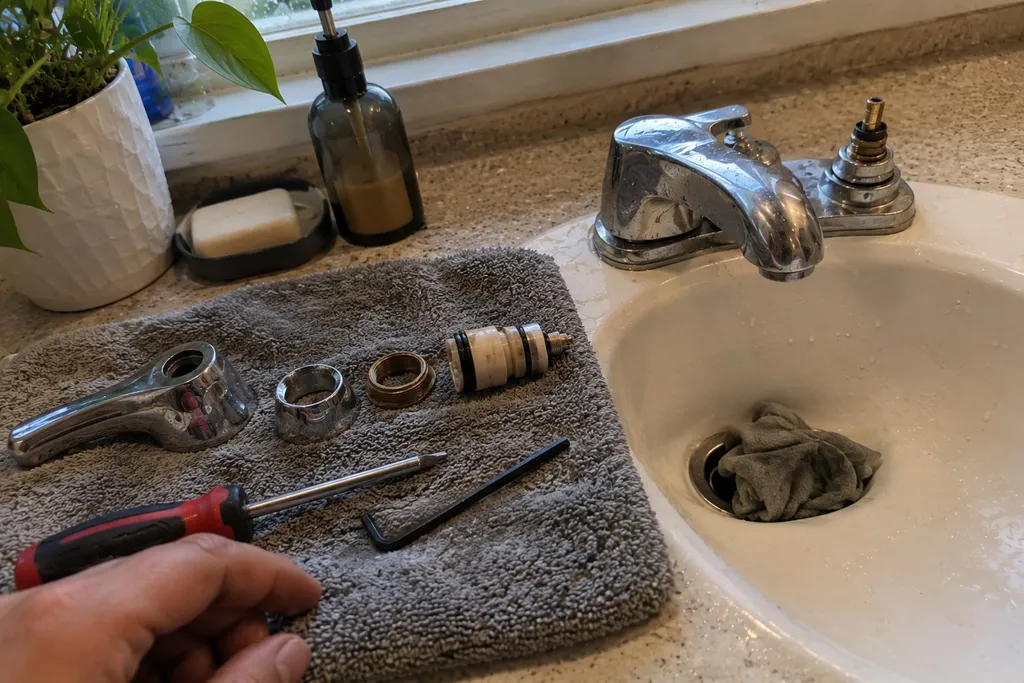
If you're handy and the leak is coming from the faucet itself, you may be able to fix it yourself. Lots of homeowners swap a washer or a cartridge on a Saturday morning and never think about it again. Beyond the quick aerator and set screw fixes above, here's what's fair to try on your own and where it's smart to stop.
Set yourself up before you take anything apart. A little prep saves most of the headaches.
- Turn off both shutoff valves under the sink. Then open the faucet to let out the water left in the line.
- Put the stopper in the drain or stuff a rag in it. Tiny screws love to roll right down the drain.
- Take a photo with your phone at each step. Lay the parts out on a towel in the order they came off.
- Look for a brand name on the faucet body or handle. Knowing the brand makes finding the right part a lot easier.
Next, figure out what kind of faucet you have. That tells you which part has likely worn out.
- Two separate handles that you turn several times to shut off are often compression faucets. These use rubber washers that wear out over time. A new washer is cheap and easy to swap.
- A single handle, or handles that turn only a short way, usually means a cartridge, a ball, or a ceramic disc inside. The repair here is usually a new cartridge or a seal kit made for that exact faucet.
- A kitchen faucet that leaks only where the spout swivels often just needs new O-rings around the base of the spout.
Take the old part with you to the hardware store. Cartridges and seals can look alike and still be a little different in size or shape. A part that's even slightly off won't seal, and you'll be right back where you started.
Know when to stop. Put the tools down and call a plumber if any of these happen:
- The shutoff valves under the sink won't turn, or they start dripping when you touch them. Don't force them. Old valves can snap.
- A nut, screw, or cartridge won't budge even with steady pressure. Forcing it can crack the faucet body.
- You can't find a matching part, or you aren't sure the one you found is right.
- The faucet still leaks after you put it back together.
- The water is coming from under the sink, not the faucet itself. That's a different problem from a worn washer.
Stopping partway isn't a failure. It's the smart move. Leave the valves off, bag up the parts you removed, and keep your photos. When you call, tell us what you've already tried and what you found. That helps us get to the real problem faster.
If your fix works and the drip stays gone, that's a win. You don't need us, and we're glad you saved the money. We'd much rather earn your trust on an honest answer than sell you a repair you could handle yourself.
Faucet Repair
Repair or Replace: How the Decision Gets Made
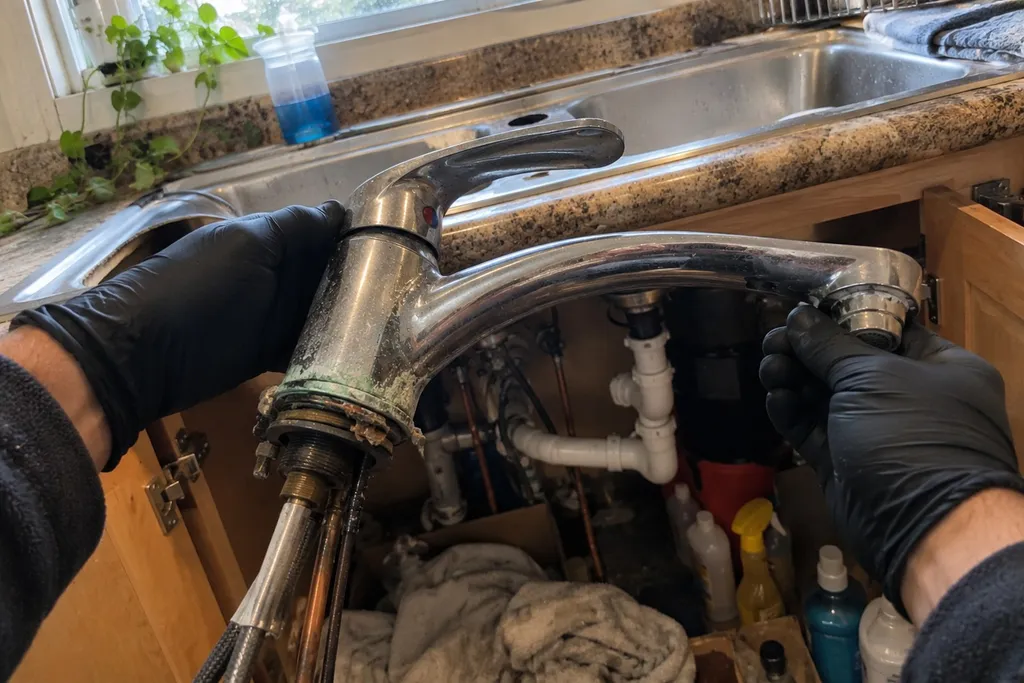
Most of the time, a leaky faucet just needs a new part, not a whole new faucet. The real question is whether the faucet around that worn part is still in good shape. If it is, repair is usually the smart, cheaper choice. If it isn't, putting new parts into it is like putting new tires on a car with a cracked frame.
Repair usually makes sense when:
- The faucet body is solid, with no cracks, deep corrosion, or pitting.
- Only one thing is wrong, like a drip or a stiff handle.
- You can still get the right cartridge, washer, or seal kit for that faucet.
- You like how the faucet looks and works.
Replacement starts to make more sense when:
- The faucet body itself is cracked or leaking, not just a part inside it.
- Parts for that model are hard to find or no longer made.
- It has several problems at once, like a drip, a leak at the base, and a handle that won't hold.
- Heavy buildup or corrosion has locked parts in place, so taking them out could break the faucet.
- It's been repaired more than once and keeps failing.
- You were already planning to update the sink or counter.
Age alone isn't a reason to toss a faucet. A well-made older faucet with one worn cartridge can keep working for a long time after a simple repair. A newer, cheaper faucet with a cracked body can't be saved. It's the condition that counts, not the birthday.
Here's how cost works in general. A repair is mostly labor plus a small part. A replacement is the price of the new faucet plus the labor to take out the old one and put in the new one. The faucet you choose can swing that total a lot, so it's worth picking one before the work starts.
A few things can push either job up:
- Tight space under the sink, like behind a garbage disposal or deep in a corner cabinet.
- Shutoff valves or supply lines that are stuck, crusty, or leaking and need to be swapped too.
- Nuts and fittings that are seized and take extra time to free up safely.
- Water damage in the cabinet that needs a closer look.
Before you say yes to any plumber, ours included, it's fair to ask a few things. What part failed, and can I see it? Can this faucet be repaired, and if not, why? Is the price for the faucet, the labor, or both? Will the shutoff valves or supply lines need work too?
A good plumber should answer those plainly. We've been at this for 20 years, and we'd rather fix the faucet you have than sell you one you don't need. When replacing it really is the better deal, we'll explain why in plain words and let you make the call.
Faucet Repair
Why Faucets Wear Out in Troutdale Homes
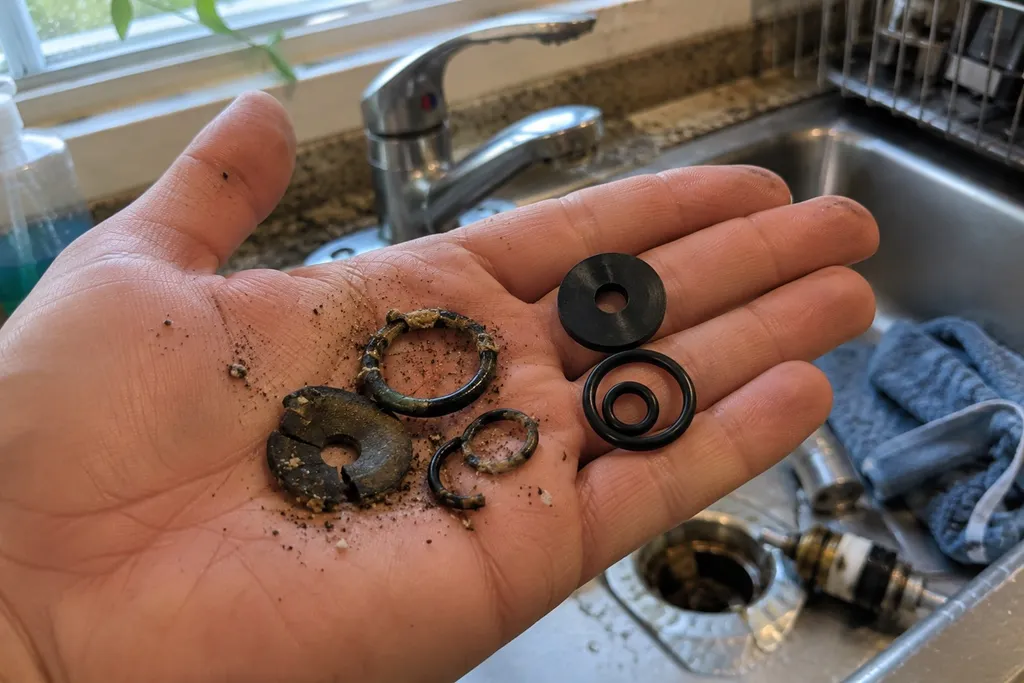
Faucets don't fail all at once. They wear down a little every time you turn them on and off, and a typical kitchen faucet gets used many times a day. Most of what wears them out is easy to understand, and some of it is easy to slow down. Small parts wear out first, and catching them early keeps a repair small.
Here's what's working against the parts inside your faucet.
- Plain old use. Rubber washers, O-rings, and seals get squeezed and released every time the handle moves. Over the years they harden, flatten, or crack, and then they stop sealing.
- Minerals in the water. Water carries dissolved minerals that leave crusty buildup on aerators, cartridges, and valve seats. That buildup can scratch seals and make handles stiff.
- Grit in the lines. Sand or bits of sediment can get stirred up after nearby water line work. They catch in the aerator and can nick the surfaces a cartridge needs to seal.
- Cranking the handle shut. Turning a handle extra hard to stop a drip crushes the washer or strains the cartridge. It might quiet the drip for a day, but it wears the part out faster.
- High water pressure. When pressure coming into the house runs too high, every seal in every fixture works harder than it should.
That last one is worth a closer look. If more than one faucet drips, toilets run on their own, or you hear pipes bang when a tap shuts off, the faucets may not be the real problem. Pressure could be wearing them out from the inside. A failing pressure regulator can cause that, and our water pressure regulator replacement page explains what's involved.
You can't stop wear completely, but a few simple habits help a lot.
- Turn handles off gently. Snug is enough. If it won't stop dripping with normal pressure, a part is worn.
- Rinse the aerator every few months. Unscrew it, clear out the grit, and screw it back on.
- Wipe away crusty buildup around the spout and handle base before it hardens.
- Peek under the sink now and then. Look for drips, stains, or a soft cabinet floor.
- Fix a drip when you first notice it, not after it's been going for months.
That last habit matters most. A drip that's left alone keeps wearing the parts around it, and minerals keep building up where the water seeps through. A faucet that needed one cartridge in the spring can need more work by winter. Dealing with it early is the cheapest way to keep the faucet you have.
Bigfoot Plumbing is family owned and based right here on the Historic Columbia River Highway in Troutdale. Kevin Brain has spent 20 years in plumbing, and we're licensed, bonded, and insured in Oregon (CCB# 257405). When you call, we'll tell you straight whether your faucet needs a simple part or something more, and we won't push work you don't need.
Faucet Repair
What Happens During a Faucet Repair Visit
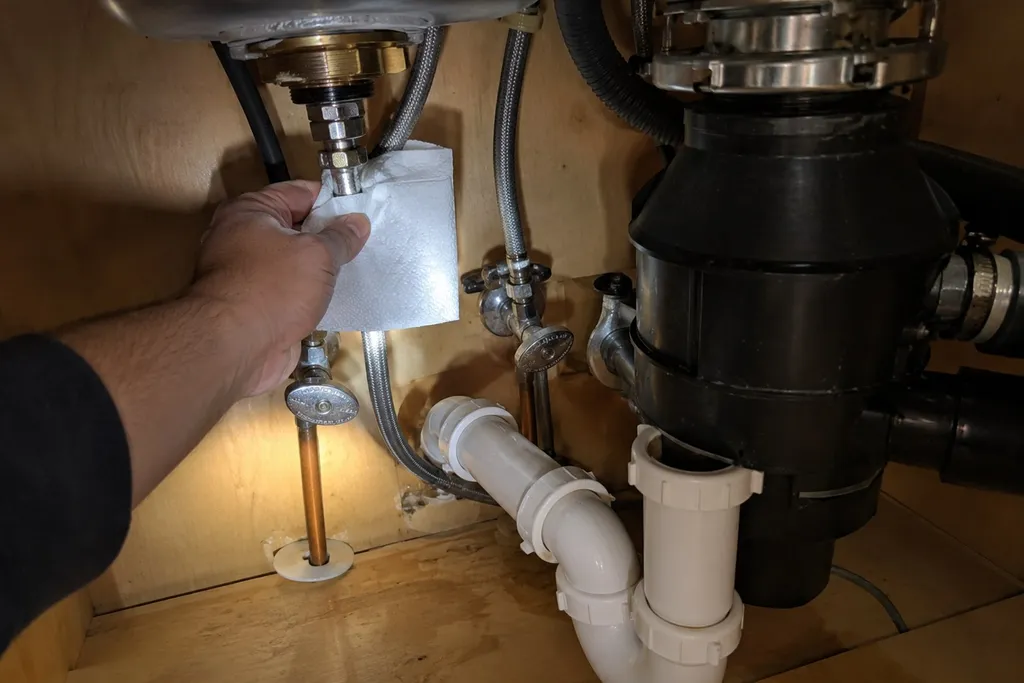
A faucet repair is usually a small, tidy job. Most of the work is finding the exact worn part, swapping it, and testing that the leak is really gone. Knowing what a good repair looks like helps you get ready and helps you tell when the job was done right.
A few minutes of prep makes things go smoother and can save time on the clock.
- Empty the cabinet under the sink so there's room to reach the shutoff valves and supply lines.
- Wipe up any standing water and point out stains or soft spots you've noticed.
- Find the brand name on the faucet if you can, and any paperwork or box you kept from when it was installed.
- Have your photos and any parts handy if you already started taking it apart.
- Make sure pets and kids have somewhere else to hang out for a bit.
A solid faucet repair generally follows the same steps, whatever the brand.
- Water to that faucet gets shut off at the valves under the sink, and the line is drained.
- The handle and trim come off, and the faucet is opened up to reach the washer, cartridge, ball, or disc inside.
- The worn part is pulled out and matched to a new one made for that faucet. Close enough doesn't count.
- The seat and inside surfaces get checked for mineral crust or scratches, since a new part won't seal against a rough surface.
- Everything goes back together snug, not cranked down.
- The water comes back on slowly, and the faucet gets tested on hot, cold, and everything in between.
Testing is the part people don't see, and it matters most. A good test means watching the spout tip for drips, checking the base of the spout, and looking at every connection under the sink while the water runs. If the shutoff valves were stiff or the supply lines looked tired, that's the time to talk about it, not after you find a puddle.
Ask to see the old part. A flattened washer or a cartridge with a cracked seal is easy to spot once it's in your hand. It also shows you the repair matched the problem.
How long it takes depends mostly on the faucet and the space. A simple washer or cartridge swap on an open bathroom sink can be quick. A kitchen faucet tucked behind a garbage disposal, or one with parts locked in place by mineral buildup, takes longer. Freeing old parts gently is how you keep from cracking the faucet body.
If the faucet turns out to be past saving once it's opened up, the repair-or-replace choice above comes back into play. You should get a plain answer and the chance to decide before any new faucet goes in.
That's really all there is to it. When a faucet gets the right part and a careful test, it should go back to being something you don't have to think about.
Common Questions
Frequently Asked Questions
Is it normal for faucet repair to take more than one visit?
+
Usually not, but it can happen if a part has to be special-ordered. Most faucet repairs are finished in a single visit once the worn part is identified and matched. Mineral buildup or seized nuts can add time to the same visit instead of requiring a return trip.
Can I keep using the faucet while I wait for repair?
+
You can, but watch it closely if water is leaking under the sink instead of just dripping from the spout. A drip from the spout tip is annoying but visible, so you'll notice it. A hidden leak under the sink can soak the cabinet floor before you see it, so it's worth checking for dampness or stains daily until it's fixed.
Why does my faucet drip worse after I tighten the handle?
+
Cranking the handle shut wears the part out faster instead of fixing the drip. Forcing it crushes the washer or strains the cartridge inside, which can quiet the drip for a day but damages the part further. Turning the handle off gently, just snug, is better for the faucet long term.
Troutdale, Oregon
Related Troutdale Services
Need Plumbing Help?
Get Help Today from
Bigfoot Plumbing
Troutdale, Fairview, Wood Village, Gresham and the homes east toward Corbett. Call the Troutdale number and talk to someone who does this for a living.
10% Off for Veterans · First Responders · Seniors