
Whole-House Water Filtration
Whole-House Water Filtration Installation in Troutdale: Pick the Right System for Your Water Source
Honest, reliable plumbing for Troutdale, Oregon & the surrounding Pacific Northwest
CCB# 257405
Licensed · Bonded · Insured
20 Yrs
Experience
Family
Owned & Operated
Troutdale, OR
East County Crew
What's Covered on This Page
- Start With Your Water Source, Not a Generic Symptom List
- Whole-House Filtration vs. Reverse Osmosis vs. Softening: Match the System to the Problem
- When a Whole-House System Is Not the Right Call
- What Happens During Installation and Why Licensing Matters
- What Drives the Cost of a Whole-House System
- What are the downsides of putting in a whole-house filter?
- Does a whole-house filter work for water with a lot of sediment, like after heavy rain?
- How do I know if my water pressure can handle a whole-house filter?
Need Whole-house water filtration installation?
Whole-House Water Filtration
Start With Your Water Source, Not a Generic Symptom List
A lot of filter shopping starts with a symptom. The water smells funny, there's a ring in the toilet, or the coffee tastes off. Then you find a list online that says "bad smell means buy this." The trouble is that the same smell can come from very different causes. A filter that fixes one can do nothing for the other.
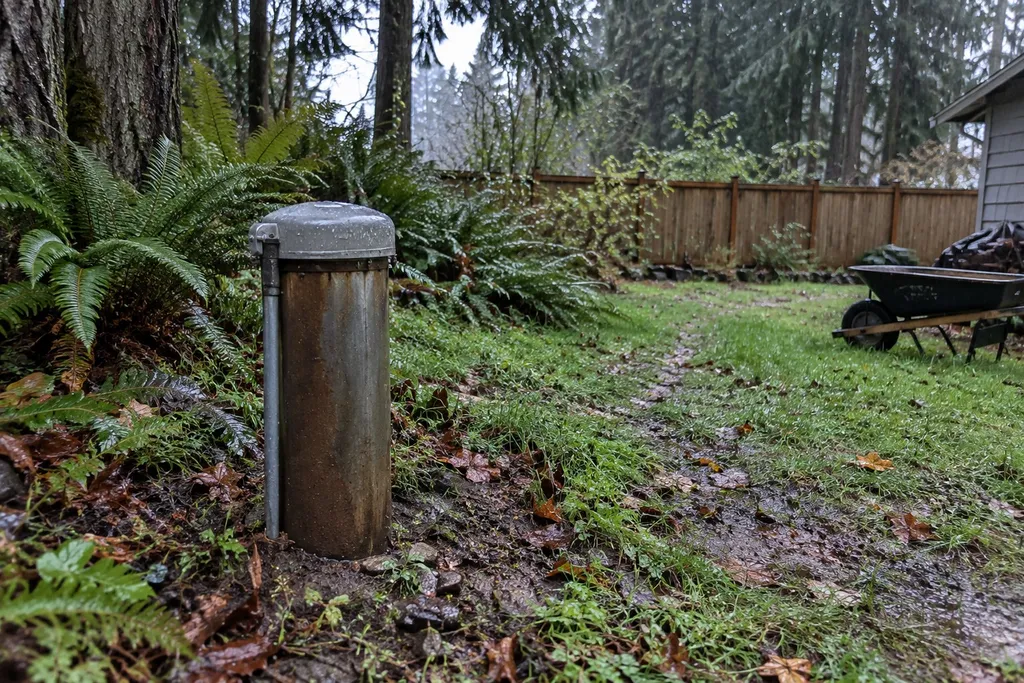
So the first question we'd ask you isn't "what's wrong with your water?" It's "where does your water come from?" In and around Troutdale, some homes are hooked up to city water and others run on a private well. Those two sources need different things from a filter.
If you're on city water, your water has already been treated before it reaches your house. That's good news. It also means the common complaints are usually about what the treatment leaves behind or what the water picks up on the way. These include:
- A chlorine taste or smell from the disinfectant the utility adds
- Bits of sediment or rust stirred up from older pipes and water mains
- Hard water spots on glass shower doors and fixtures
Your water provider puts out a yearly water quality report. It's free, and it's a good place to start. It tells you what's in the water when it leaves the plant. It won't tell you what happens inside your own pipes, though.
If you're on a private well, nobody tests or treats that water but you. That changes the picture a lot. Well water can carry iron that leaves orange stains, manganese that leaves dark ones, a rotten egg smell, heavy hardness, or grit after a big rain. Some of those are just a nuisance. Others need a real lab test before anyone picks equipment.
Here's the part that trips people up. A standard whole-house filter cleans up taste, odor, and sediment. It isn't the same thing as a system that kills germs. If a well test shows bacteria, that's a different problem. A carbon filter alone won't solve it, and we'll tell you so straight.
Say two neighbors both notice their water smells a little off. One is on city water and is picking up chlorine. The other is on a well and has sulfur in the water. On a symptom list, they'd look like the same problem. In real life, they need different setups. One might be happy with a simple carbon system. The other might need something sized and staged for well water.
That's why we start with your source and a test, not a sales sheet. Sometimes the answer is a full whole-house system. Sometimes you only care about what you drink, and a reverse osmosis system under the kitchen sink makes more sense. And sometimes the test shows your water is fine, and you don't need to buy anything at all.
Knowing your source first keeps you from paying for a filter that targets the wrong thing. It also means whatever we put in fixes what's bugging you.
Whole-House Water Filtration
Whole-House Filtration vs. Reverse Osmosis vs. Softening: Match the System to the Problem
Once you know your source and what's in your water, the choice gets a lot simpler. Each of these three systems does one main job. None of them does all three jobs well. Most mix-ups happen when someone buys one system expecting it to fix a problem that belongs to another.
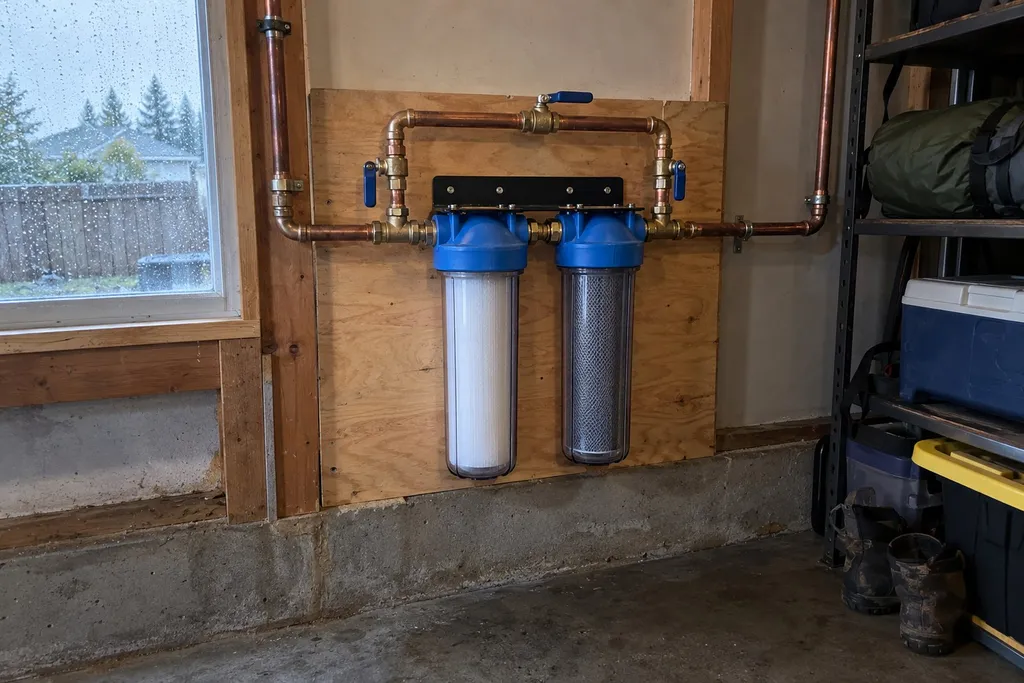
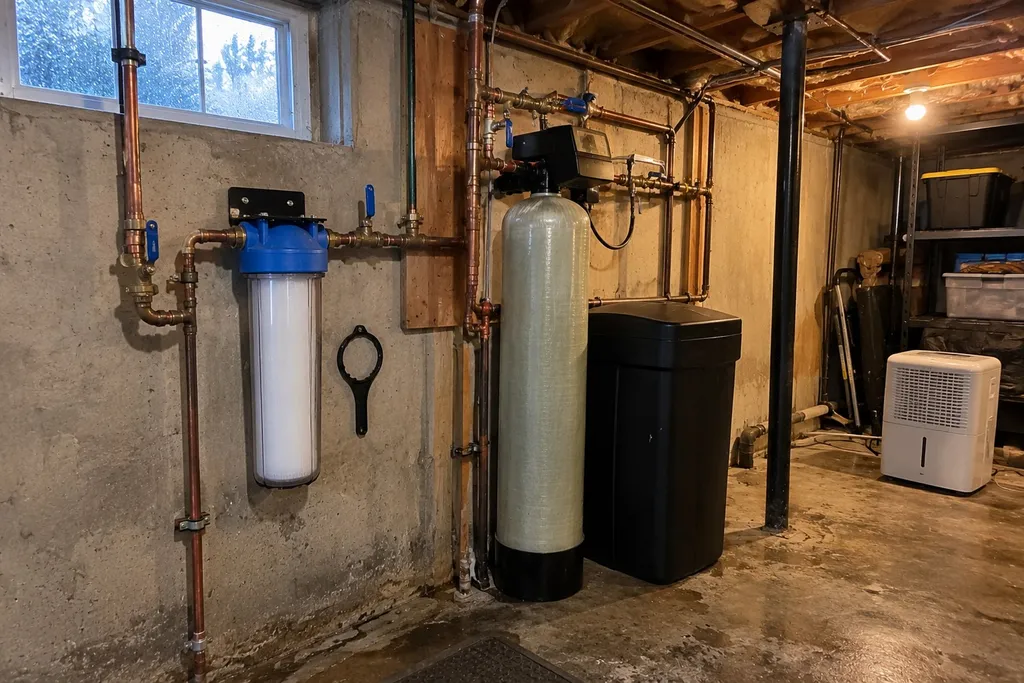
A whole-house filter goes on the main water line where it comes into your home. Every tap, shower, and appliance gets filtered water. Its main jobs are catching sediment and grit and cutting chlorine taste and smell. Some setups also help with certain odors. What it won't do is pull out the dissolved minerals that cause hard water. Your shower door can still spot up with a good whole-house filter in place.
A reverse osmosis system, or RO, usually sits under the kitchen sink and feeds its own small faucet. It pushes water through a very fine filter that removes far more dissolved stuff than a standard filter can. That makes it great for drinking and cooking water. It's slow, though, and it sends some water down the drain as it works. That's why it's almost always used at one sink and not for the whole house.
A water softener is a different machine with a different job. It takes out the hardness minerals, calcium and magnesium, that leave white crust on faucets and scale inside water heaters. It won't fix a chlorine taste, and it won't catch sediment. If your main complaint is hard water, a softener is the tool for that. A carbon filter isn't. A softener isn't a service we list, so if hardness turns out to be your real problem, we'll tell you that straight instead of selling you a filter that won't help.
Here's a quick way to match what's bugging you to the right kind of system:
- Chlorine taste or smell at every tap: whole-house carbon filtration
- Sand, grit, or rusty bits in the water: whole-house sediment filtration
- You mostly care about what you drink and cook with: reverse osmosis at the kitchen sink
- White crust, scale, and spotty dishes: a water softener
- Bacteria on a well test: a disinfection system, which none of these three is on its own
Lots of homes end up with more than one. A common pairing is a whole-house filter to handle sediment and chlorine for the whole home, plus RO at the kitchen for the cleanest drinking water. When systems are combined, the order matters. A sediment filter up front catches grit before it reaches finer equipment, which keeps that equipment working longer and saves you money on replacement parts.
Picture a family on city water. They're tired of the chlorine smell in the shower, and they also want better-tasting water for the kids' bottles. An RO system alone would fix the drinking water but leave the shower smelling the same. A whole-house filter alone would fix the shower but might not get the drinking water as clean as they'd like. Knowing what each one does lets them pay for exactly what they need, and nothing they don't.
That's the whole point of matching the system to the problem. You buy the right equipment once and skip the trial and error.
Whole-House Water Filtration
When a Whole-House System Is Not the Right Call
Sometimes the honest answer is no. A whole-house filter is a good tool, but it only fixes problems that come in through your main line. If the problem starts somewhere else, a filter won't touch it, no matter how good it is.
Here's the key thing to know. The filter sits where water first enters your home. Anything that gets into your water after that point never passes through it. That rules out a lot of common complaints.
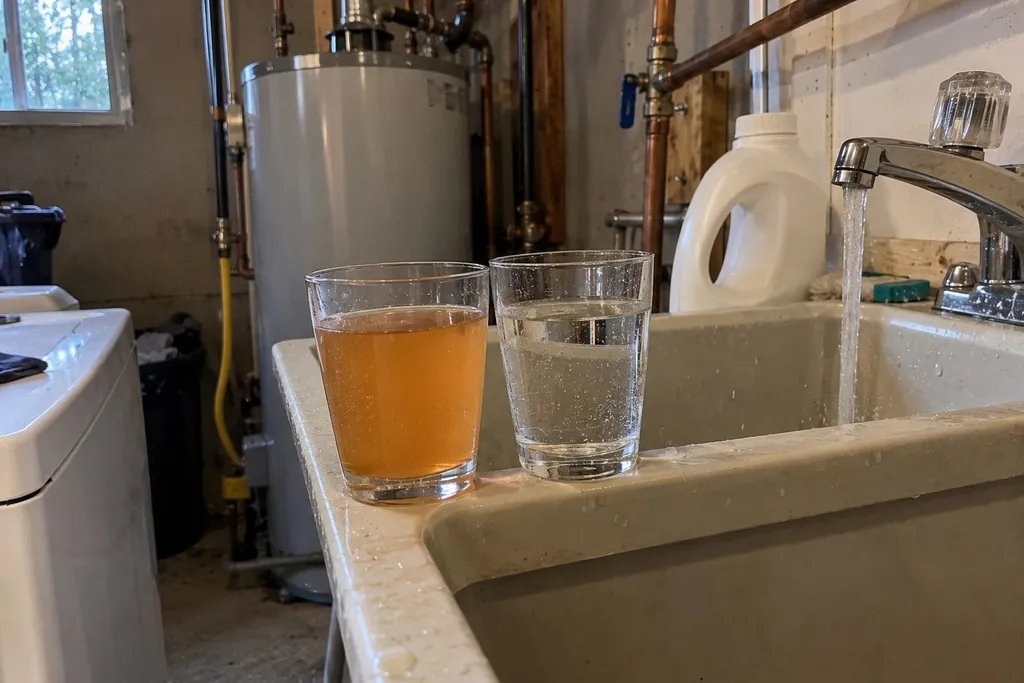
- The problem only shows up in hot water. If cold water is fine but hot water smells like rotten eggs or comes out rusty, look at the water heater first. A filter on the main line can't fix what's happening inside the tank.
- Rusty water after it sits overnight, or only at some taps. That often points to old, corroding pipes inside your walls. The rust gets in after the filter, so you'd keep seeing it. Repiping fixes the cause.
- A bad smell from one sink or tub drain. If the water from the tap smells fine but the drain doesn't, that's usually a drain issue, not a water issue.
- Your water pressure is already weak. Any filter slows water down a little, and more so as the cartridge fills up. If your showers already trickle, get the pressure problem fixed first. Adding a filter on top can make it worse.
A quick test you can do yourself: run cold water from the kitchen tap, then hot. Then try a tap at the other end of the house. If the problem only shows up in one place, or only in hot water, a whole-house filter probably isn't your answer.
There are a few other times we'd tell you to hold off.
- Your test came back clean. If your water already looks, smells, and tastes fine, you don't need to fix it.
- You only care about drinking water. A kitchen RO setup, covered above, costs less and does that job better.
- You're renting or moving soon. The system stays with the house. Talk to your landlord, or think about whether you'll be there long enough to get your money's worth.
- You won't keep up with cartridge changes. A filter that's past its life stops doing its job and can choke your water flow. If that upkeep doesn't fit your life, it's better to know now.
Picture a homeowner whose hot shower smells like sulfur but whose kitchen water tastes fine. It would be easy to sell them a big filter. It also wouldn't fix anything. The smart move is a look at the water heater, and that costs a lot less.
We'd rather send you home with the right answer than the biggest ticket. If a whole-house system isn't the fix, we'll tell you what is, even if it's a small repair or nothing at all.
Whole-House Water Filtration
What Happens During Installation and Why Licensing Matters
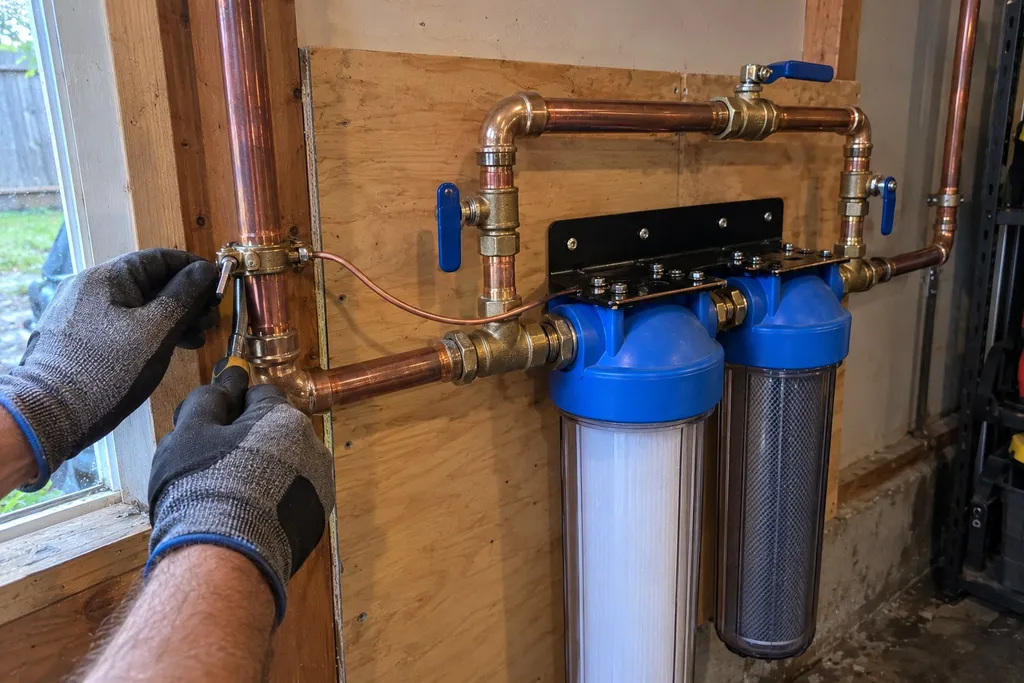
A whole-house filter isn't a gadget you screw onto a faucet. It gets cut into your main water line, the pipe that feeds your whole home. That's real plumbing work. If it's done right, you'll hardly think about it. If it's done wrong, you can end up with a slow leak, weak pressure, or a system you can't service.
A careful installation usually covers these steps:
- Finding the main shutoff and turning off the water to the house.
- Picking a spot on the main line after the shutoff and before the water heater, so hot and cold water both get filtered.
- Adding a bypass valve. If a filter ever needs work, you can keep water running to the house while it's offline.
- Mounting the filter housings firmly, with enough room underneath to swap cartridges without a fight.
- Keeping your electrical ground connected. In some homes, the metal water pipe is part of the electrical grounding. Cutting in plastic filter parts can break that path unless a jumper wire bridges it.
- Flushing the new cartridges, turning the water back on slowly, and checking every joint for drips.
- Running a few taps to confirm the pressure still feels right.
Most of these steps are about the years after install day. A filter tucked behind a water heater with no room to reach it is a filter nobody changes. A missing bypass means a cartridge swap shuts off water to the whole house.
Cost depends on your home and your water. Here's what tends to move the price up or down:
- How easy your main line is to reach, in a garage, a crawlspace, or behind a finished wall.
- The size and type of your main pipe.
- How many filter stages your water needs. Well water often needs more than city water.
- Whether extra work is needed first, like a new shutoff valve or a pressure fix.
- The equipment itself and what replacement cartridges will cost over time.
Before you hire anyone, ask a few simple questions. Is the quote for equipment and labor together? Will there be a bypass valve? What do replacement cartridges cost, and how often will I need them? Does my job need a permit? Straight answers to these tell you a lot about who you're dealing with.
Licensing matters here because the main line is the pipe that matters most. In Oregon, contractors are licensed through the Construction Contractors Board, and you can look up any contractor's CCB number before you let them work on your home. A license, a bond, and insurance mean that if something goes wrong, you aren't stuck holding the bill.
Bigfoot Plumbing is licensed, bonded, and insured in Oregon, CCB# 257405. We're a family-owned company based right here in Troutdale, and Kevin brings 20 years of plumbing experience to every job. Veterans, first responders, and seniors get 10% off.
Whole-House Water Filtration
What Drives the Cost of a Whole-House System
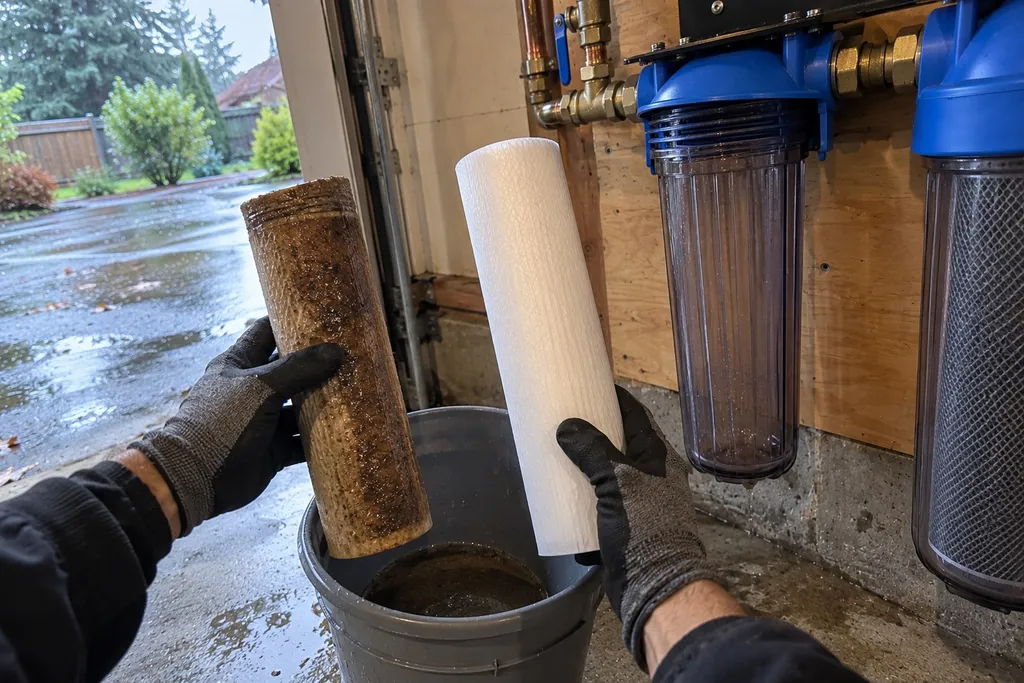
The price on install day is only part of the story. A whole-house filter is something you live with for years. The real cost is the system, plus every cartridge you'll buy, plus whatever it does to your water pressure along the way. A cheap system with pricey refills can cost you more over time than a better one that's built for your water.
Your water quality matters as much as the equipment. Cartridges fill up as they catch sediment and chlorine. Water with a lot of grit in it, like some wells after a heavy rain, wears through cartridges much faster than clean city water does. That's why the water test from the first step pays off twice. It points you to the right system, and it tells you how often you'll be changing filters.
Size is the next big piece. A system has to keep up with how much water your home uses at once. Think of a morning with two showers going, the dishwasher running, and someone filling a pot at the sink.
- Too small: it costs less up front. But it clogs faster, drops your pressure at busy times, and has you buying cartridges more often.
- Too big: you pay for capacity you'll never use.
- Right-sized: it's matched to your bathrooms, your household, and your main line. It runs quietly in the background for years.
Staging changes cost too, and sometimes it saves you money. A low-cost sediment filter in front of a carbon filter catches the grit first. That lets the more expensive carbon cartridge last longer. Skipping the first stage looks cheaper on paper. It often isn't once you start buying refills.
It also helps to know how plumbers price this kind of job. Some give a flat quote for the whole job. Others charge for time plus parts. A flat quote is easier to plan around, as long as it spells out what's included. Time-and-materials pricing can be fair too, but ask for a best guess up front so the final bill doesn't surprise you. Either way, you should see equipment and labor listed clearly.
Picture two quotes for the same house. One is lower, but it uses a single small housing with cartridges you can only buy from one maker. The other costs more on day one, but it uses standard cartridges you can find anywhere and a sediment stage that slows wear. Over five years, the second one may well be the better deal. Comparing only the bottom line on day one would point you the wrong way.
We'd rather you understand all of this before you spend a dime. Fair pricing means you know what the system costs now, what it'll cost to keep running, and why it's sized the way it is. If a smaller setup or a kitchen-only system covers what you need, we'll tell you.
Common Questions
Frequently Asked Questions
What are the downsides of putting in a whole-house filter?
+
The main downside is that it can slow your water pressure a little, especially as the cartridge fills up over time. It also needs regular cartridge changes to keep working right, and skipping that upkeep can choke your water flow. On top of that, a whole-house filter only cleans water coming through your main line, so it won't fix problems from your water heater, old pipes, or a weak pressure issue that already exists.
Does a whole-house filter work for water with a lot of sediment, like after heavy rain?
+
Yes, but it depends on how the system is staged. A sediment filter placed ahead of a carbon filter catches grit first, which keeps the carbon cartridge from wearing out fast. Well water that picks up grit after a big rain tends to use up cartridges quicker than city water, so knowing your water source helps size the system and plan for how often you'll swap filters.
How do I know if my water pressure can handle a whole-house filter?
+
Run water from a kitchen tap and a tap at the far end of your house and see how both feel. If your pressure already trickles, get that fixed before adding a filter, since any filter slows flow a bit and more so as the cartridge fills. Adding a filtration system on top of an existing pressure problem usually makes things worse, not better.
Troutdale, Oregon
Related Troutdale Services
Need Plumbing Help?
Get Help Today from
Bigfoot Plumbing
Troutdale, Fairview, Wood Village, Gresham and the homes east toward Corbett. Call the Troutdale number and talk to someone who does this for a living.
10% Off for Veterans · First Responders · Seniors