
Water Line Repair
Water Line Repair in Troutdale: Know Before You Dig
Honest, reliable plumbing for Troutdale, Oregon & the surrounding Pacific Northwest
CCB# 257405
Licensed · Bonded · Insured
20 Yrs
Experience
Family
Owned & Operated
Troutdale, OR
East County Crew
What's Covered on This Page
- Signs Your Water Line Needs Repair
- Permits Required for Water Line Work in Troutdale
- What Happens to Your Yard During a Repair
- Repair or Replace: Making the Right Call
- When It Might Not Be a Water Line Problem
- If someone is parked over my water line, who handles that in Troutdale?
- Can I move forward with repair if I'm not sure the leak is on my side of the line?
- What if my water bill jumped a lot more than usual, like double or triple?
Need Water line repair?
Water Line Repair
Signs Your Water Line Needs Repair
Your water line runs underground from the meter to your house, so you won't see it break. You'll see what the leak does. Most people notice one small thing first and brush it off. Catching it early is the best way to keep water line repair small, simple, and fair on your wallet.
Here are the signs worth paying attention to:
- Your water bill jumps, but your habits haven't changed. A steady leak runs 24 hours a day, and it adds up fast.
- Water pressure drops all over the house. If every faucet and shower feels weak at the same time, water may be escaping before it reaches you.
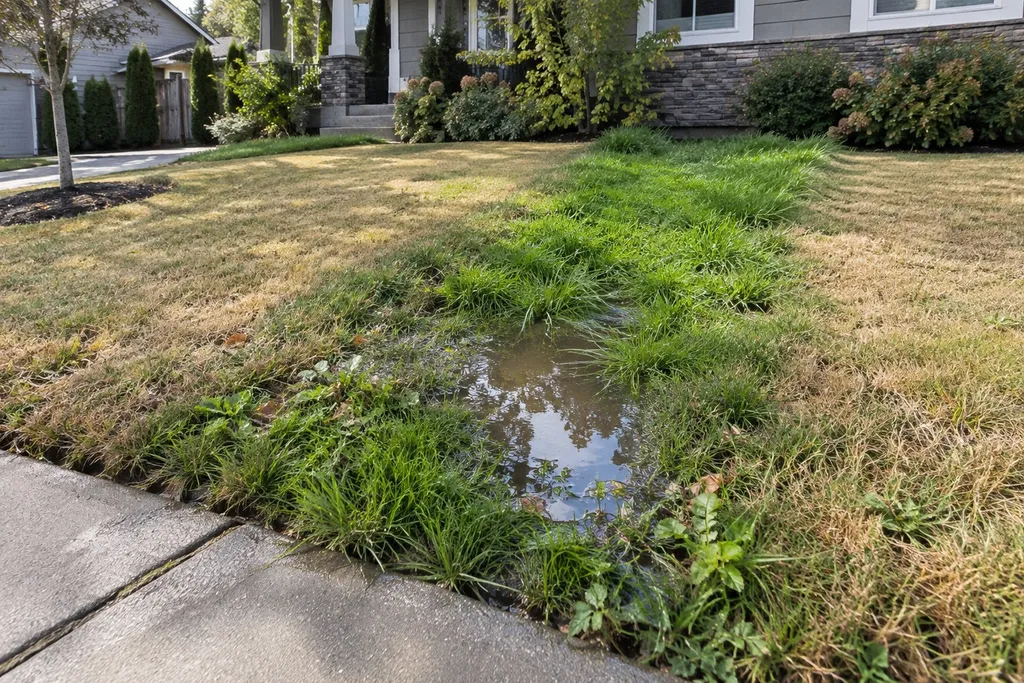
- There's a soggy patch in the yard that won't dry out, even after a few dry days.
- One strip of lawn grows greener or faster than the rest. That's often the path the pipe takes.
- The ground sinks or a small hole opens up between the street and your house.
- You hear water running or hissing when every tap is off.
- Your water turns rusty, brown, or gritty. Dirt can get into a cracked line.
- Puddles or damp spots show up near the spot where the line comes into your home.
Want to check before you call anyone? Try the meter test. Turn off every faucet, shower, and appliance that uses water. Make sure the toilets aren't refilling. Find your water meter and look at the small leak dial or the last number on the readout. Write it down, wait an hour, and look again. Don't use any water while you wait. If the number moved, water is going somewhere.
Next, shut off the main valve at your house and watch the meter again. If it still moves, the leak is most likely in the line that feeds your home. If it stops, the leak is probably inside the house. That points to plumbing leak repair, not the water line.
Some signs can fool you, so we'll be straight with you. Low pressure doesn't always mean a broken line. A worn-out pressure regulator can cause the same problem, and replacing one costs far less than digging up a yard. A running toilet can also push your bill up and make the meter move. Rule those out first. If you can't tell what's going on, our leak detection service can find the source without guessing.
Don't wait on the bigger signs, though. Sinking ground, water pooling near your foundation, or a sudden loss of water all mean the leak is already doing damage. Shut off your main valve if you can, and get it looked at soon. A small leak left alone tends to wash out the soil around the pipe and grow.
After 20 years in plumbing, Kevin Brain and our family-owned team know one thing for sure. Spotting the problem early is what gives you the most choices. A bad section of pipe can often be repaired instead of replaced, but only if it's caught before the damage spreads.
Water Line Repair
Permits Required for Water Line Work in Troutdale
Most water line work in Troutdale needs a plumbing permit and an inspection. That can sound like red tape when you just want the leak fixed. But the permit is there to protect you. It means someone checks the repair before the trench gets filled back in, while the pipe and fittings are still easy to see.
Rules can change, and small jobs are sometimes treated differently than full replacements. The best move is to confirm with the local building department or ask your plumber to confirm it for your address. Don't let anyone tell you a permit "doesn't matter" without checking first.
Your water line is split into two parts, and that changes who handles what.
- The street side, up to and including the meter, usually belongs to the city or your water provider. If the leak is on their side, call them first. It's typically their job to fix.
- The house side, from the meter to your home, is usually yours. This is the part a homeowner pays to repair, and the part a permit and inspection cover.
If your meter test from earlier pointed to a leak on the house side, that part is most likely yours to fix.
Skipping a permit can feel like a way to save money or time. It rarely works out that way. An unpermitted repair can cause headaches when you sell your home, since buyers and inspectors may ask about past work. It can also make insurance claims harder if something goes wrong later. Without an inspection, nobody checks that the new section is joined right, bedded right, and buried deep enough to stay safe through a cold snap.
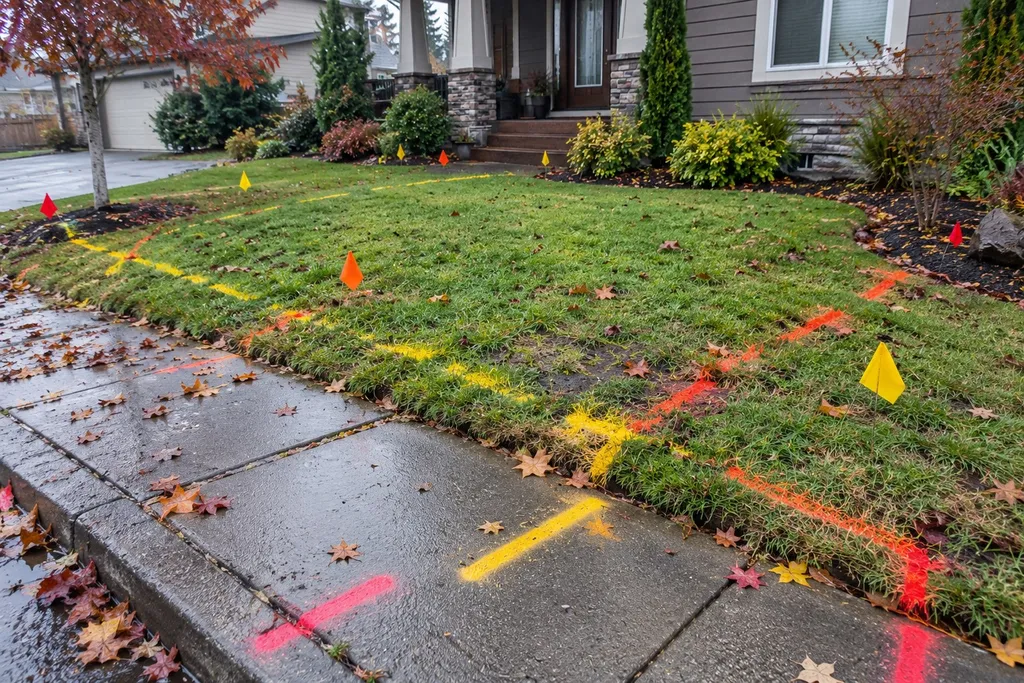
There's one more step before any shovel goes in the ground. Buried gas, power, and cable lines need to be marked first. Hitting a gas line while chasing a water leak turns a repair into an emergency. A licensed plumber should make sure the lines are marked before digging starts.
Here's what we'd ask any plumber before letting them dig up your yard:
- Does this job need a permit, and who's pulling it?
- Is the permit cost included in your quote, or added later?
- Will the line be inspected before the trench is filled?
- Are you licensed, bonded, and insured in Oregon? What's your CCB number?
- Who's responsible for getting buried utilities marked?
You can look up any Oregon contractor's license through the Construction Contractors Board. Ours is CCB# 257405. We're licensed, bonded, and insured, and we've spent 20 years in plumbing. We'd rather you check us out than just take our word for it.
A permit is also a good reason to catch a leak early. A short repair on one bad section means less digging, a quicker inspection, and less of your yard torn up. Wait until the line fails in several spots, and the job can grow into a full replacement with a bigger trench and more to inspect.
Water Line Repair
What Happens to Your Yard During a Repair

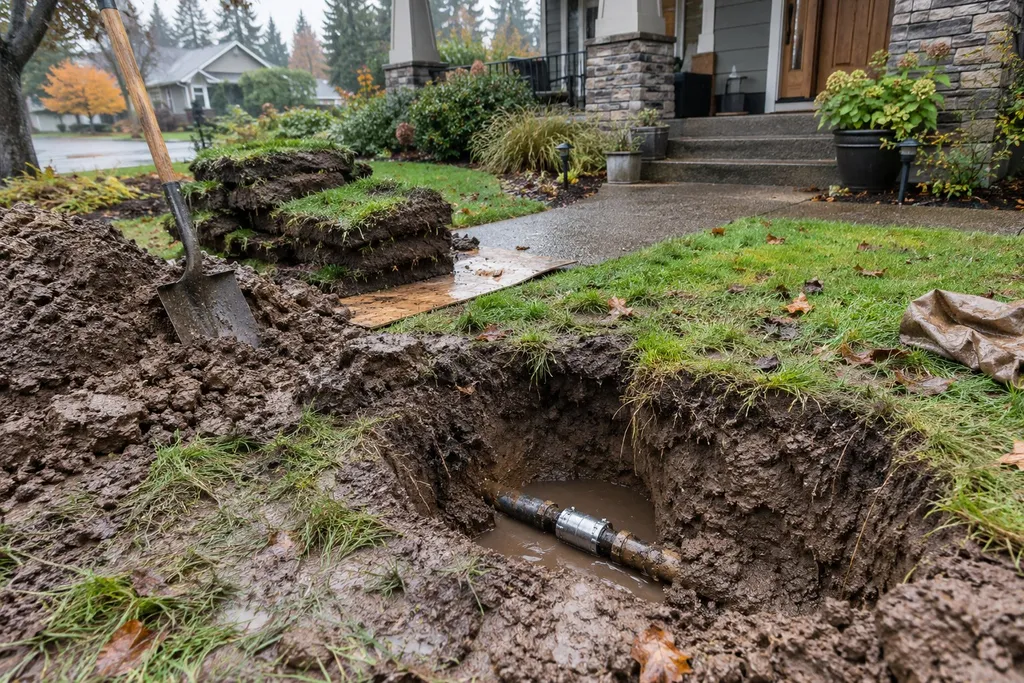
Here's the honest answer. Some digging is usually part of fixing a water line, but how much depends on how big the problem is when you call. A single leak in one spot often means one hole, maybe a few feet across. A line failing in several places can mean a trench running the length of your yard.
That's why finding the leak first matters so much. When a plumber can pinpoint the bad spot, they dig there and nowhere else. When nobody knows where the leak is, you end up opening more ground just to look.
Once the utility lines are marked, the work in your yard usually goes like this:
- The digging area is laid out over the leak or along the pipe's path.
- Sod and topsoil are lifted and set aside when that's possible, so they can go back later.
- The hole is dug down to the pipe, deep enough to work on it safely.
- The bad section is cut out and repaired, or the line is replaced.
- After the inspection, the pipe is bedded and the hole is filled back in.
Your water will be off while the pipe is open. Plan for that. Fill a few jugs for drinking and cooking, and hold off on laundry until the job's done.
If the whole line needs replacing, you may have options that dig less. Trenchless methods pull a new pipe through the ground using a small pit at each end, so you don't need one long trench. They're not right for every yard. Rocky soil, tree roots, tight bends, and the type of old pipe can all rule them out. A good plumber will tell you plainly whether your yard is a fit, not just pitch the fancier option.
A little prep on your end helps protect the things you care about:
- Tell your plumber about sprinkler lines, buried lights, and invisible pet fences. These aren't covered by utility marking, and they're easy to nick.
- Move pots, furniture, toys, and anything else near the work area.
- Keep kids and pets inside or away while the hole is open.
- Point out plants or trees you really want to save, so the dig can steer around them if possible.
After the hole is filled, expect the soil to settle over the next few weeks, especially after rain. A low spot in the yard is normal. Add a bit of topsoil, tamp it down, and reseed or patch the grass. Your lawn usually grows back faster than you'd think.
One thing to settle before work starts is cleanup. Ask what "restored" means in your quote. Some plumbers backfill and rake the area smooth. Others also replace sod or fix walkways. Neither is wrong, but you should know which one you're getting so there's no surprise later.
If your driveway, a patio, or a concrete walk sits on top of the line, that can change the job. Cutting and patching concrete adds time and cost. Sometimes rerouting the pipe around it makes more sense. It's worth talking through before anyone picks up a saw.
Water Line Repair
Repair or Replace: Making the Right Call
This is the question most folks really care about. Can you fix the one bad spot, or does the whole line have to go? The answer depends on the pipe, not the plumber's sales goals. A good plumber looks at the pipe on both sides of the leak before saying a word about replacement.
A repair usually makes sense when:
- There's one leak in one spot, and the pipe around it still looks solid.
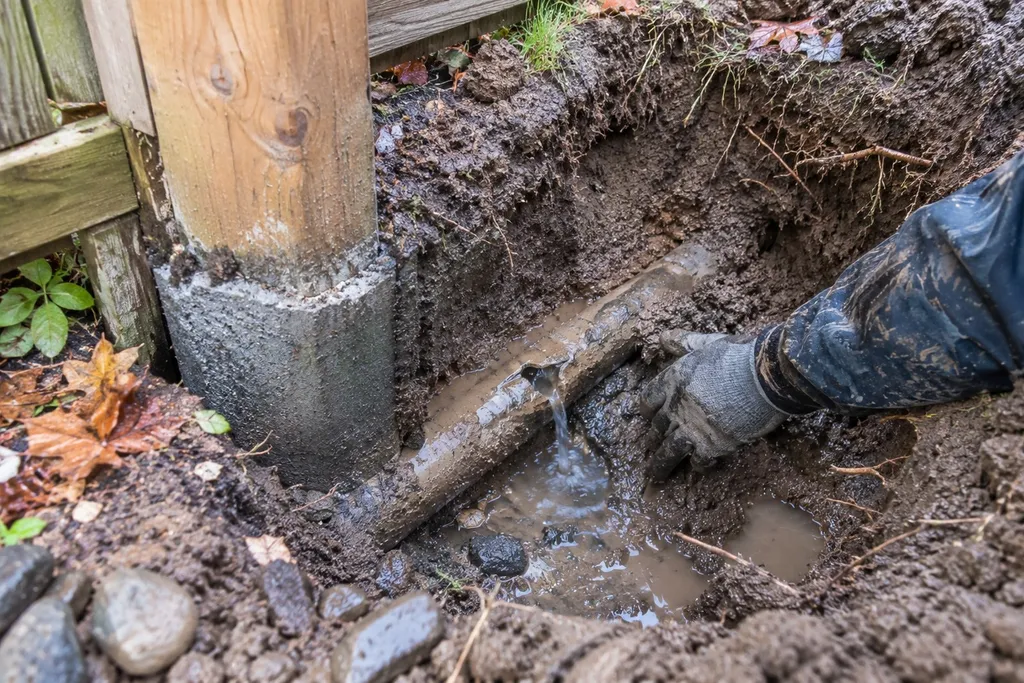
- The damage came from something outside the pipe, like a shovel, a fence post, or a single tree root.
- The line is a newer material that's holding up well everywhere else.
- It's the first problem you've had with this line.
Replacement usually makes more sense when:
- You've had more than one leak in the past few years. A second leak often means a third is coming.
- The pipe is old galvanized steel. It rusts from the inside out, so the next weak spot may be a few feet away.
- The line is lead, or it's an older plastic pipe known for failing over time.
- The pipe is too small to give your house good pressure, even with no leak.
- Once the hole is open, the pipe crumbles, flakes, or looks thin.
Here's a simple way to think about it. Picture an old garden hose that's cracked in one spot. If the rest is soft and strong, you patch it. If it's stiff and splitting all over, a patch just moves the leak. Your water line works the same way.
Cost follows that same logic. A repair is usually the smaller bill up front. But if you're paying for a dig every year or two, those repairs can add up past what one replacement would have cost. The things that drive price up or down are mostly the same for both jobs: how long the line is, how deep it's buried, what sits on top of it, what it's made of, and how easy it is to reach.
This is where catching it early pays off. A line with one fresh leak still gives you a real choice. A line that's been leaking for months has often washed out the soil around it and stressed the pipe nearby, and the choice gets made for you.
Before you agree to either option, ask your plumber a few plain questions. How old is my line, and what's it made of? What did the pipe look like on each side of the leak? Why repair, or why replace? And the best one: what would you do if this were your own house? An honest plumber can answer all of these without hedging.
That's how we work at Bigfoot Plumbing. Kevin Brain has spent 20 years in plumbing, and our family-owned team won't push a full replacement when a repair will do the job. If your line truly needs replacing, we'll show you why and let you decide. We also offer 10% off for veterans, first responders, and seniors.
Water Line Repair
When It Might Not Be a Water Line Problem
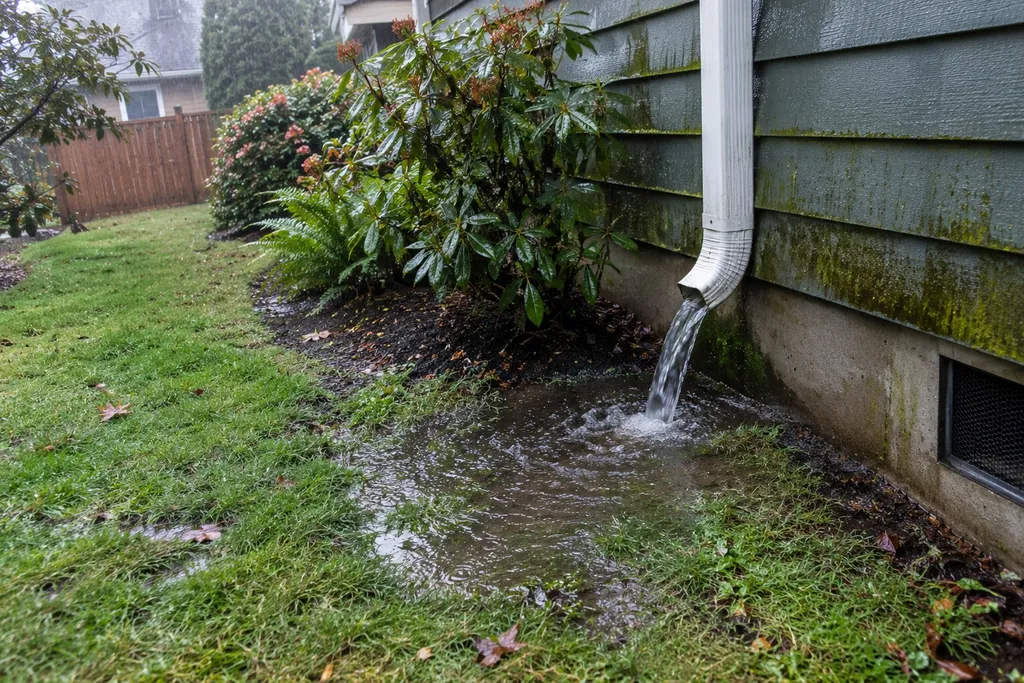
Plenty of things can look like a broken water line and turn out to be something smaller. Some you can fix yourself in ten minutes. We'd rather you check these first than pay for a dig you don't need. You already know about the pressure regulator, the running toilet, and the main valve test from earlier. Here are a few more look-alikes worth ruling out.
A sprinkler system is the big one. Irrigation lines run through the same yard and can leave the same soggy patch or green strip. They can also make your meter move. Shut off the valve that feeds your sprinklers, then run the meter test again. If the meter stops, the leak is in your irrigation, not your water line. That's usually a smaller, shallower fix.
Wet ground isn't always pipe water either. A downspout that dumps next to the house, a low spot where rain collects, or a yard that drains slowly can stay soggy for days after a long wet stretch. Here's the clue. If the spot dries out during a dry week and the meter holds still, it's likely drainage. If it stays wet no matter the weather, take a closer look.
A wet spot that smells bad points somewhere else. Water from your supply line is clean and has no odor. A sewage smell, slow drains, or gurgling toilets suggest a problem with the drain or sewer side of your plumbing. That's a different job.
Other signs have simple causes, too:
- Weak pressure at just one faucet or shower. That's almost never the water line. Unscrew the aerator or showerhead and rinse out the grit. A whole-house drop is the one to worry about.
- Low pressure or rusty water only on the hot side. If the cold water runs clear and strong, look at your water heater, not the line out front. Our water heater repair service can help with that.
- Brown water that shows up all at once and clears after a while. The city may be flushing mains or working on pipes nearby. Run your cold tap for a few minutes. Ask a neighbor if theirs looks the same.
- A dripping outdoor spigot or a hose left trickling. These are easy to miss, and they'll keep the meter turning all day.
- A bill that jumps once and then goes back to normal. Check whether it says "estimated" instead of an actual meter reading. A bad estimate can look like a leak on paper.
If one of these explains what you're seeing, you may not need us at all. That's a good outcome, and we mean it. Clean the aerator, fix the spigot, or call your water provider about the bill.
If you've checked these and the meter still moves with everything off, including the sprinklers, the signs point back to a leak on your water line. At that point, guessing costs more than knowing. A proper leak check is the next step.
Common Questions
Frequently Asked Questions
If someone is parked over my water line, who handles that in Troutdale?
+
You'll need to get the vehicle moved before digging can start. In Troutdale, if a car sits over the work area, the standard notice period is 72 hours before it can be towed. Check with the city or your plumber early so this doesn't delay your repair.
Can I move forward with repair if I'm not sure the leak is on my side of the line?
+
Yes, but confirm it first with the meter test described earlier. The street side, up to and including the meter, is usually the city or water provider's responsibility, while the house side is yours. If you're still unsure after testing, ask your plumber to help trace it before any digging begins.
What if my water bill jumped a lot more than usual, like double or triple?
+
A big jump like that often points to a steady leak running around the clock, not just a small drip. Compare your current bill to past months and check if it's based on an actual meter reading or an estimate. If usage looks far higher than normal and your habits haven't changed, run the meter test and call for a leak check.
Troutdale, Oregon
Related Troutdale Services
Need Plumbing Help?
Get Help Today from
Bigfoot Plumbing
Troutdale, Fairview, Wood Village, Gresham and the homes east toward Corbett. Call the Troutdale number and talk to someone who does this for a living.
10% Off for Veterans · First Responders · Seniors