
Heat Pump Water Heater Installation
Heat Pump Water Heater Installation in Troutdale: Is Your Home Ready?
Honest, reliable plumbing for Troutdale, Oregon and the east side of Multnomah County.
CCB# 257405
Licensed · Bonded · Insured
20 Yrs
Experience
Family
Owned & Operated
Troutdale, OR
East County Crew
What's Covered on This Page
- Heat Pump Water Heaters Are Not a Drop-In Tank Replacement
- Checking Your Space and Electrical Capacity Before Installation
- When a Standard or Tankless Water Heater Makes More Sense
- What Happens on Installation Day
- Permits, Licensing, and Rebate Programs in Oregon
- How long does a heat pump water heater last compared to a regular tank?
- Can I install a heat pump water heater myself to save money?
- Will a heat pump water heater make my garage too cold in winter?
Need Heat Pump Water Heater Installation in Troutdale?
Heat Pump Water Heater Installation
Heat Pump Water Heaters Are Not a Drop-In Tank Replacement
Lots of folks figure this is just a new tank in the same old spot. Pull out the old one, set the new one down, hook it up, done. Sometimes it really is close to that. But often it isn't, and it helps to know why before you buy one.
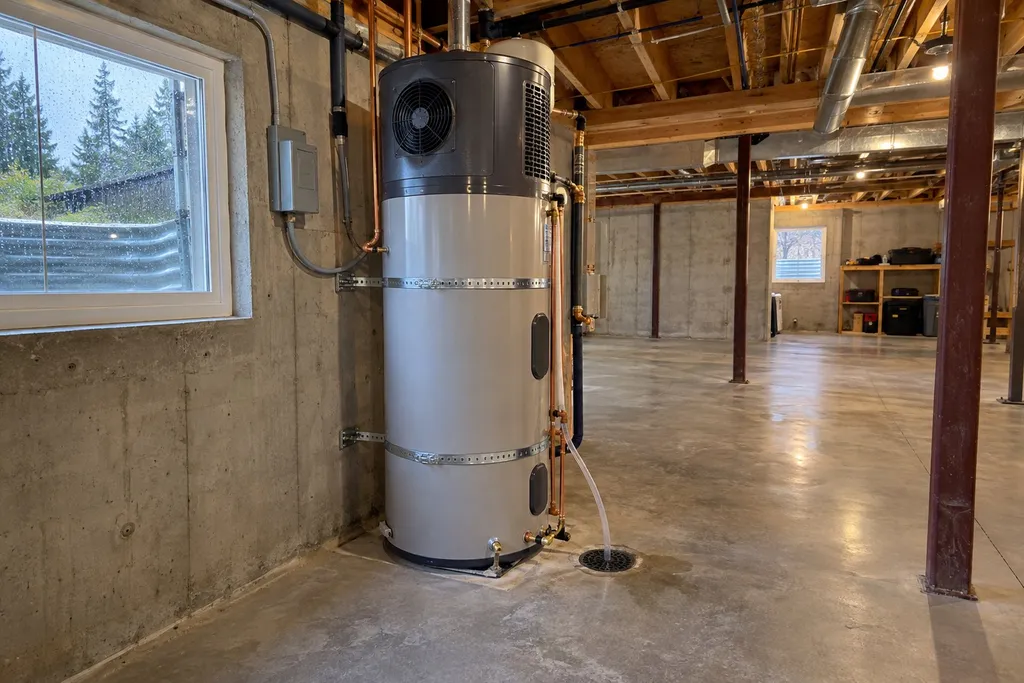
A regular tank heats water with a burner or electric elements. A heat pump model works more like a fridge running in reverse. It pulls warmth out of the air in the room and moves it into the water. That's why it can save so much energy. It's also why the room it lives in matters so much.
Here's what makes it different from a plain tank swap:
- It needs room to breathe. The unit needs a good amount of open air to pull heat from. A tight closet with the door shut can starve it, and then it leans on its backup electric elements and costs more to run.
- It blows out cool air. Since it takes heat from the room, the space gets cooler and drier. In a garage or basement that's often fine. In a small laundry room next to a bedroom, you may feel it.
- It makes water you have to drain. Like an air conditioner, it drips condensate. That water needs to go to a floor drain, a utility sink, or a small pump. If there's no drain nearby, that's added work.
- It may need different power. Many models run on a 240-volt circuit. If your old heater was gas, or your panel is already full, you might need electrical work before the install.
- It hums. There's a fan and a compressor. It's not loud, but it's not silent either. Right under a home office or nursery may not be the best spot.
- It's often taller. The heat pump sits on top of the tank, so it can be taller than your old heater. Low ceilings and tight spaces under stairs can be a problem.
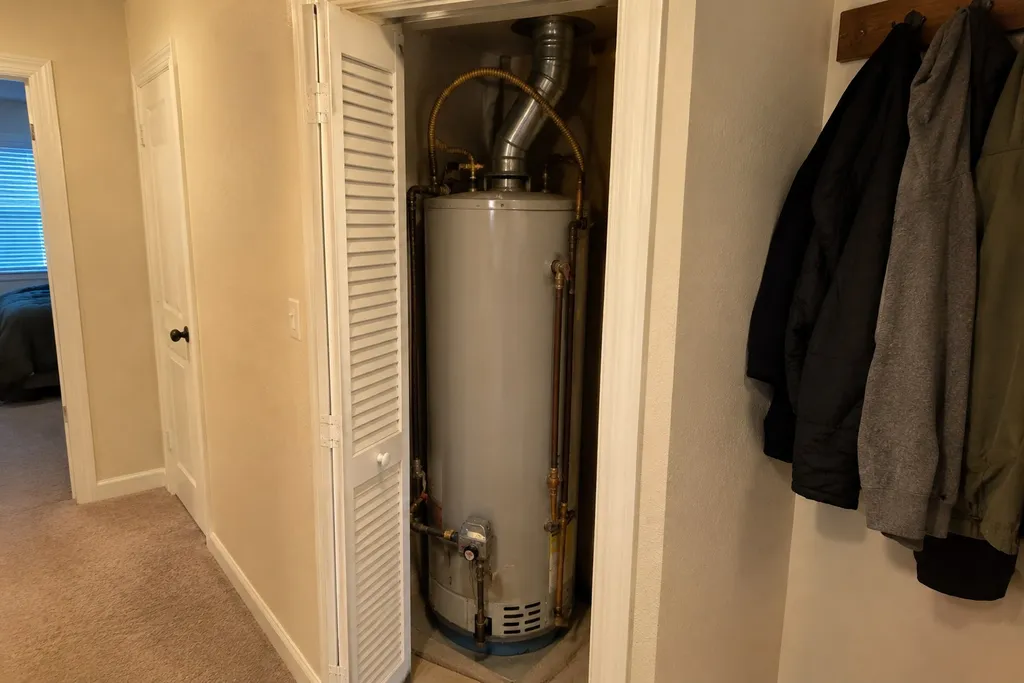
Picture this. Your old 50-gallon gas tank sits in a small hall closet with a louvered door. You love the idea of lower power bills, so you order a unit online. When it shows up, you find it's taller than the closet header, there's no outlet that fits, and there's no drain anywhere close. Now a simple swap means moving the heater, running a new circuit, and adding a drain line. None of that is bad news. It's just better to know it up front.
Garages and roomy basements tend to be the easiest spots. They have air, space, and often a drain nearby. Just keep in mind that a garage that gets very cold in winter gives the unit less heat to work with, so it may run on backup elements more on the coldest days.
None of this means a heat pump water heater is a bad choice. It means the spot has to be checked before the unit is picked. With 20 years in plumbing and an Oregon license (CCB# 257405), our team would rather give you a straight answer about your space than sell you something that won't work well where it's going.
Heat Pump Water Heater Installation
Checking Your Space and Electrical Capacity Before Installation
You can learn a lot about your home in about 20 minutes with a tape measure and a flashlight. You don't need to be handy. You just need to look at a few things before you pick a unit, so nothing surprises you on install day.
Start with the room where your current water heater sits. Here's what to check:
- Ceiling height. Measure from the floor to the lowest thing above the heater, like a beam, duct, or shelf. Write it down, then compare it to the height listed for any model you're looking at, and leave room on top for pipes and the air filter.
- Room size. Measure the length, width, and height of the space. Every model lists a minimum room size in its install guide. If your space comes up short, a vented door or a duct kit can sometimes fix it.
- The nearest drain. Look for a floor drain, a laundry sink, or a standpipe close by. If you can't find one within a few feet, plan on a small condensate pump.
- Clear space around the unit. Check that you can walk up to it and reach the front panel and filter. You'll want to clean that filter now and then, so don't box it in.
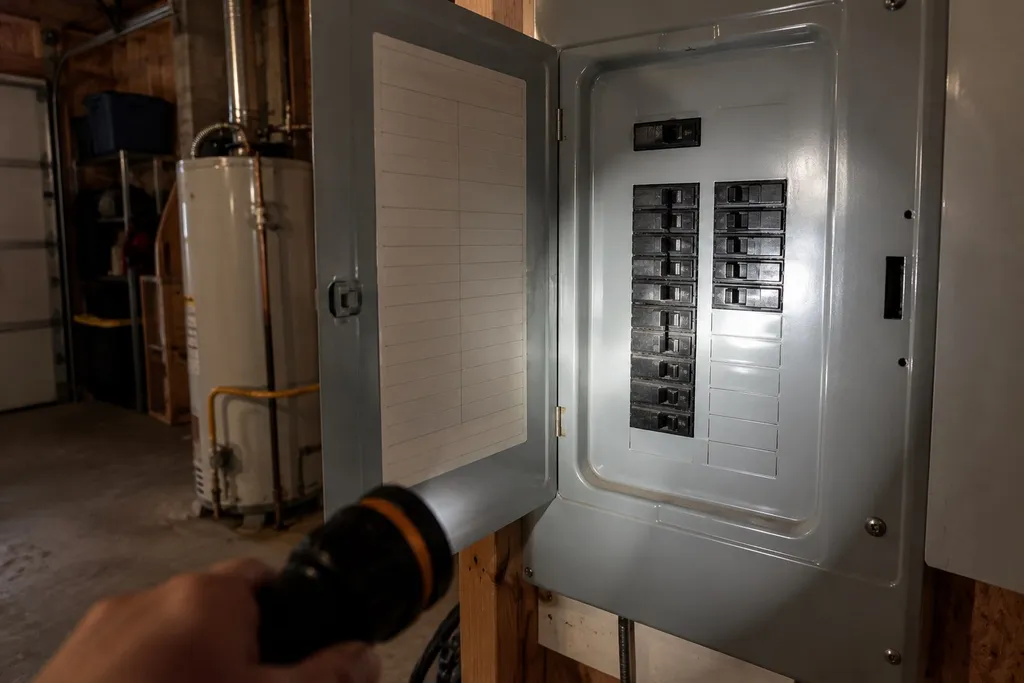
Next, open your electrical panel door. Don't take the cover off. Just look.
- Find the water heater breaker. A double-wide breaker, often marked 30, usually means you already have a 240-volt line. That's good news.
- Count the open slots. If there's no empty space for a new double breaker, the panel may need some work first.
- Look at the main breaker number at the top. Older homes with smaller panels can run out of room once you add this unit, an electric range, and maybe an EV charger later.
If you're switching from gas, this part matters most. Your old heater probably plugs into a simple 120-volt outlet for its controls, or it has no power at all. A new circuit run from the panel is a job for a licensed electrician, and it may need a permit. Some models are built to plug into a regular 120-volt outlet. They can make a gas-to-electric switch easier, but they tend to heat water slower, so they fit some families better than others.
Think about your household, too. How many people shower in the morning? Do you run the dishwasher and washer at the same time? A busy family of five needs a bigger tank than a couple does. Size it too small and the unit leans on its backup elements, which eats into the savings you bought it for.
Snap a few photos while you're at it: the heater, the room, the label on the old tank, and the open panel. Those pictures answer most of the early questions any installer will ask. They also help you get honest quotes that cover the real work, not just the price of the tank.
If your checks turn up a short ceiling, a full panel, or no drain, that doesn't rule out a heat pump. It just tells you what has to happen first, so you can plan for it and budget for it.
Heat Pump Water Heater Installation
When a Standard or Tankless Water Heater Makes More Sense
A heat pump water heater is a great fit for a lot of homes. It isn't the right fit for every home, and we'd rather tell you that now than after you've paid for it. Here are the times we'd steer you toward something else.
Your current heater still works fine. If your tank is heating well, isn't leaking, and isn't very old, you don't have to replace it just to go electric. Running a good heater until it's near the end of its life is often the smarter money move. That gives you time to plan the switch, the circuit, and the drain on your schedule instead of in a rush.
Your old tank just quit and you need hot water now. When a tank fails and floods the garage, most families just want a hot shower by tomorrow. If your space needs a new circuit, a drain line, or a move to a bigger room first, a standard tank in the same spot may be the faster fix. You can still plan a heat pump for next time.
The space just can't work. Sometimes the checks from the last section all come back the wrong way at once. Here's what that can look like:
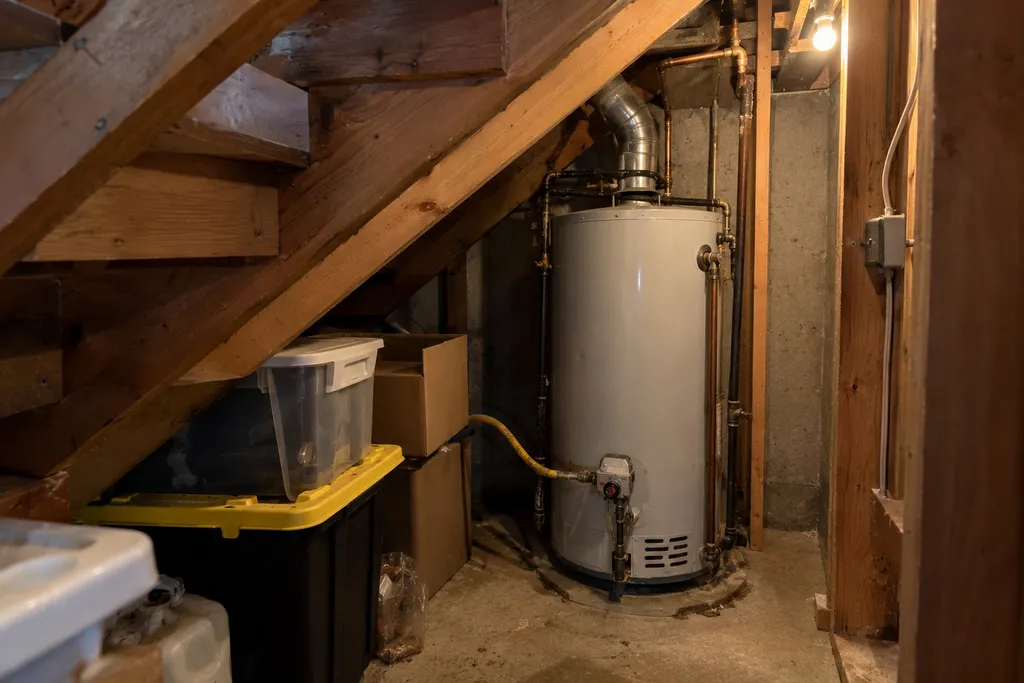
- A small closet that's too short for the unit, with no way to add a vented door or duct kit.
- No drain nearby and no good path for a condensate pump line.
- A full panel where adding a 240-volt circuit would mean a big electrical upgrade you weren't planning on.
- A spot right next to a bedroom or nursery where the hum and cool air would bother your family every day.
One of those is usually fixable. Three or four together can make the project cost more than it's worth for your home.
You already have gas and like it. If gas is already piped to your heater and your venting is in good shape, a new gas tank is often the simplest, lowest-hassle swap. Nothing new has to be run, and the install looks a lot like the old one.
You're short on space but use a lot of hot water. Tankless heaters mount on the wall and take up very little room. They heat water as you use it, so back-to-back showers don't run the tank dry. For a family that's tight on floor space and long on showers, tankless can be a better match. It has its own needs, like proper gas sizing or a strong electrical supply, so it still takes a look at your home first.
You're moving soon. A heat pump saves money over time. If you're selling in a year or two, you may not stay long enough to see much of that payback. A standard tank may make more sense for now.
None of these are knocks on this kind of water heater. They're just honest limits. The right heater is the one that fits your space, your budget, and how your family uses hot water. If that turns out to be a plain tank, that's a fine answer, and we'll tell you so.
Heat Pump Water Heater Installation
What Happens on Installation Day
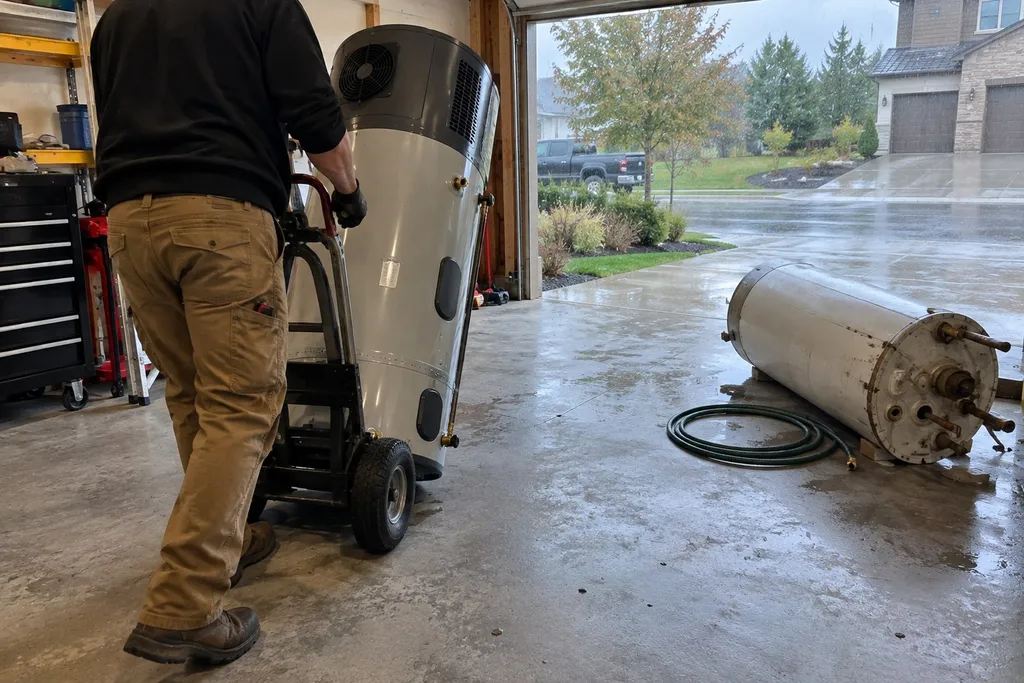
If your space checked out, install day is pretty calm. Most of the hard thinking happened earlier. A plain swap in a garage or basement with a drain and a 240-volt line already there can often be done in part of a day. If you need a new circuit, a condensate pump, or a move to a new spot, plan for it to take longer.
A few things make the day go easier for everyone:
- Clear a path from the door to the heater. These units are tall and heavy, and tight hallways slow things down.
- Move boxes, bikes, and storage away from the old tank so there's room to work.
- Keep pets and little ones in another part of the house.
- Plan on no hot water for a good part of the day. Shower the night before.
A proper install usually follows the same basic steps. Water and power to the old heater get shut off, and gas too if you're switching from gas. The old tank gets drained and hauled out. The new unit is set in place, leveled, and strapped to the wall for earthquake safety. A drain pan underneath is a good idea when the heater sits over a finished floor.
Then come the connections. The hot and cold lines get hooked up. The relief valve gets a discharge pipe that runs down toward the floor or to a safe spot. The condensate line goes to your drain or pump. If your home has a closed plumbing system, an expansion tank may be added to protect the new heater from pressure swings. If a new circuit is needed, a licensed electrician handles that part.
One step matters more than people think. The tank should be filled all the way, with air bled out at a hot water faucet, before the power goes on. Then the unit starts up and runs a first heating cycle. That first cycle can take a while, so don't worry if the water isn't hot right away.
Before the installer leaves, it's fair to expect a quick walk-through. Here's what to look at and ask about:
- No drips at any fitting, the relief valve, or the condensate line.
- Water flowing out of the condensate line once the unit has run a bit, not pooling on the floor.
- Which mode it's set to. Most units have a heat pump only mode, a hybrid mode that uses backup elements when demand is high, and a plain electric mode. Hybrid is a good place to start for most families.
- Where the air filter is and how to pull it out to rinse it.
- What the temperature is set to, and how to change it.
For the first few days, just pay attention. You'll hear a soft hum when it runs, and the room will feel a little cooler. That's normal. If the water runs out faster than you'd like, try switching to hybrid mode before you assume something's wrong. If you see water on the floor or hear clicking that won't stop, call the installer back. A good installer would rather fix a small thing early than have you live with it.
Heat Pump Water Heater Installation
Permits, Licensing, and Rebate Programs in Oregon
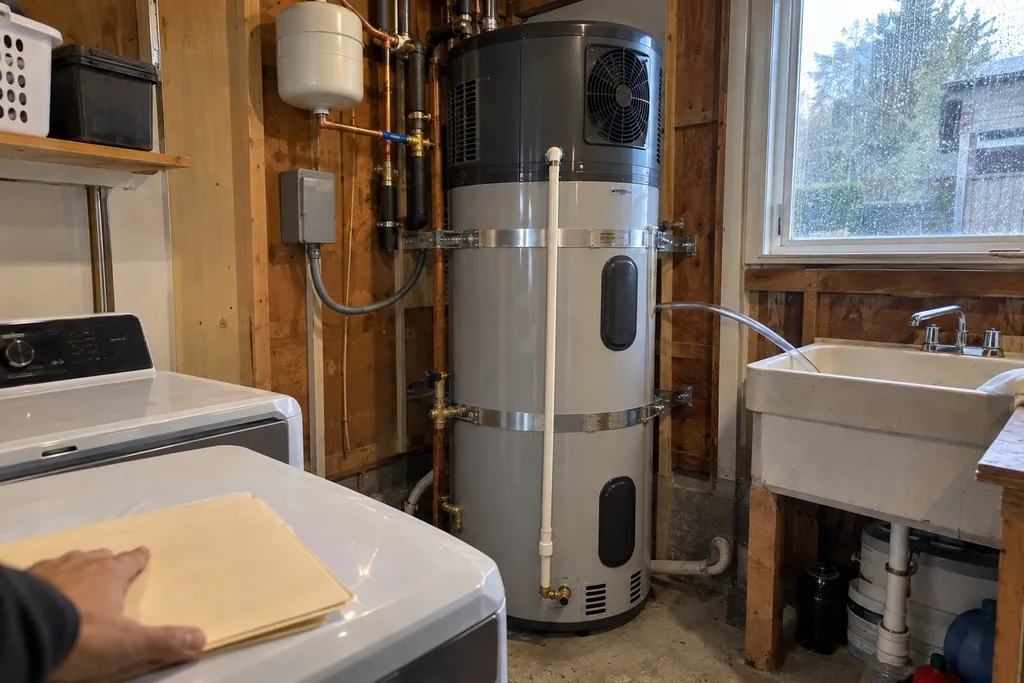
The paperwork is the part nobody gets excited about. But it's also where a lot of the savings and the safety come from. Here's how it works in plain terms.
Swapping a water heater isn't like changing a faucet. In most Oregon cities and counties, replacing one calls for a permit and an inspection. The inspector checks the things that keep your family safe: the earthquake straps, the relief valve and its discharge pipe, the water connections, and the electrical hookup. If you need a new 240-volt circuit, that work usually needs its own electrical permit too. Your local building department can tell you exactly what's required for your address.
A permit can feel like a hassle. It's worth it, though. Skipping it can cause trouble later when you sell your home, file an insurance claim, or apply for a rebate that asks for proof of a proper install.
In Oregon, anyone you pay to work on your home should be licensed with the Construction Contractors Board. You can look up any contractor's CCB number online in a couple of minutes. Ours is CCB# 257405, and we're licensed, bonded, and insured. Plumbing work also has to be done by a licensed plumber, and new circuits by a licensed electrician. When you're comparing quotes, ask each company these questions:
- What's your CCB number, and are you bonded and insured?
- Who pulls the permit, you or me?
- Does your quote include the permit, the drain or condensate pump, and any electrical work?
- Will you be there for the inspection or help line it up?
- Will you give me the paperwork I need for rebates and tax credits?
Heat pump water heaters often qualify for savings that a standard tank doesn't. Over the years these have come from a few places: utility and energy-efficiency programs, state incentives, and federal tax credits. The amounts, the rules, and even which programs are open change often, so we won't promise you a number here. What we can tell you is how to avoid missing out.
- Check before you buy. Some programs only cover certain models or efficiency ratings, and some require you to apply before the install.
- Look up your utility. Your electric company's website is a good first stop for current offers.
- Keep everything. Save the receipt, the model and serial numbers, the permit, and the final inspection sign-off.
- Ask a tax pro about federal credits. They can tell you what applies to your situation this year.
Rebates can take a real bite out of the cost, but don't let a rebate talk you into a unit that doesn't fit your space. A heater that struggles in a cramped closet won't save you much, rebate or not. If you're a veteran, first responder, or senior, we also offer 10% off.
With 20 years in plumbing, Kevin and our team at Bigfoot Plumbing are happy to look at your space, give you an honest answer on whether this type of system fits, and make sure the job is done right and on the books.
Common Questions
Frequently Asked Questions
How long does a heat pump water heater last compared to a regular tank?
+
That depends on upkeep, but keeping the air filter clean and the space around the unit clear helps it run efficiently for years. Since the unit pulls heat from the air instead of burning fuel or straining electric elements, giving it proper airflow and room to breathe protects its performance over time. A cramped closet or a dirty filter forces it to lean on backup electric heat more often, which adds wear and cuts into savings.
Can I install a heat pump water heater myself to save money?
+
We don't recommend it, mainly because of the electrical and plumbing work involved. Most models need a 240-volt circuit, a condensate drain, and proper venting for airflow, and in Oregon this work needs permits and licensed trades. A licensed plumber handles the water connections and an electrician handles any new circuit, so the inspector can verify the earthquake straps, relief valve, and wiring are safe before you rely on the unit.
Will a heat pump water heater make my garage too cold in winter?
+
It can make an already cold garage feel a bit cooler, since the unit pulls heat from the surrounding air to warm the water. In a Troutdale garage that already drops low in winter, the unit has less warm air to work with, so it may lean on its backup electric elements more on the coldest days. This doesn't ruin the install, but it's worth knowing before you pick that spot.
Troutdale, Oregon
Related Troutdale Services
Need Plumbing Help?
Get Help Today from
Bigfoot Plumbing
Troutdale, Fairview, Wood Village, Gresham and the homes east toward Corbett. Call the Troutdale number and talk to someone who does this for a living.
10% Off for Veterans · First Responders · Seniors