
Expansion Tank Installation
Expansion Tank Installation in Troutdale: Do You Need One?
Honest, reliable plumbing for Troutdale, Oregon and the east side of Multnomah County.
CCB# 257405
Licensed · Bonded · Insured
20 Yrs
Experience
Family
Owned & Operated
Troutdale, OR
East County Crew
What's Covered on This Page
- An Expansion Tank Is Usually a Sign Your System Changed, Not a Random Upgrade
- Signs Your Expansion Tank Is Failing or Missing
- When You Likely Don't Need an Expansion Tank
- How Expansion Tank Installation Works
- Permits and Code Compliance for Expansion Tanks in Troutdale
- How long does an expansion tank usually last before it needs attention?
- Can I check my own water pressure before calling a plumber?
- Where exactly does the expansion tank get installed on my water heater?
- What happens if I skip the expansion tank and just keep my relief valve?
Need Expansion Tank Installation in Troutdale?
Expansion Tank Installation
An Expansion Tank Is Usually a Sign Your System Changed, Not a Random Upgrade
If someone told you that you need an expansion tank, it's fair to ask why. Your house got along fine without one for years. So what changed? Usually, the answer is your plumbing, not the plumber's sales pitch.
Here's the simple version. When your water heater warms up a tank of cold water, the water gets a little bigger. It takes up more room. In an older setup, that extra water could push back out into the city line, and nobody noticed. That's called an open system.
Once something blocks water from flowing back out, you have a closed system. The extra water is stuck inside your pipes. Every time the heater runs, the pressure goes up, then drops when someone uses hot water, then goes up again. That cycle wears on things.
These are the most common changes that close a system:
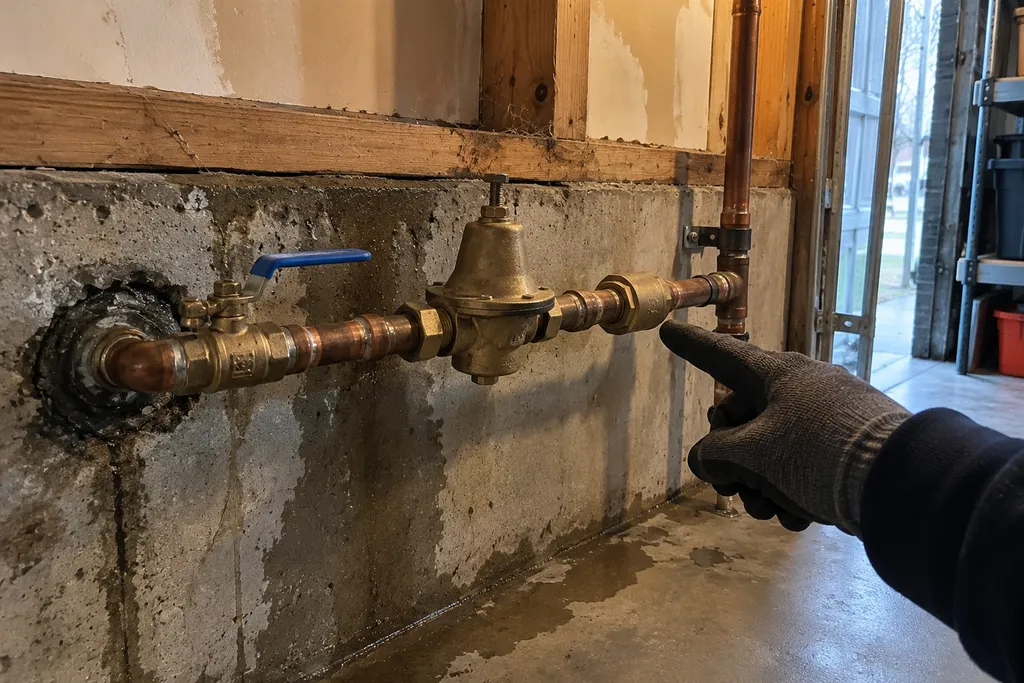
- A new or replaced pressure regulator. Many have a built-in check that stops water from flowing backward.
- A check valve or backflow preventer added at the water meter, often during utility work.
- A new water heater install, where the installer finds the system is already closed and the old setup never had a tank.
- A recent repipe or main line change that added a one-way valve.
You might not even know one of these happened. A meter swap can happen while you're at work. A regulator might have been replaced years ago by a past owner.
Your house often tells you before anyone else does. Picture this. You put in a new water heater last spring. Now you notice a small puddle under the relief valve pipe, or the valve drips after a long stretch of hot water use. Maybe a toilet fills for a second when nobody touched it. Maybe a faucet spits hard when you first turn it on. Each one is a sign that pressure is spiking with nowhere to go.
That relief valve is a safety part. It isn't supposed to open all the time. If it's dripping often, it's doing a job the expansion tank should be doing.
Now the honest part. Not every home needs one. If your system is still open and your pressure stays steady, a tank won't do much for you. Before we recommend one, it's worth checking whether your system is closed and what your pressure looks like when the heater runs. If the real problem is high incoming pressure, a pressure regulator replacement may be the better first step.
With 20 years in plumbing, Kevin and our team would rather explain what's going on in your pipes than sell you a part you don't need. If the tank fits your system, we'll tell you why. If it doesn't, we'll tell you that too.
Expansion Tank Installation
Signs Your Expansion Tank Is Failing or Missing
Having an expansion tank doesn't mean you're covered. Tanks wear out, and most of them fail quietly. The tank still hangs there and looks fine. It just stops doing its job.
Here's why. Inside the tank, a rubber bladder keeps a pocket of air on one side and water on the other. That air works like a cushion. When hot water expands, it squeezes the air instead of squeezing your pipes. If the bladder tears or the air slowly leaks out, the tank fills up with water. Plumbers call that waterlogged. At that point it's just a heavy steel can, and your system acts like there's no tank at all.
These are the signs a tank you already have is failing:
- It sounds solid when you knock on it. Tap the top half with your knuckles. A healthy tank sounds hollow up top, where the air is. If it sounds dull all the way up, it's probably full of water.
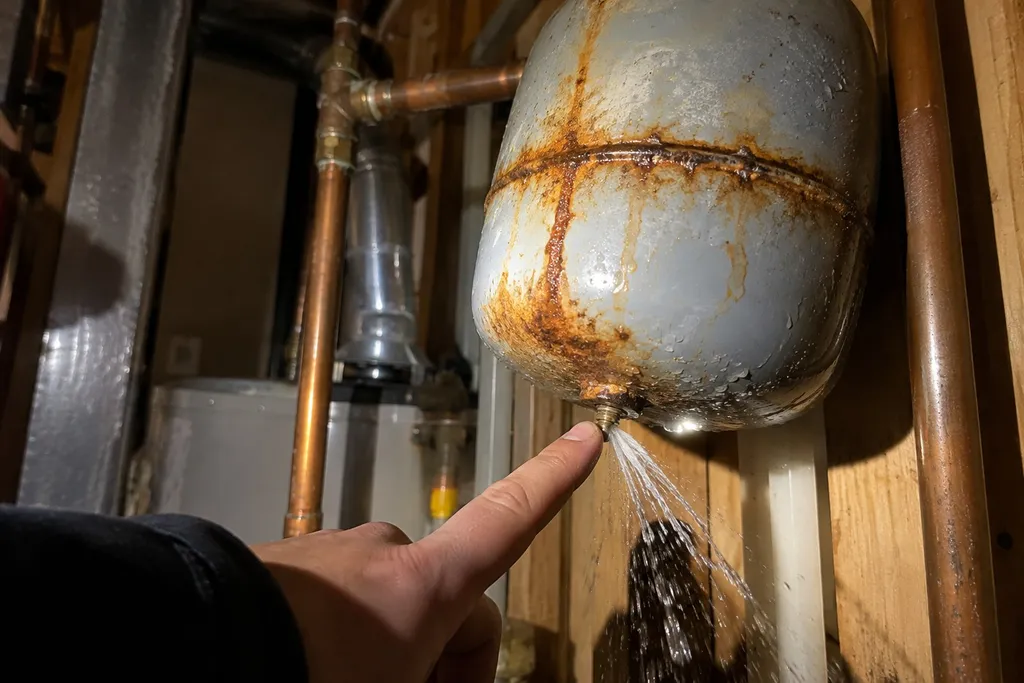
- Water comes out of the air valve. Most tanks have a small valve on one end, like the one on a bike tire. If a quick press lets out water instead of air, the bladder has broken.
- You see rust, sweating, or drips. Look at the seams and at the fitting where the tank screws onto the pipe. A rusty or wet tank is near the end of its life.
- It's pulling on the pipe. A waterlogged tank is a lot heavier than it should be. If it hangs off the line with no support, that extra weight strains the fitting over time.
- The old pressure signs come back. If you already have a tank but you still see the relief valve drips and pressure spikes we talked about above, the tank likely isn't absorbing anything.
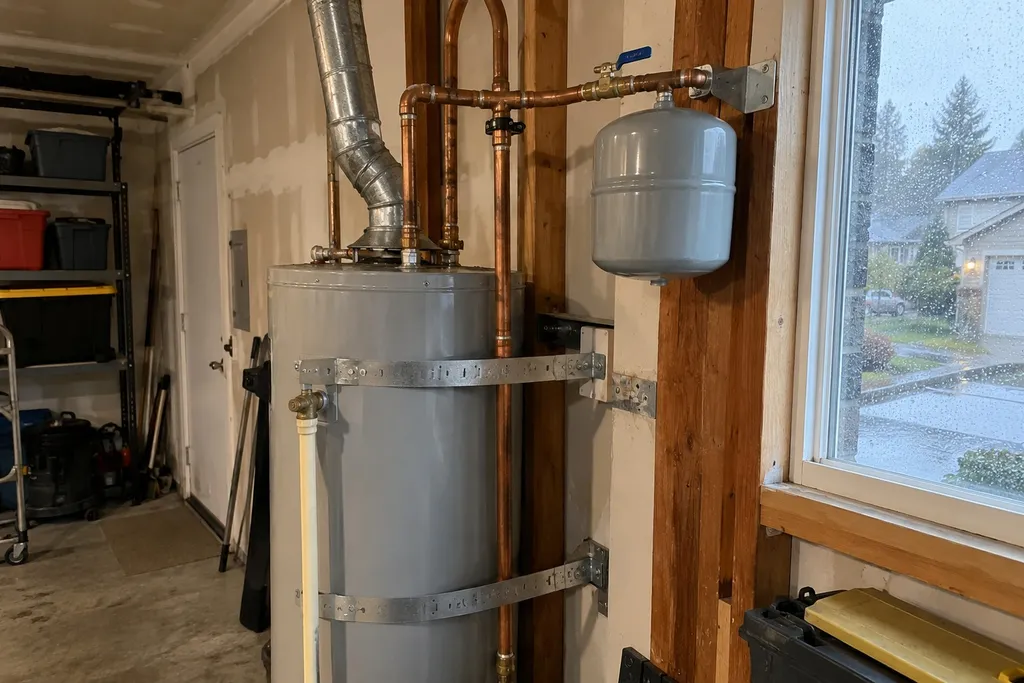
Checking for a missing tank is even easier. Go to your water heater and follow the cold water pipe coming in. An expansion tank is usually a small round tank, a bit bigger than a football, screwed into that line near the heater. If there's nothing there and your system is closed, the tank is simply missing.
One thing that trips people up is the air setting. A tank has to be charged with air to match your home's water pressure. If nobody set it when it went in, the tank can't cushion the way it should, and it can wear out early. Sometimes a tank with a good bladder just needs its air charge set right. A tank with a torn bladder can't be fixed that way. It needs to be replaced.
Now the honest part. A dripping relief valve doesn't always mean the tank is bad. The valve itself can wear out and leak on its own, and that's a water heater repair, not a new tank. And if your incoming pressure is too high, a new tank won't solve it. That's a job for the pressure regulator.
That's why it's worth testing before you buy anything. Checking the tank's air charge and your home's water pressure while the heater runs tells you which part is causing the trouble. You shouldn't have to pay for a new tank when the real problem is a worn valve or a regulator that's letting too much pressure in.
Expansion Tank Installation
When You Likely Don't Need an Expansion Tank
Here's the part most people don't expect a plumber to say. Plenty of homes don't need an expansion tank, and a few simple checks can save you the money.
You can likely skip one in these cases:
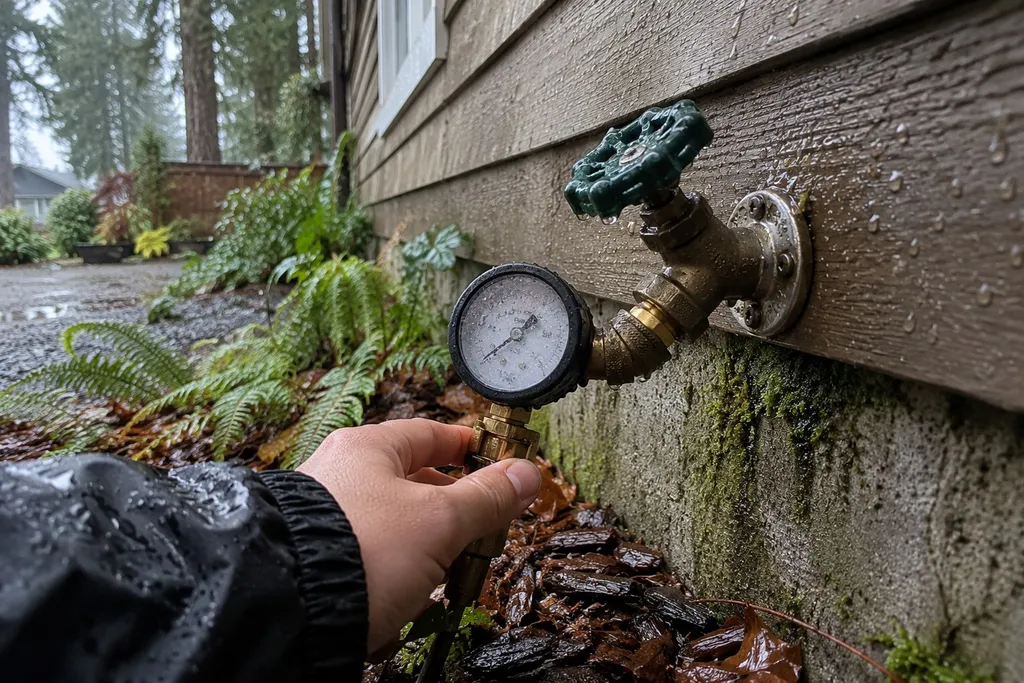
- Your pressure stays steady. Pick up a water pressure gauge at a hardware store and screw it onto an outdoor spigot. Check it in the morning, then again after the water heater has run for a while with no taps open. If the needle barely moves, you probably don't have a thermal expansion problem.
- Your system is still open. If there's no check valve or backflow device at your meter or regulator, expanding water can still push back out to the street, as we covered above. Your water provider can usually tell you what's installed at your meter.
- You have a tankless water heater. It only heats water as it flows and doesn't hold a big tank of hot water. With so little stored water, expansion is usually small. Some setups still call for a tank, so it's worth a quick check, but it's often not needed.
- You're on a well with a working pressure tank. In many well setups, that pressure tank already gives expanding water somewhere to go. If your well tank is healthy and nothing blocks the water between it and your heater, a second tank may not add much.
- Your current tank still works. If it sounds hollow up top and the air valve lets out air, not water, leave it alone. A good tank with the right air charge doesn't need replacing just because it's been there a while.
Some symptoms look like pressure trouble but aren't. A toilet that refills by itself every so often usually has a worn flapper letting water seep into the bowl. That's a toilet repair, not an expansion tank. Pipes that bang when a washing machine or dishwasher shuts off are often caused by a valve snapping closed fast. An expansion tank on your water heater line won't stop that.
Timing matters too. If your water heater is old and you're planning to replace it soon, it often makes sense to wait and handle the tank with the new heater. That way the work happens once, and the tank gets sized and set for the new heater instead of the old one.
There's also no reason to add one just because a neighbor did or because it sounds like extra protection. If your pressure is steady and your system is open, a tank just hangs there doing nothing.
If you've checked the gauge, looked at your setup, and still aren't sure, that's fine. Writing down what you saw on the gauge before and after the heater ran gives any plumber a real starting point. It also helps you spot a pitch for a part that doesn't match your numbers.
We'd rather tell you to keep your money than install something that won't change a thing in your home. That's how we'd want our own families treated, and it's how we treat yours.
Expansion Tank Installation
How Expansion Tank Installation Works
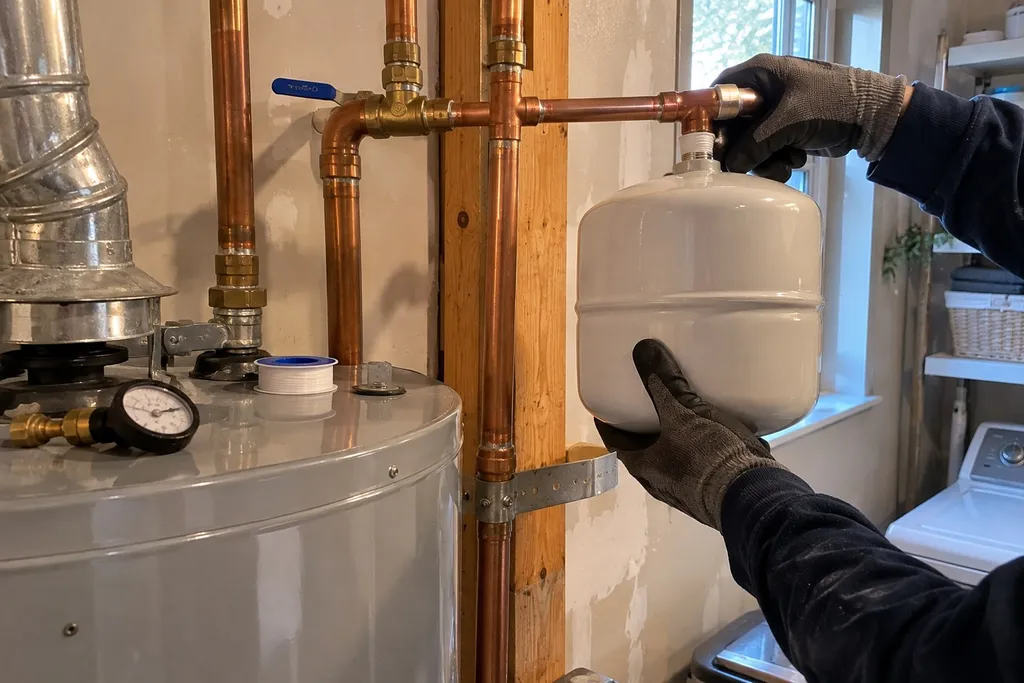
Putting in an expansion tank isn't a big tear-out job. The tank is small and the work happens right at your water heater. A few steps make the difference between a tank that protects your plumbing for years and one that's waterlogged by next winter. Here's what a good install looks like, so you know what to expect and what to look for.
It starts with sizing. A tank that's too small fills up fast and can't take all the expanding water. The right size depends mostly on two things: how many gallons your water heater holds and how high your incoming water pressure is. A bigger heater or higher pressure calls for more room. That's why the pressure reading matters before any tank gets picked off the shelf.
Next comes the air charge. Tanks come from the factory with air already in them, but that setting rarely matches your house. As we covered above, the air side needs to match your home's water pressure. A plumber checks it with a tire-style gauge and adds or lets out air before the tank goes on the pipe. Once it's full of water, you can't set it properly. Skipping this step is one of the most common reasons a brand-new tank wears out early.
Then the install itself. In plain terms, the job usually goes like this:
- Shut off the water to the heater and let off the pressure in the line.
- Add a fitting on the cold water pipe that feeds the heater, close to the heater itself.
- Thread the tank on with a proper seal so the connection stays dry.
- Add a strap or bracket so the tank's weight isn't hanging off the pipe.
- Turn the water back on slowly and check every joint for drips.
That support step gets skipped more than it should. A tank full of water is heavy, and you already know what that weight does to a fitting over time. A simple strap to the wall or a stand takes a few minutes and saves a leak later.
Last is testing, and it's the part that proves the job worked. With the tank on, the heater runs a full cycle while a pressure gauge stays on the line. In a closed system with no working tank, the needle climbs as the water heats. With a good tank, it should stay much steadier. The relief valve should stop dripping, too. If those numbers don't change, something else is going on, and it's better to find that out now than after you've paid.
On most homes, this is a short job that's done in one visit. It can take longer if the pipes near the heater are old or crowded, if there's no good spot to mount the tank, or if the relief valve or regulator turns out to need work too.
When the work's done, it's fair to ask a few questions. What size tank went in, and why? What was the air charge set to? What did the pressure gauge read before and after? A plumber who did it right won't mind telling you. Write the answers down and keep them near the heater. Then whoever works on it next, maybe even you, will have a real starting point.
Expansion Tank Installation
Permits and Code Compliance for Expansion Tanks in Troutdale
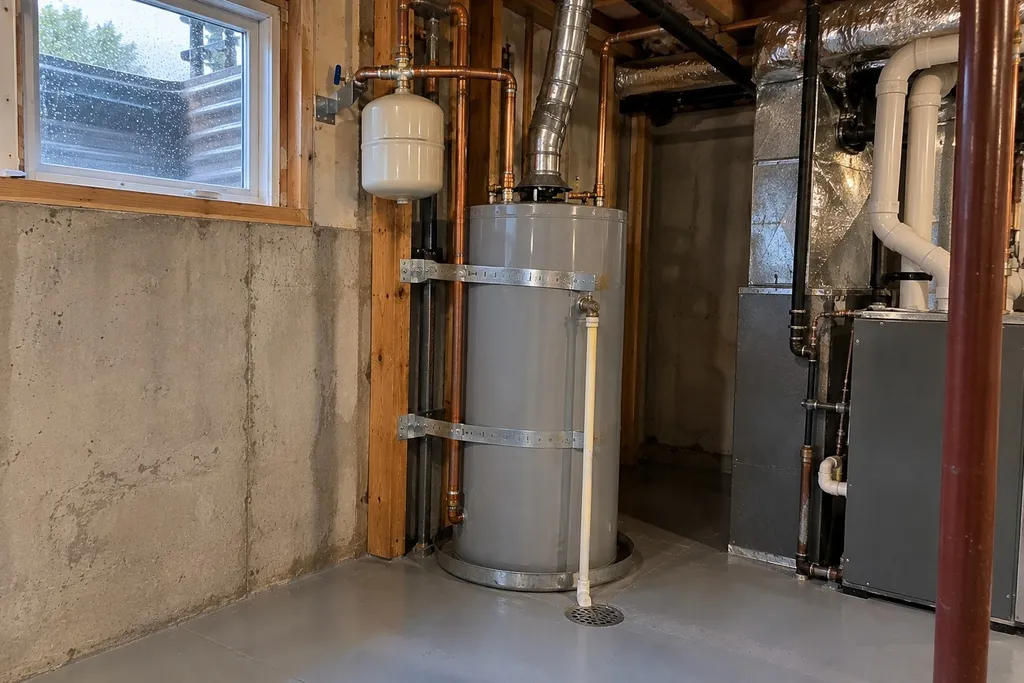
Paperwork isn't the fun part. But it's the part that protects you if something goes wrong, or when you sell your house someday. Here's what you should know before any tank goes on your line in Troutdale.
Plumbing codes care about thermal expansion for a simple reason. Once a home has a closed system, the extra pressure has to be handled on purpose. The relief valve on your water heater is a last line of defense. It isn't meant to be the thing that handles expansion every day. That's why codes generally call for a way to control expansion in a closed system, and an expansion tank is the most common way to do it.
Whether you need a permit depends on the job. Replacing or installing a water heater in Oregon often calls for a plumbing permit and an inspection, and the expansion tank gets looked at as part of that work. Adding a tank by itself to an existing heater may be handled differently. Rules can change by job type and by which office covers your address, so the safest move is to ask before work starts. A good plumber will know or will find out. If someone says permits never matter, that's a red flag.
When an inspector looks at a water heater setup, these are the kinds of things that commonly get checked:
- Expansion control on a closed system, so the relief valve isn't doing that job.
- The relief valve and its discharge pipe, which should run to a safe spot and not be capped or blocked.
- Secure strapping on the water heater itself.
- Clean, dry connections with the right fittings and supports.
There's also the question of who does the work. In Oregon, contractors who do plumbing work for pay need to be properly licensed. You can look up any contractor's number with the Oregon Construction Contractors Board before you hire them. It takes a minute and tells you if their license is active. Bigfoot Plumbing is licensed, bonded, and insured in Oregon under CCB# 257405. You're welcome to look us up. We'd do the same thing in your shoes.
This matters most when it's time to sell. Home inspectors often flag a missing expansion tank on a closed system, or a tank that's hanging off the pipe with no support. A buyer may ask for it to be fixed before closing. If the work was done right the first time, with any needed permit signed off, that's one less thing to sort out under a deadline.
Before you say yes to any install, it's fair to ask a few plain questions. Does this job need a permit? Who pulls it? Will someone inspect it? Is your license active? Clear answers mean you're working with someone who does things the right way.
With 20 years in plumbing, Kevin and our team believe doing it by the book is part of treating your home like our own. If you're not sure whether your home needs a tank, or you want it done right and up to code, give us a call. We'll check your system and give you a straight answer.
Common Questions
Frequently Asked Questions
How long does an expansion tank usually last before it needs attention?
+
An expansion tank can fail quietly after years of use once the rubber bladder tears or the air charge leaks out. There's no fixed age to watch for, but a tank that sounds dull when tapped on top, or lets out water instead of air at the valve, has likely reached the end of its life. Checking it during your water heater's yearly checkup is a good habit.
Can I check my own water pressure before calling a plumber?
+
Yes, you can check it yourself with a water pressure gauge from a hardware store. Screw it onto an outdoor spigot and check the reading in the morning, then again after the water heater has run a while with no taps open. If the needle barely moves, your home likely doesn't have a thermal expansion problem worth worrying about.
Where exactly does the expansion tank get installed on my water heater?
+
It gets installed on the cold water pipe that feeds your water heater, usually right next to the unit. A plumber adds a fitting on that line, threads the tank on with a proper seal, then straps or brackets it so its weight doesn't pull on the pipe. The whole setup sits close enough that you can check it yourself later by following the cold line into your heater.
What happens if I skip the expansion tank and just keep my relief valve?
+
Your relief valve can handle occasional pressure spikes, but it's a safety backup, not a daily solution. If it starts dripping often after hot water use, it's doing a job the expansion tank should be handling. Over time, that repeated pressure cycling can wear out fittings, valves, and even shorten your water heater's life.
Troutdale, Oregon
Related Troutdale Services
Need Plumbing Help?
Get Help Today from
Bigfoot Plumbing
Troutdale, Fairview, Wood Village, Gresham and the homes east toward Corbett. Call the Troutdale number and talk to someone who does this for a living.
10% Off for Veterans · First Responders · Seniors