
Water Heater Maintenance
Water Heater Maintenance in Troutdale: Why Soft Water Changes What Your Tank Needs
Honest, reliable plumbing for Troutdale, Oregon and the east side of Multnomah County.
CCB# 257405
Licensed · Bonded · Insured
20 Yrs
Experience
Family
Owned & Operated
Troutdale, OR
East County Crew
What's Covered on This Page
- Why Soft Water Changes the Maintenance Equation Here
- Signs Your Water Heater Needs Service Now
- What a Professional Maintenance Visit Includes
- When You Can Handle It Yourself (and When You Can't)
- Oregon Code and Manufacturer Guidance vs. Fixed Schedules
- How long does a water heater maintenance visit take?
- Will a maintenance visit make my water heater last longer?
- Can I keep using hot water while the tank is being checked?
- Does a tankless water heater need the same maintenance as a tank model?
Need Water Heater Maintenance in Troutdale?
Water Heater Maintenance
Why Soft Water Changes the Maintenance Equation Here
A lot of water heater advice online is written for places with hard water. In those places, minerals like calcium build up as crusty scale at the bottom of the tank. The big tip is always "flush it every year." That advice isn't wrong. It just isn't the whole story for a home in Troutdale.
Our area's water tends to be soft, which means it carries fewer of those minerals. That's good news in one way. You won't get the thick scale layer that makes a tank rumble and wastes gas or power. But soft water can be a little harder on metal, and that changes which part of your water heater wears out first.
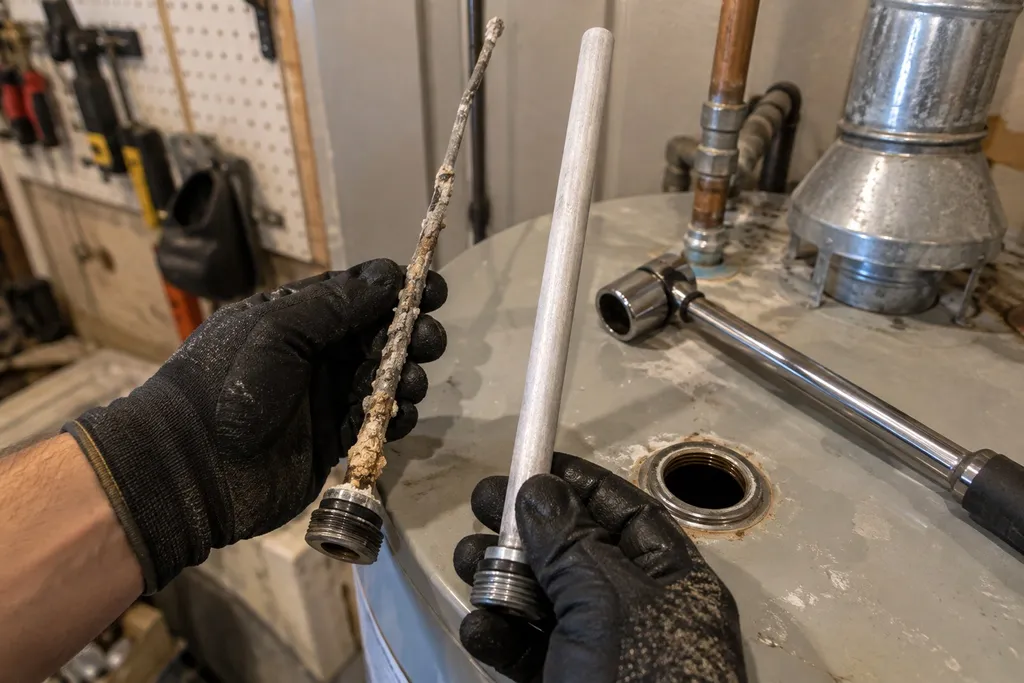
Inside every standard tank there's a metal rod called the anode rod. Its whole job is to corrode so your tank doesn't. Think of it like a bodyguard that takes the hits. In soft water, that rod can get used up faster than you'd expect. Once it's gone, the water starts working on the steel tank itself. Rust inside a tank can't be fixed. When it eats through, you get a leak, and a leak means a new water heater.
So in our area, the most useful thing a maintenance visit can do is check that rod and swap it if it's worn thin. A new anode rod is a small part. A new water heater is a big bill. That's the trade you're making when you keep up with it.
- Anode rod check: This comes first here. A rod that's worn down to the wire needs to be replaced before the tank starts rusting.
- Tank flush: Still worth doing. Even soft water can leave some sediment, plus bits of the anode rod itself can settle at the bottom.
- Relief valve test: The temperature and pressure relief valve is a safety part. It needs to open and close the way it should.
- Signs of trouble: Rusty-looking hot water, a rotten egg smell, or moisture around the base can all point to a tank that's corroding.
One exception is worth knowing. If your home is on a private well instead of city water, your water may be quite different. Well water can be harder or carry fine sand. A simple water test tells you what you're working with, and that changes what your tank needs most.
Here's the bottom line. In a soft-water area, a tank that looks fine on the outside can still be wearing out on the inside. A quick look at the anode rod is the easiest way to know for sure. It's also the best way to help your water heater reach the end of its normal life instead of quitting early.
Water Heater Maintenance
Signs Your Water Heater Needs Service Now
Most of the time, maintenance is something you plan. But some signs mean your water heater is already asking for help. The trick is knowing which ones can wait a week and which ones can't.
Call soon if you notice any of these:
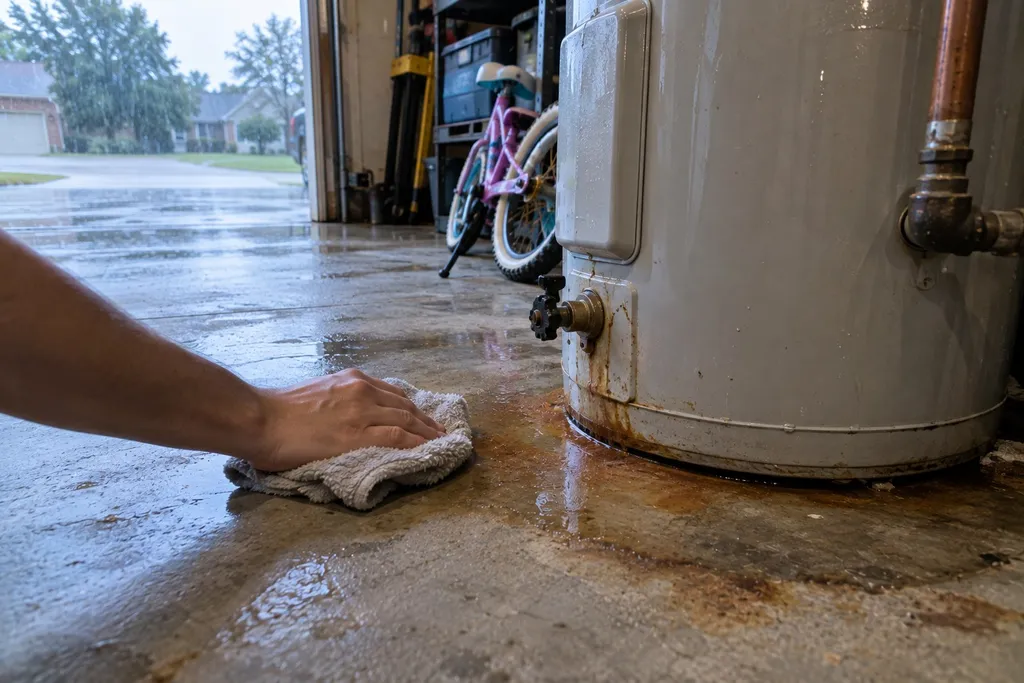
- Water on the floor near the tank. First, find where it's coming from. A drip from a pipe fitting or valve on top is often a simple repair. Water seeping from the tank body itself is different. That usually means the inside has rusted through, and a tank can't be patched.
- A relief valve that drips or spits water. That valve is supposed to stay closed unless something's wrong. If it's letting water out, either the pressure or heat in the tank is too high, or the valve is wearing out. Either way, it needs a look.
- Hot water that runs out much faster than it used to. If your shower used to last and now goes cold halfway through, something inside is off. It could be sediment taking up space at the bottom or a part that's quit working.
- No hot water, or water that's only lukewarm. Sometimes it's a small fix. Sometimes it's the first sign of a bigger problem. It's worth finding out before it gets worse.
- Popping, rumbling, or banging sounds. That noise often comes from water trapped under sediment at the bottom of the tank. It means the tank is working harder than it should.
Rusty-looking hot water and a rotten egg smell belong on this list too. As we covered above, both can point to wear inside the tank. Here's a quick test: run only the hot tap, then only the cold. If the rust shows up only in the hot water, the tank is the likely source, not your pipes.
Now picture this. You walk past the water heater in the garage and see a small damp spot at the base. It's not much. It's easy to wipe it up and forget about it. But a slow drip from the tank itself rarely stays small. When a tank finally gives out, it can soak a garage or a finished basement fast. A small spot is your early warning, so take it seriously.
Not every sign means bad news. A dripping valve, a fitting that's leaking, or a little noise can often be handled with a repair or a tune-up. We'll tell you straight whether your tank is worth keeping. If a repair makes sense, that's what we'll recommend. If the tank is near the end, we'll explain why, so you can plan for it instead of getting caught off guard on a cold morning.
Bigfoot Plumbing is licensed, bonded, and insured in Oregon (CCB# 257405), and we do both water heater repair and emergency plumbing. If water is on the floor right now, that's a call to make today.
Water Heater Maintenance
What a Professional Maintenance Visit Includes
A real maintenance visit is more than a peek at the tank and a sticker on the side. You should come away knowing how much life your water heater has left and whether anything needs fixing now. Here's what a good checkup covers.
- Anode rod check. The rod comes out so it can be looked at directly. As we covered above, this matters most in our soft-water area. If it's worn thin, it gets swapped.
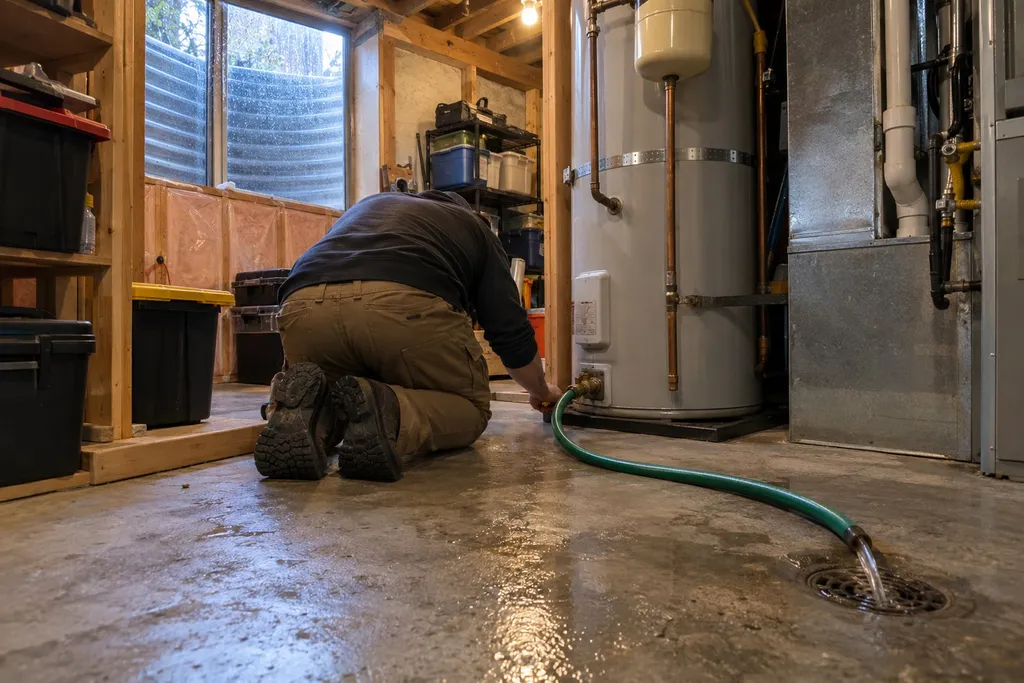
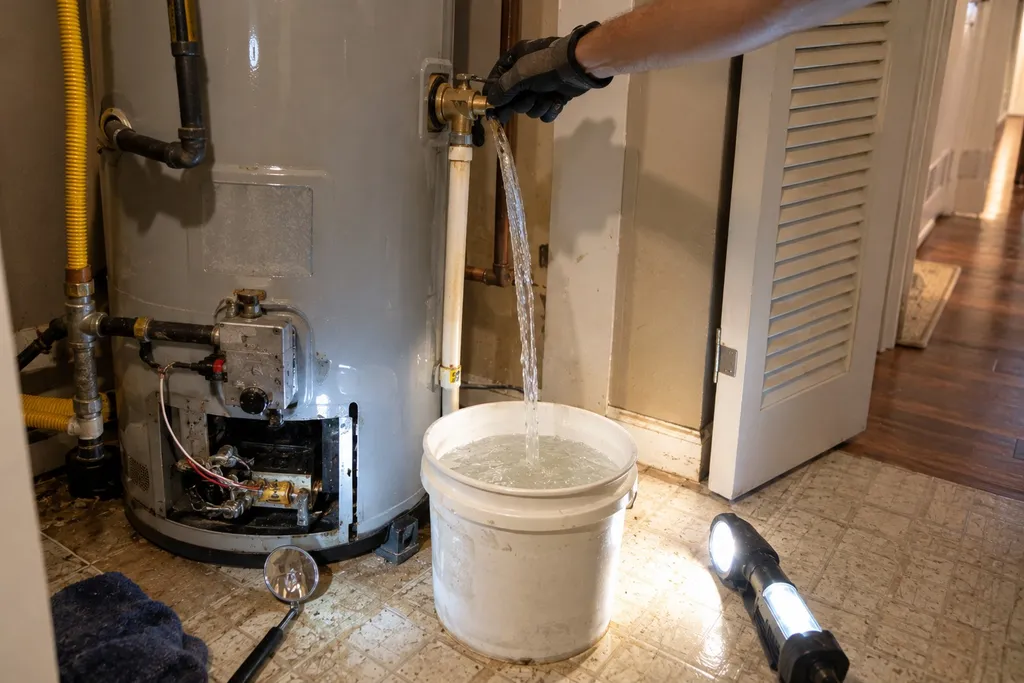
- Tank flush. The tank is drained through the valve at the bottom until the water runs clear. That clears out sediment and any bits of old anode rod sitting on the bottom.
- Relief valve test. The temperature and pressure relief valve is opened briefly to make sure it lets water out and then seals shut again. A valve that sticks or keeps dripping afterward should be replaced.
- Temperature setting. The thermostat is checked so your water is hot enough to be useful but not so hot that it can scald a child or waste energy.
- Gas or electric parts. On a gas unit, that means looking at the burner, the flame, and the vent pipe so exhaust leaves your home the way it should. On an electric unit, it means checking the heating elements and wiring connections.
- Pipes, fittings, and shutoff valve. Every connection on top of the tank gets a look for drips, rust, or crusty buildup. The cold water shutoff should turn easily, because that's the valve you'll need in a hurry if the tank ever leaks.
- Straps and setup. In earthquake country like ours, the tank should be strapped securely to the wall. The visit also checks that the tank sits level and that the area around it is clear.
Water pressure is part of the picture too. When the pressure coming into your home runs high, every part of the water heater works harder, including that relief valve. A quick gauge reading at a faucet shows where you stand. If it's high, an expansion tank installation or a water pressure regulator replacement may be the fix. Each one has its own page if you want the details.
Tankless water heaters need a different kind of care. There's no anode rod and no tank to drain. Instead, the unit gets a flush to clean the heat exchanger, plus a check of the inlet filter and the venting. The goal is the same: keep it running well and catch small problems early.
The most useful part of the visit comes at the end. You should get a plain answer about what's in good shape, what's wearing, and what can wait. If everything checks out, that's what you'll hear. We've spent 20 years in this trade, and we'd rather tell you your tank is fine than sell you something you don't need.
Water Heater Maintenance
When You Can Handle It Yourself (and When You Can't)
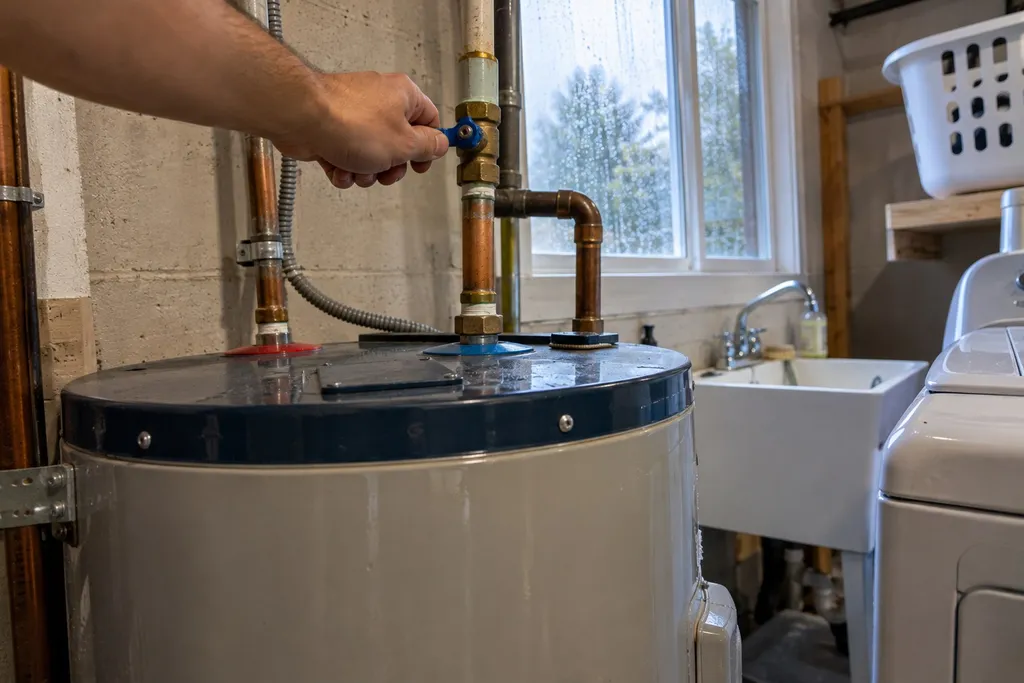
Here's the honest answer. Some water heater care is easy, and you don't need us for it. These are simple habits most homeowners can keep up on their own:
- Take a quick look every month or so. Check the floor around the base and the pipes on top. Dry is what you want to see.
- Find your cold water shutoff now, and make sure it turns. If the tank ever leaks, that's the first thing you'll reach for.
- Keep the area clear. Boxes, paint cans, and piles of laundry don't belong next to a water heater, and that's especially true for a gas unit.
- Pay attention to your hot water. Notice if it runs out sooner, looks rusty, or the tank starts making new noises.
- Turn the thermostat down if the water feels too hot for little hands.
If you're handy and your drain valve is in good shape, flushing the tank yourself is a fair job to take on. Start with your owner's manual, since it lays out the steps for your model.
Some jobs are better left to a licensed plumber:
- Pulling the anode rod. After years in the tank, it's often stuck tight. Forcing it with the wrong tools can twist the fitting or damage the tank top. That turns a small part into a big repair.
- Anything on the gas side. The burner, the pilot, and the vent pipe all affect whether exhaust leaves your home safely. That isn't the place to guess.
- Electric heating elements and wiring. These run on high-voltage power. The power has to be shut off the right way before anyone touches them.
- An old valve that hasn't moved in years. Opening a stiff drain valve or relief valve for the first time can start a drip that won't stop. That's worth having someone there who can fix it on the spot.
- Water coming from the tank body. No amount of maintenance fixes that.
There are also times you don't need a maintenance visit at all. If your tank is fairly new, it was checked in the last year or so, and you aren't seeing any of the warning signs above, you can wait. We'd rather you save your money.
The other case is a tank that's already leaking from the body. Maintenance can't save a tank that's rusted through. That money is better put toward water heater installation, and we'll tell you so plainly instead of selling you a tune-up that won't help.
For everything in between, a checkup is how you find out what's going on inside the tank. That includes an older tank, a rod nobody's looked at, or a valve you're not sure about. In our soft-water area, a tank can look fine on the outside and still be wearing out inside.
Bigfoot Plumbing is a family-owned company based right here in Troutdale. We're licensed, bonded, and insured in Oregon (CCB# 257405). Veterans, first responders, and seniors get 10% off.
Water Heater Maintenance
Oregon Code and Manufacturer Guidance vs. Fixed Schedules
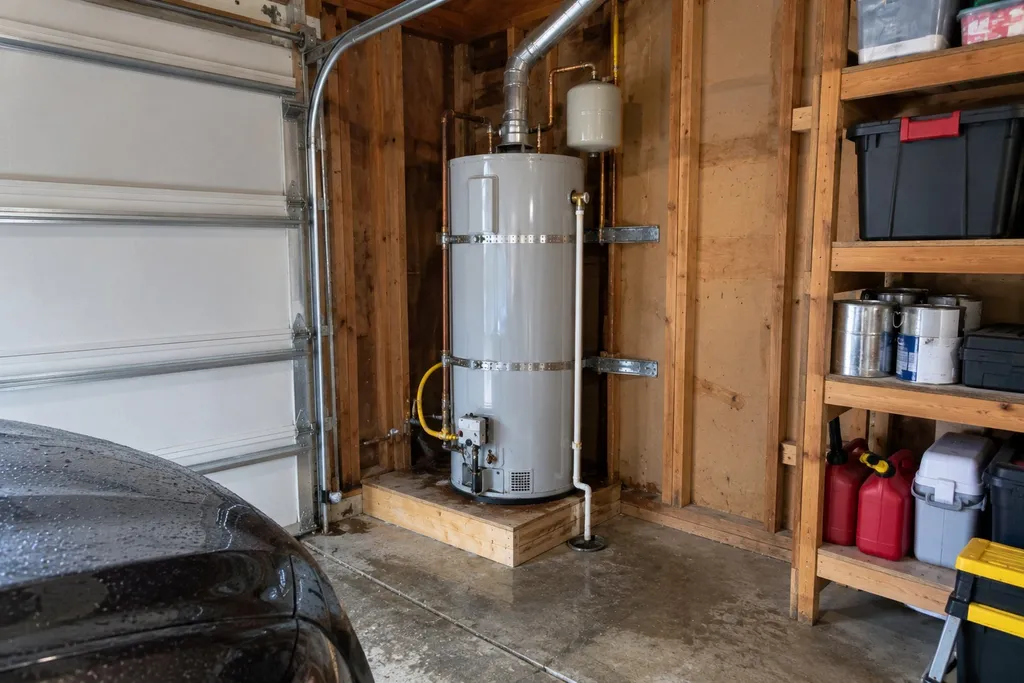
You've probably heard the rule: flush your water heater once a year. It's easy to remember. But it's a guess, and it was built for hard-water towns. A better schedule comes from three places: what your owner's manual says, what Oregon's plumbing rules require for safety, and what your own tank shows when someone looks inside.
Start with the manufacturer. The label on the side of your tank lists the model number and size, and the owner's manual lists the care steps for that model and how often to do them. Different models ask for different things. A tankless unit's manual will have its own flush schedule, too. If the manual is long gone, the model number on the label is usually enough to look it up. Treat that guidance as your baseline.
Next comes code. Oregon's plumbing rules are mostly about how a water heater is installed safely, not how often you service it. A checkup is a good time to make sure an older setup still holds up on the safety basics:
- The relief valve has a drain line that carries hot water down to a safe spot, not toward someone standing nearby.
- The tank is strapped to the wall, as we mentioned earlier.
- A gas unit's vent pipe is connected and pitched so exhaust leaves your home.
- Nothing that can burn is stored close to a gas burner.
Rules change over time. A tank put in 15 years ago may have been fine then and fall short now. That doesn't always mean you have to change anything today. It does mean that when the tank gets replaced, the new install needs to meet the rules in place at that time. It's better to know that ahead of time than to be surprised by it later.
The last piece is your tank itself, and in our soft-water area, the anode rod sets the pace. Picture two neighbors on the same street with the same tank put in the same year. One has a family of five and lots of long showers. The other is a retired couple. Their rods won't wear at the same speed, so they shouldn't be on the same schedule.
That's why the first checkup matters so much. It gives you a starting point. If the rod has barely worn, the next check can wait longer. If it's thin already, you'll want to look again sooner. After a visit or two, you'll have a schedule that fits your home, not a calendar rule made for somebody else's water.
We've spent 20 years in this trade, and that's how we like to work. We'll follow what your manual says, check the safety basics, and tell you plainly when your next look should be. If that's two years out, that's what you'll hear from us.
Common Questions
Frequently Asked Questions
How long does a water heater maintenance visit take?
+
Most checkups take under an hour, since the anode rod, flush, and safety checks cover the full tank quickly. An older tank with a stuck anode rod or valve can take a bit longer. We'll let you know up front if your tank needs extra time.
Will a maintenance visit make my water heater last longer?
+
Yes, catching a worn anode rod early is the single best way to stop the slow corrosion that shortens a tank's life. Once that rod wears out, the tank itself starts rusting, and that damage can't be undone. A checkup now can help your tank reach its normal lifespan instead of failing early.
Can I keep using hot water while the tank is being checked?
+
No, the tank needs to be drained for a flush and have power or gas shut off for a full check, so hot water won't be available during the visit. Plan on skipping showers or dishes for that short window, then everything goes right back to normal.
Does a tankless water heater need the same maintenance as a tank model?
+
No, a tankless unit skips the anode rod and tank flush entirely since there's no tank to drain. Instead, it needs a flush to clean the heat exchanger plus a check of the inlet filter and venting, which keeps it running well and catches problems early.
Troutdale, Oregon
Related Troutdale Services
Need Plumbing Help?
Get Help Today from
Bigfoot Plumbing
Troutdale, Fairview, Wood Village, Gresham and the homes east toward Corbett. Call the Troutdale number and talk to someone who does this for a living.
10% Off for Veterans · First Responders · Seniors