
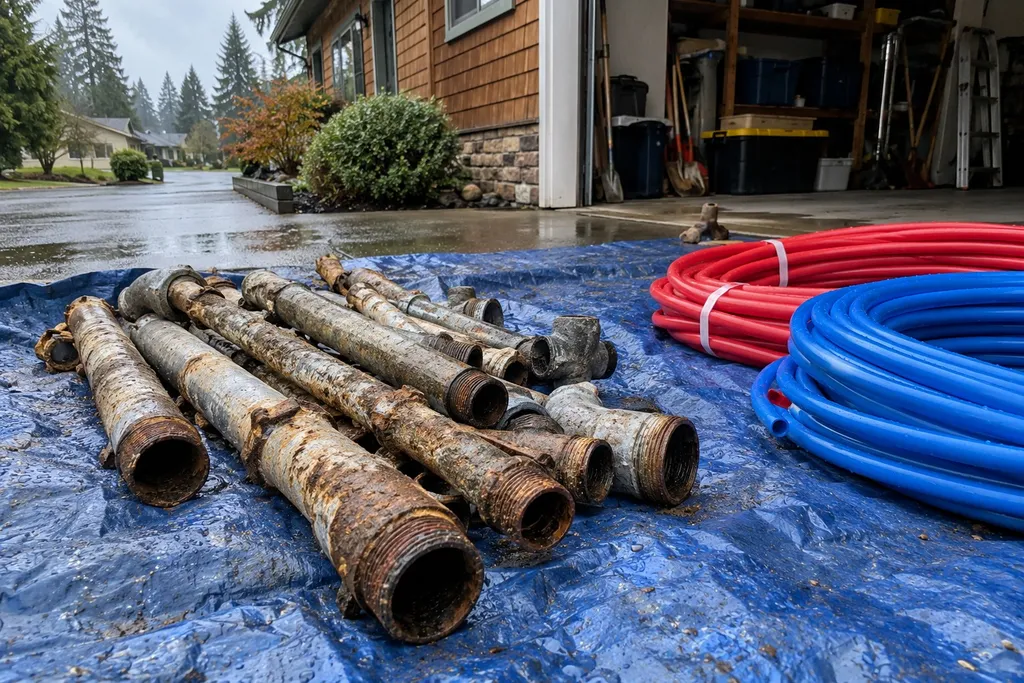
Pipe Replacement
Pipe Replacement in Troutdale: Know When You Really Need It
Honest, reliable plumbing for Troutdale, Oregon & the surrounding Pacific Northwest
CCB# 257405
Licensed · Bonded · Insured
20 Yrs
Experience
Family
Owned & Operated
Troutdale, OR
East County Crew
What's Covered on This Page
- Deciding Between a Repair and a Full Pipe Replacement
- Signs Your Pipes Are Failing, Not Just Leaking
- When a Repair Is the Right Call, Not Replacement
- Why Older Multnomah County Homes Face More Pipe Failures
- What Pipe Replacement Involves, Start to Finish
- Can you replace pipes without tearing out my walls?
- How long will my water be shut off during pipe replacement?
- Do I need a permit to replace pipes in my Troutdale home?
- What should I do if I find a leak but I'm not ready to replace pipes yet?
Need Pipe replacement?
Pipe Replacement
Deciding Between a Repair and a Full Pipe Replacement
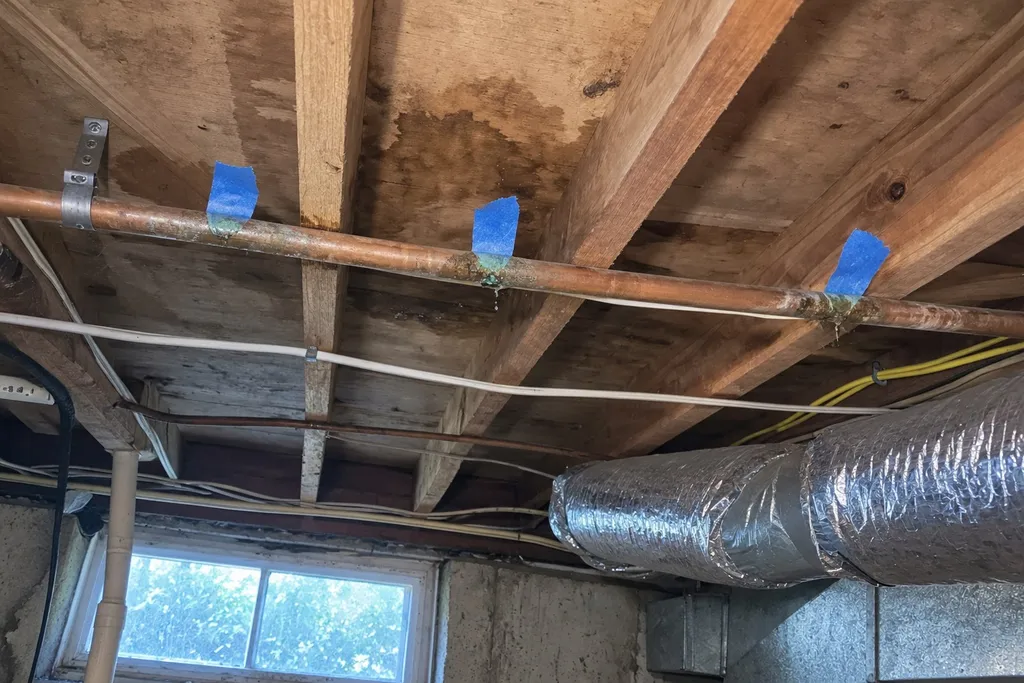
Here's the honest truth. Most leaks don't mean you need new pipe. If a fitting worked loose, a pipe froze and split in one spot, or someone drove a nail through a line during a remodel, the rest of your plumbing is probably fine. We fix the bad spot, and you get on with your day. Replacing good pipe because of one bad joint is money you don't need to spend.
A repair is usually the right call when:
- It's the first leak you've had, and there's a clear reason for it.
- The pipe on either side of the leak looks clean and solid, with no green crust, flaking, or rust.
- Your water pressure is good everywhere else in the house.
- Your water runs clear, with no brown or orange tint when you first turn on the tap.
Things change when the pipe itself is the problem. Pipes wear out from the inside. You can't see that happening, but you can see what it leaves behind. When one patch leads to another a few months later, you're not fixing a leak anymore. You're chasing a pipe that's failing one weak spot at a time.
It's time to think about replacement when you notice:
- Two or more leaks in the same run of pipe, especially small pinhole leaks.
- Rusty or discolored water, mostly from hot water or first thing in the morning.
- Low pressure at several fixtures, not just one faucet with a clogged aerator.
- Older galvanized steel pipe, which rusts shut from the inside over time.
- Gray plastic polybutylene pipe, a material known for failing at the fittings.
Picture this. You fix a drip under the kitchen sink in spring. By fall there's a damp spot on the basement ceiling, and the shower takes a while to warm up and comes out weak. Each of those could be a small repair. Together they tell you the line feeding that part of the house is tired.
There's also a middle ground. Pipe replacement doesn't have to mean the whole house. Often it's one section, like the line to the water heater or one bathroom, that's worn out while the rest is fine. Replacing just that run can fix the problem without opening every wall. If the wear shows up all through the house, a full repipe is its own job, and it has its own page.
Whoever you call, ask them to show you why. A good plumber should be able to point to the corrosion, the repeat leak spots, or the pipe material and explain it in plain words. If they can't show you, get a second look. Kevin has spent 20 years in this trade, and our whole approach at Bigfoot Plumbing comes down to one thing: you should only pay for the fix your home really needs.
Pipe Replacement
Signs Your Pipes Are Failing, Not Just Leaking
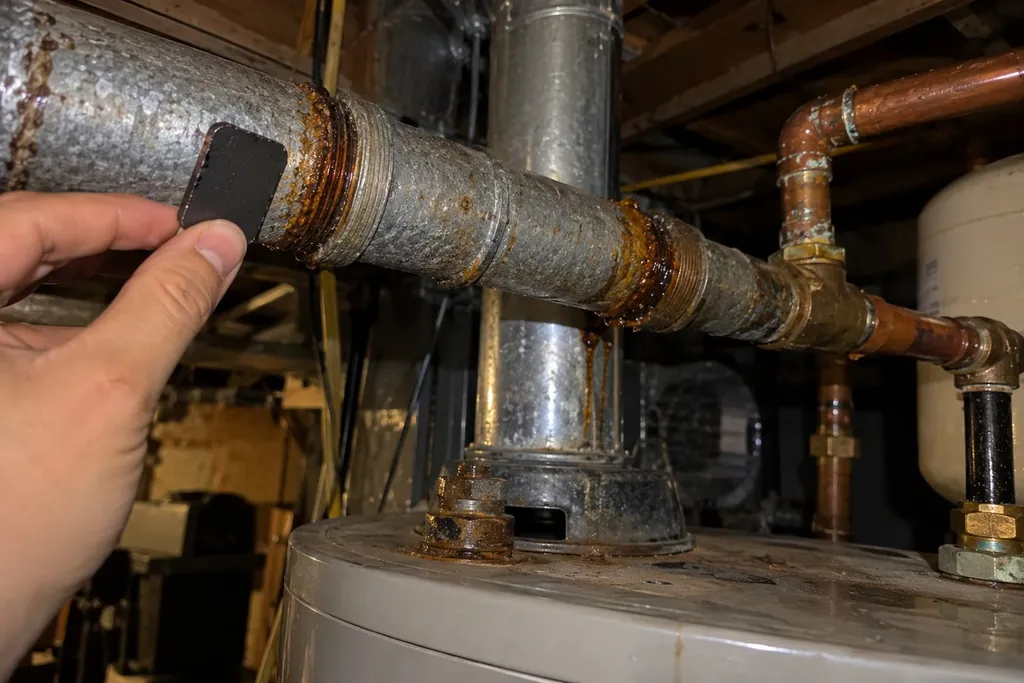
You don't need special tools to get a good idea of what's going on with your pipes. A few minutes with a flashlight and a magnet can tell you a lot. These checks won't replace a plumber's eyes, but they'll help you walk into that conversation knowing what to ask.
Start by finding out what your pipes are made of. Look where the water line comes into the house, near the water heater, or under the house if you have a basement or crawlspace. Here's how to tell what you've got:
- Galvanized steel is dull gray metal with threaded joints. A fridge magnet will stick to it.
- Copper looks like an old penny. If you lightly scratch it with a coin, it'll shine bright orange. A magnet won't stick.
- Polybutylene is gray plastic, often stamped with PB2110. It's usually joined with metal crimp rings.
- PEX is flexible plastic, often red, blue, or white. It's a newer material and usually not the cause of age-related trouble.
Next, figure out where discolored water is coming from. Fill a white cup from the cold tap first thing in the morning, then fill another from the hot tap. If only the hot water looks rusty, the water heater may be the real problem, not your pipes. That's a water heater repair, not a pipe job. If both hot and cold come out tinted, the pipes themselves are the more likely source.
Then test your water pressure the simple way. Turn on the kitchen faucet and flush a toilet at the same time. Watch the flow. A little dip is normal. A big drop at more than one fixture points to pipes narrowing on the inside. If only one faucet is weak, unscrew the aerator at its tip and rinse it out. A clogged aerator is a two-minute fix, and it's a lot cheaper than new pipe.
Check for leaks you can't see. Shut off every faucet and appliance that uses water. Then look at your water meter. Many meters have a small dial or triangle that spins when water moves. If it's turning while everything's off, water is escaping somewhere. That could be one bad spot or a sign of wider trouble. Leak detection can pin down where it is before anyone opens a wall.
Last, take a close look at any pipe you can reach. Run your hand along it. Green or white crust at the joints, flaking metal, bulges, or damp spots that come back after you wipe them dry all tell you the pipe is wearing out from the inside. Clean, dry pipe with tight joints is a good sign, even if it's old.
Here's the main thing. One clue by itself doesn't mean much. Old pipe can still have plenty of life left, and a single bad reading might just be a clogged aerator or a tired water heater. When two or three of these checks point the same way, that's when pipe replacement starts to make sense. If you've done these checks and you're still not sure, write down what you found. It makes the first conversation with a plumber faster and more honest.
Pipe Replacement
When a Repair Is the Right Call, Not Replacement
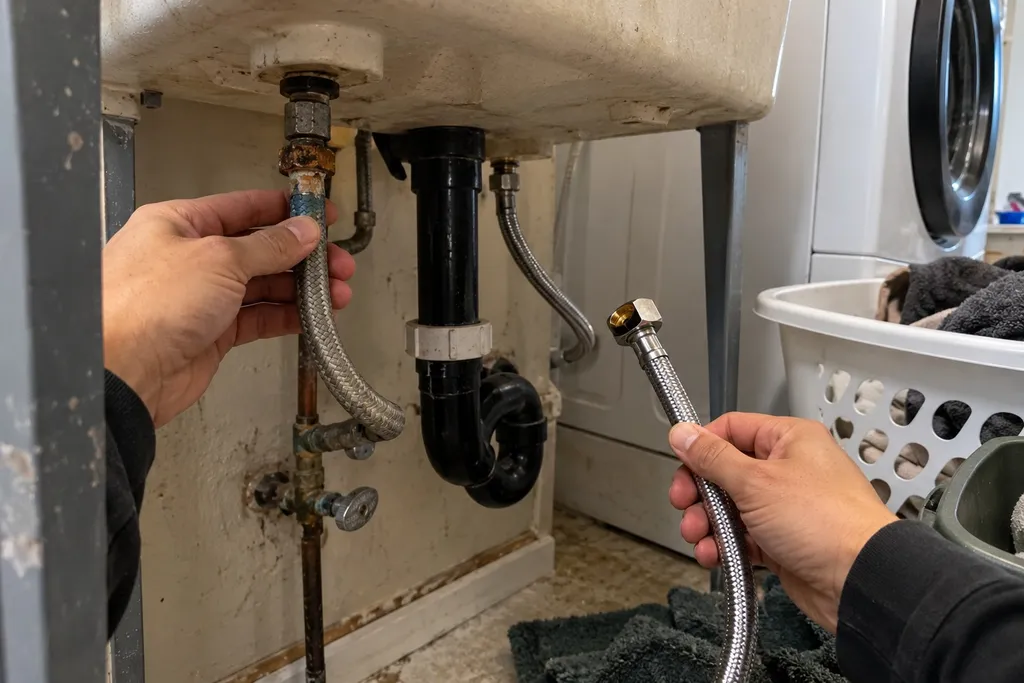
Sometimes the problem only looks like a pipe problem. Other times it's real but small, or it's real but can safely wait. In each of those cases, new pipe is the wrong answer, and we'll tell you so.
A few problems get blamed on pipes when the real cause sits somewhere else:
- Low or surging pressure across the whole house. Many homes have a pressure regulator where the main line comes in. When it wears out, pressure can drop or spike everywhere at once. Replacing the regulator is a much smaller job than replacing pipe.
- Banging or knocking when a faucet shuts off. That's often water hammer, a pressure surge in the line. It's noisy and worth fixing, but it doesn't mean the pipe is worn out.
- A leak under a sink or behind a toilet. These often come from the flexible supply line or the little shutoff valve, not the pipe in the wall. Those parts are cheap and easy to swap.
- A running or leaking toilet. That's a toilet repair. Your pipes have nothing to do with it.
Some of this you can handle yourself. If a braided supply line under a sink is dripping, you can shut off the small valve below it, unscrew the line, and take it to the hardware store to match. Swap it in by hand, snug it a quarter turn with a wrench, and open the valve slowly. If the valve won't turn, or it leaks once you open it, stop there. A stuck valve is a good reason to call a plumber, not to force it.
Old pipe isn't the same as bad pipe. Copper that's decades old can still be clean, dry, and doing its job. If your water runs clear, your pressure is steady, and you haven't had repeat leaks, the age of the pipe alone isn't a reason to tear it out.
A leak under a concrete slab doesn't always mean replacement either. Sometimes the leaking spot can be repaired from above. Other times it makes more sense to reroute that one line through a wall or attic and leave the old one in the slab. Neither of those requires replacing the rest of your plumbing.
There are also good reasons to wait, even when your pipes show some wear:
- You've had one leak, it's fixed, and nothing else is going on. Keep an eye on it. If nothing new shows up, you've lost nothing by waiting.
- Money is tight right now. A solid repair can buy you time to plan and save, as long as you're not seeing new leaks every few weeks.
- You're planning a remodel. If walls are coming open next year anyway, replacing pipe in those rooms at the same time can save you from paying to open and patch the same walls twice.
If you decide to wait, give yourself an early warning. Water leak sensors on the floor near the water heater and under sinks can alert you the moment water shows up. An emergency shut-off valve lets you stop the water fast if something does let go. Neither one fixes a tired pipe, but both can keep a small leak from turning into a ruined floor while you plan your next step.
Waiting only stops making sense when leaks keep coming back. If you're patching a new spot every few months, the repairs start costing more than they save, and water damage becomes the bigger risk.
Pipe Replacement
Why Older Multnomah County Homes Face More Pipe Failures
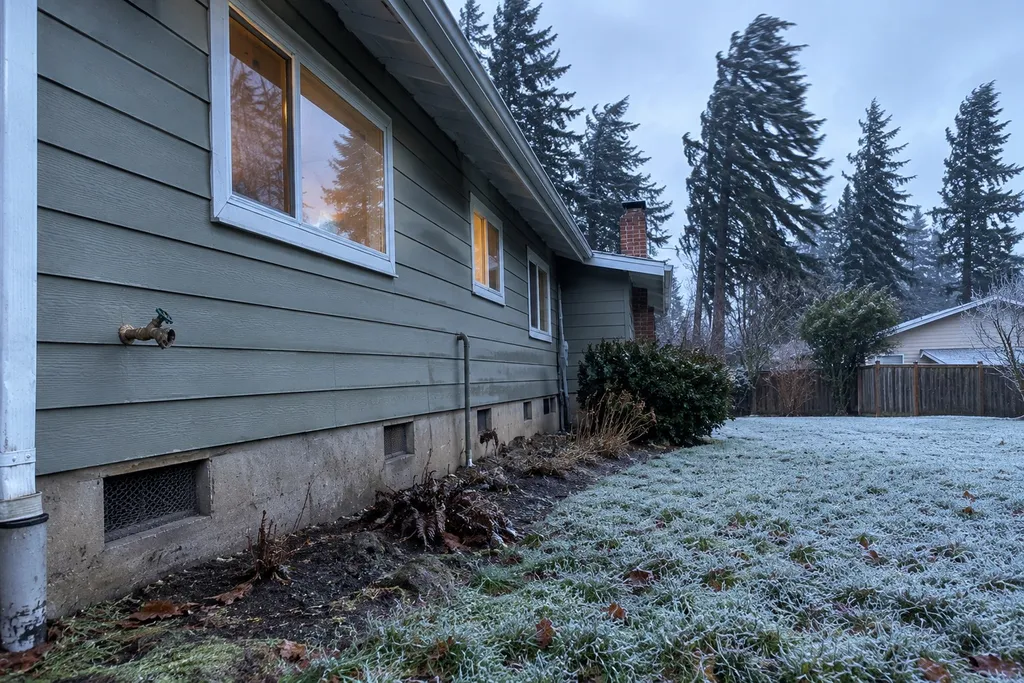
Age alone doesn't doom a pipe. Older homes around Troutdale run into more trouble because of what those pipes were made of, how they've been patched over the years, and the weather they sit through every winter. If you know which of these apply to your house, you'll know whether to keep an eye out or start planning.
Start with when your home was built. Building materials changed over the decades, and each era left its own weak spot:
- Older homes often still have galvanized steel. It rusts from the inside out, so the opening slowly narrows until pressure drops and the water turns brown.
- Homes built or remodeled later often switched to copper. Good copper can last a long time, but water chemistry and age can still cause small pinhole leaks.
- Some homes from the late 1970s into the 1990s got gray polybutylene. It tends to fail at the fittings, often with no warning.
- Newer homes usually have PEX, which isn't old enough to cause age-related trouble.
You already know how to tell these apart from the checks above. The point here is that the year your house was built gives you a good first guess at what's behind the walls.
Patch jobs are the next piece. An older home has usually seen a few owners and a few plumbers. Over the years, someone may have spliced copper straight onto galvanized pipe without the right fitting between them. When those two metals touch, the joint can corrode faster than either pipe would by itself. If you see green or white crust where two different-looking pipes meet, that joint deserves a closer look.
Then there's the weather. Troutdale sits right at the west end of the Columbia River Gorge. In winter, cold east winds come down the Gorge and can drive temperatures below freezing, sometimes for days. Pipes in crawlspaces, garages, and outside walls take the worst of it. A pipe that freezes doesn't always burst the first time. It can bulge or crack a little, then start leaking weeks later when nobody connects it to the cold snap. Older homes often have less insulation around their pipes, so they feel that cold more.
Damp crawlspaces add slow wear. Many homes in our area sit over a crawlspace instead of a full basement. Our long, wet winters keep a lot of those spaces humid for months. Metal pipe sitting in damp air for years can corrode on the outside while it's corroding on the inside too. It's worth grabbing a flashlight and looking under there once a year, especially after a hard freeze.
Your water matters too, but every system is different. Your water provider puts out a yearly water quality report. It's a quick read, and it'll tell you whether your water is soft, hard, or treated to protect pipes. That helps explain why one neighborhood's copper lasts and another's springs pinhole leaks.
None of this means your older home needs new pipe. Plenty of older houses have plumbing in fine shape. It just means that when a leak does show up in an older Troutdale home, it's worth asking why before you patch it and move on.
Pipe Replacement
What Pipe Replacement Involves, Start to Finish
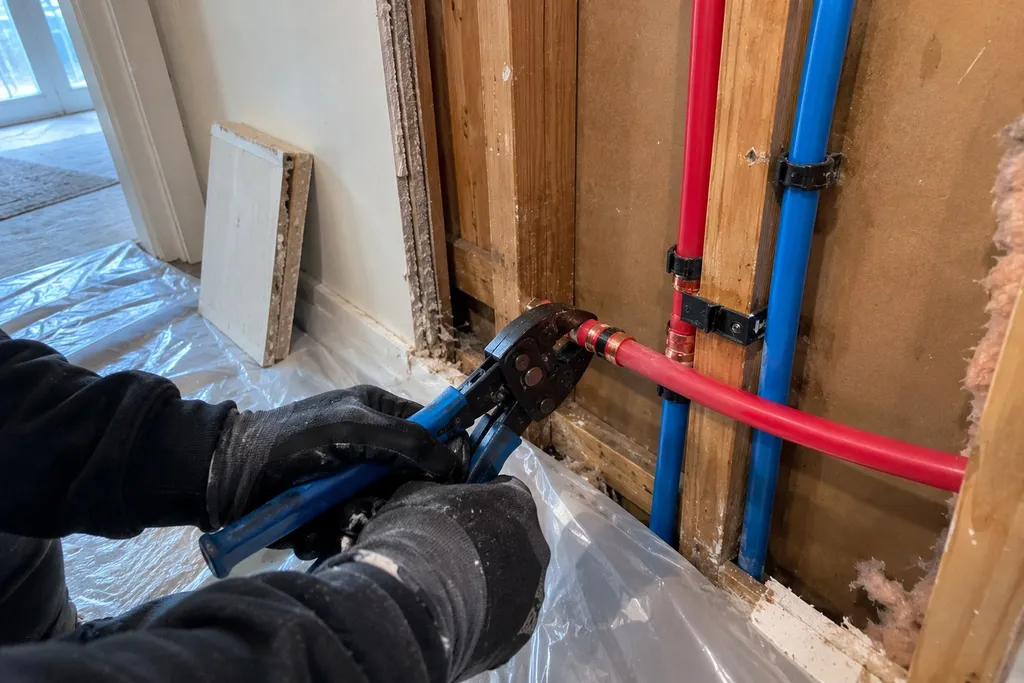
Once you know a section of pipe is worn out, the job itself is less scary than most people expect. Here's how pipe replacement usually goes, so you know what's coming and what to ask before anyone starts cutting.
It starts with a plan. A good plumber traces the bad run from where it starts to where it ends and decides how much really needs to go. That might be the line to one bathroom, or the line to the water heater. You should get a clear answer to three things before work begins: which pipe is coming out, what it's being replaced with, and why that much and no more.
Next comes the new material. Most replacement work today uses PEX or copper. PEX bends around corners, so it often needs fewer openings in your walls. Copper is rigid and has a long track record. Either one can be a fine choice. Ask why your plumber is picking one over the other for your house.
Then there's access. This is where the layout of your home matters most. If the pipe runs through a crawlspace or an unfinished basement, a lot of the work can happen down there with little or no damage to your walls. If it runs inside finished walls, the plumber will need to cut some openings. Good work keeps those openings small and only where they're needed. Ask up front who patches the drywall afterward, because some plumbers do it and many don't.
Your water will be off for part of the job. For a single run, that's often a matter of hours. For bigger jobs, the new pipe can sometimes be run first and then switched over at the end, which keeps the shutoff shorter. It's worth filling a few jugs and planning showers around it.
After the new pipe is in, it should be tested before the walls are closed. That means filling it with water or air under pressure and watching for any drop. A test you can see is worth more than someone telling you it's fine.
Most pipe replacement also needs a plumbing permit and an inspection. That protects you. It means someone outside the job looked at the work, and it can matter when you sell your home or file an insurance claim. If a contractor suggests skipping the permit to save time, that's a red flag.
Before you hire anyone, it helps to ask:
- Are you licensed with the Oregon Construction Contractors Board, and what's your number?
- Exactly which pipe are you replacing, and why not more or less?
- Will you pull the permit and schedule the inspection?
- How long will my water be off?
- Where will you open walls, and who patches them?
- Is the price for the whole job, or could it change once walls are open?
That last one matters. Pipe hidden in walls can hold surprises. An honest plumber will tell you ahead of time what could change the price and will talk to you before doing anything extra.
Common Questions
Frequently Asked Questions
Can you replace pipes without tearing out my walls?
+
Often yes, especially if the run goes through a crawlspace or unfinished basement. Many Troutdale homes sit over a crawlspace, so pipes there can be swapped with little or no damage to your walls. If the pipe runs inside finished walls instead, a plumber will need to cut some openings, but a good one keeps those small and only where needed. Ask ahead of time who patches drywall afterward, since not every plumber includes that.
How long will my water be shut off during pipe replacement?
+
For a single section of pipe, your water is usually off for just a few hours. On bigger jobs, a plumber can sometimes run the new pipe first and switch it over at the end, which shortens the actual shutoff time. It's smart to fill a few jugs of water and plan showers around the work.
Do I need a permit to replace pipes in my Troutdale home?
+
Yes, most pipe replacement work needs a plumbing permit and an inspection. This protects you because someone outside the job reviews the work, which can matter later if you sell your home or file an insurance claim. If a contractor suggests skipping the permit to save time, treat that as a warning sign.
What should I do if I find a leak but I'm not ready to replace pipes yet?
+
Set up an early warning system while you plan. Water leak sensors near the water heater and under sinks can alert you the moment water shows up, and an emergency shut-off valve lets you stop water fast if a pipe lets go. Neither fixes worn pipe, but both can protect your floors and walls while you save up or schedule the work.
Troutdale, Oregon
Related Troutdale Services
Need Plumbing Help?
Get Help Today from
Bigfoot Plumbing
Troutdale, Fairview, Wood Village, Gresham and the homes east toward Corbett. Call the Troutdale number and talk to someone who does this for a living.
10% Off for Veterans · First Responders · Seniors