
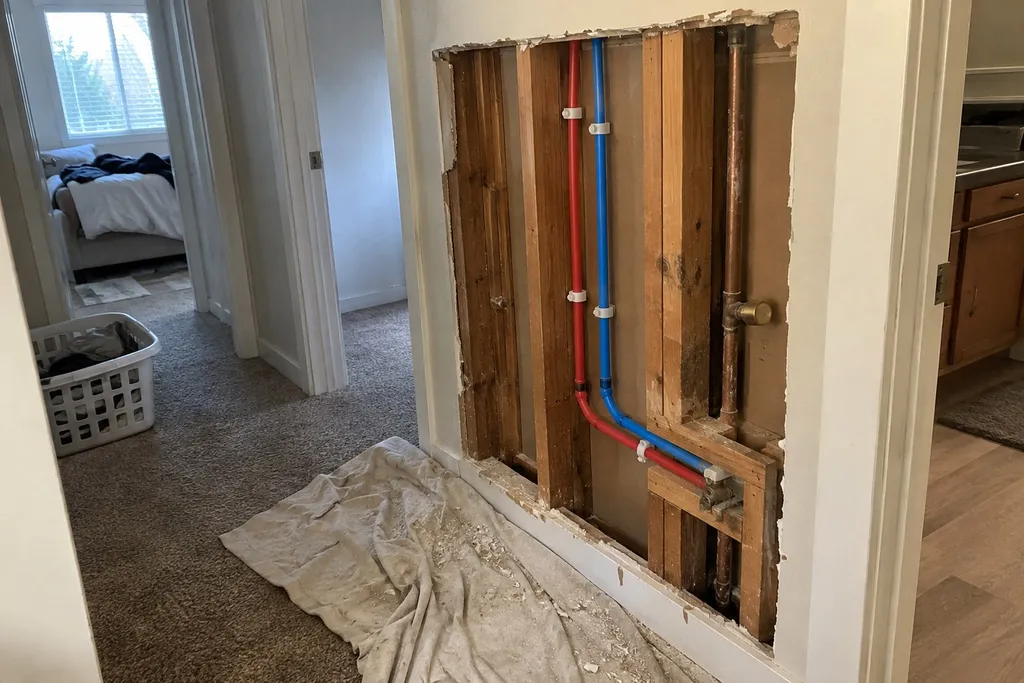
Pipe Rerouting
Pipe Rerouting in Troutdale: Should You Reroute, Repair, or Repipe?
Honest, reliable plumbing for Troutdale, Oregon & the surrounding Pacific Northwest
CCB# 257405
Licensed · Bonded · Insured
20 Yrs
Experience
Family
Owned & Operated
Troutdale, OR
East County Crew
What's Covered on This Page
- Pipe Rerouting Is Different From Repair and Repiping
- Situations That Call for Rerouting a Pipe
- When You Do Not Need Pipe Rerouting
- What Happens During a Pipe Rerouting Job
- Permits and Why Pressure Testing Matters
- How long does a pipe rerouting job usually take?
- What kind of pipe material is used for a reroute?
- Will rerouting a pipe mean tearing up my walls or floors?
- Do I need a permit for pipe rerouting in Troutdale?
Need Pipe rerouting?
Pipe Rerouting
Pipe Rerouting Is Different From Repair and Repiping
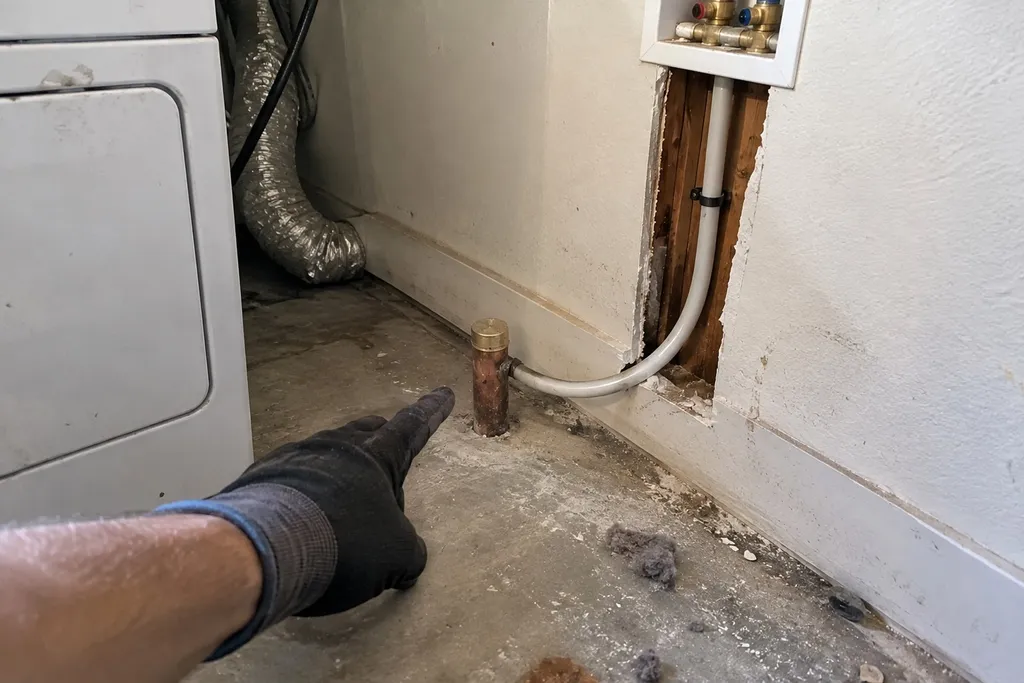
When a pipe gives you trouble, you'll usually hear about three options. It's easy to mix them up. Each one solves a different problem. Pipe rerouting is the right call when the pipe itself isn't the issue. Where it runs is the issue.
- Repair: We fix the one spot that failed, like a cracked fitting or a single leak. It's quick and it makes sense when the rest of the line is healthy and sits in a good spot.
- Rerouting: We run a new section of pipe along a better path and shut off the old one. The old line might be buried under a slab, stuck in a cold outside wall, or blocking a remodel.
- Repiping: We replace the water lines throughout the house. That's for homes where the pipe material is worn out everywhere, not just in one place.
Here's a simple way to think about it. If the same pipe keeps leaking in the same area, patching it again won't change much. The pipe is still sitting where it got hurt the first time. Rerouting takes it out of that spot for good.
A slab leak is a good example. A water line under a concrete floor springs a leak. One fix is to break up the floor, dig down, and patch it. But that line is still under the concrete. If it leaks again later, you're back to breaking floor. Rerouting runs a new line through the walls or attic instead. The old pipe under the slab gets capped and left alone. For many homes that means less mess and fewer surprises down the road. When you just need that one spot handled, our slab leak repair page covers it.
Rerouting also isn't a whole-house job. If one stretch of pipe is the problem and everything else is in good shape, there's no reason to replace it all. On the other hand, if you're seeing pinhole leaks in several rooms, or the water looks off at more than one tap, the trouble may be the pipe material itself. In that case, rerouting one section won't get you far, and a full repipe may be the honest answer. Our pinhole leak repair and repiping pages explain those jobs in more detail.
So how do you know which one you need? Ask yourself a few questions. Has this pipe leaked more than once? Is it somewhere hard or costly to reach, like under a slab or inside a finished wall? Are the problems in one area, or all over the house? If the trouble keeps coming back to one spot that's hard to get at, rerouting is usually worth a look.
Our owner, Kevin Brain, has 20 years in the plumbing trade. We're licensed, bonded, and insured in Oregon (CCB# 257405). We'll tell you plainly which of these three fits your home. Sometimes it's the small repair, and when it is, that's what we'll say.
Pipe Rerouting
Situations That Call for Rerouting a Pipe
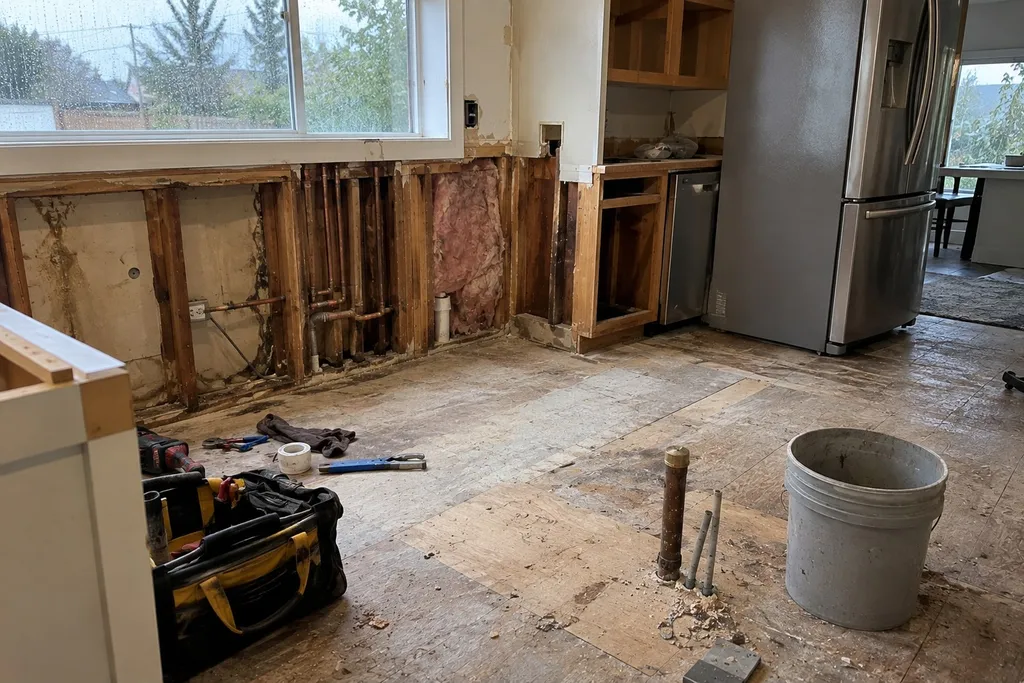
Most people don't wake up wanting a pipe moved. They get there because something keeps going wrong in the same spot, or because a pipe is in the way of something they want to do. Here are the situations where rerouting tends to make the most sense.
The same line keeps leaking in a spot that's hard to reach. This is the big one. If a pipe under a slab, behind tile, or inside a finished ceiling has leaked before, the next leak will likely mean the same cost to open it all up again. Like the slab leak example above, moving the line to a spot you can get to means you stop paying for the location over and over.
A pipe runs where it gets too cold. Some older homes have water lines running through outside walls, unheated garages, or crawlspaces with little protection. Those are the pipes that freeze and split when a hard cold snap hits. Insulation helps. But if a line has frozen more than once, moving it into a warmer inside wall is often the fix that lets you stop worrying every winter.
You're remodeling. Moving a sink to an island, opening up a wall, or adding a bathroom almost always means some pipes have to go somewhere new. This is planned rerouting. It's much easier to do while the walls are already open than to come back later.
A pipe is blocking other work. Sometimes a water line sits right where a new beam, duct, or doorway needs to go. Rather than work around it in a way that causes trouble later, it's cleaner to give that pipe a new path.
The run is long and winding. Pipes that snake the long way around a house add extra fittings and extra length. Every fitting is one more place that can leak. A shorter, simpler path can mean fewer weak spots, and sometimes better flow at the tap. If weak pressure is your main complaint, though, there are other causes worth checking first, and our low water pressure repair page walks through them.
You'd like to be able to reach your pipes. Lines buried where nobody can see them are hard to check and hard to fix. Moving them to a spot with an access panel or an open basement wall makes future repairs smaller and cheaper.
A few quick signs point toward rerouting:
- You've fixed the same section of pipe two or more times.
- The pipe sits under concrete, behind finished surfaces, or in an outside wall.
- The problem stays in one area instead of showing up all over the house.
- You're already opening walls or floors for another project.
If you only check one of those boxes, a simple repair may still be the better deal. If you check two or three, it's worth a real conversation about moving the line. We'll look at where the pipe runs now, where it could go, and tell you straight whether the move is worth it for your home.
Pipe Rerouting
When You Do Not Need Pipe Rerouting
Rerouting is a good fix for the right problem. It's also more work than a lot of homes need. Here's when we'd tell you to skip it.
You had one leak in a spot that's easy to reach. If a pipe under your sink or in an open basement leaked once, and the rest of the line looks fine, just fix that spot. You can see it. You can get to it. If it ever leaks again, getting to it won't cost you much. Moving the whole line won't buy you anything there.
The pipe is hidden but hasn't given you trouble. A line under a slab or inside a finished wall isn't a problem just because of where it sits. Lots of pipes live in those spots for decades without a single leak. If yours is quiet, leave it alone. Rerouting a healthy pipe just in case is spending money on a problem you don't have.
The trouble is all over the house. As we covered above, leaks in several rooms usually point to worn-out pipe material, not one bad path. Rerouting one section won't stop the next leak somewhere else. That's a repipe conversation. It's better to have it up front than after you've paid for a reroute that didn't help.
Your real complaint is weak water pressure. Low pressure has a lot of causes, and many of them have nothing to do with how your pipes are laid out. A worn pressure regulator, for example, can make every tap feel weak. Swapping that part is a much smaller job than moving pipe, so it makes sense to check the simple causes first.
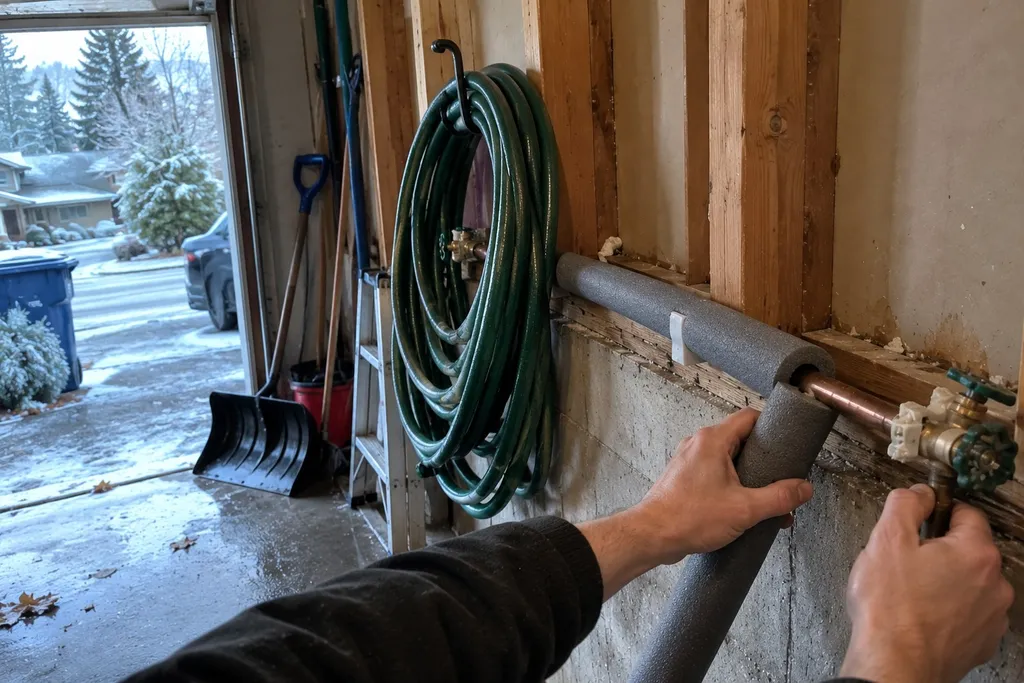
A pipe froze one time in a bad cold snap. One freeze doesn't always mean the pipe has to move. Often the answer is better protection right where it is. A few things you can do yourself:
- Put foam pipe sleeves on lines you can reach in the garage or crawlspace.
- Unhook garden hoses from outside spigots before winter.
- Open the cabinet doors under sinks on outside walls when it gets very cold, so warm air can reach the pipes.
If the same pipe freezes again after you've protected it, that's when moving it inside starts to make sense.
You're planning a remodel soon. If you plan to redo the kitchen or bathroom in the next year or two, it's often smart to wait. Fix the current problem with a simple repair for now. Then reroute while the walls are already open for the remodel. You'll pay for the wall work once, not twice.
You aren't sure where the water is coming from yet. Don't decide on a reroute until you know which pipe is leaking. A wet ceiling or a damp floor can come from a spot several feet away. Finding the real source comes first. Once you know it, the right fix is usually pretty clear.
If any of these sound like your situation, rerouting probably isn't your best move right now. That's a fine answer. The goal is to fix what's wrong in your home, not to do the biggest job on the list.
Pipe Rerouting
What Happens During a Pipe Rerouting Job
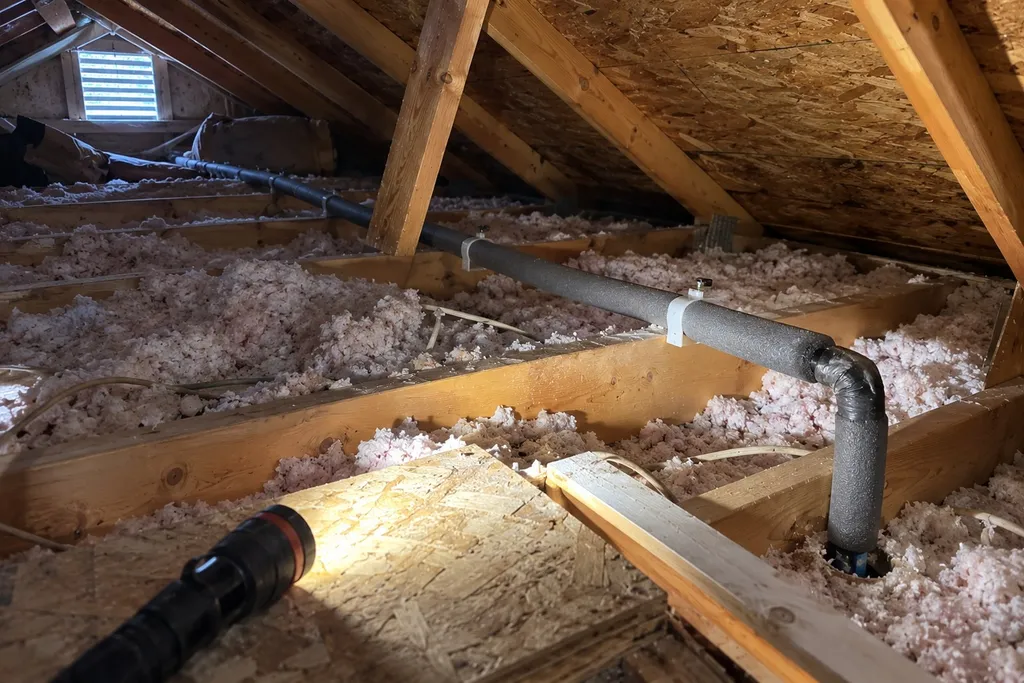
Once you've decided a pipe needs to move, the job itself is pretty simple to follow. It's not a mystery, and it's usually less of a mess than people expect. Here's how a reroute generally goes, step by step.
First, find the real problem. Before anyone picks a new path, the plumber needs to know which pipe is failing and where it runs now. That might mean tracing the line, checking water pressure, or doing leak detection to pin down the exact spot. Starting a reroute based on a guess can mean moving the wrong pipe.
Next, plan the new path. This is the part that makes or breaks the job. A good path is short, stays inside the warm part of the house, and is easy to reach later. Common routes go through an attic, a crawlspace, an inside wall, or along the back of a closet or cabinet. The plumber also looks at where the new line will tie into your system on each end. You should get a clear answer on where the pipe will go and why.
Then open small access points. Most reroutes don't mean tearing out whole walls. The plumber cuts openings where the pipe has to pass through, such as near the tie-in points or where it crosses a wall. How many openings you'll need depends on the path. A run through an open attic may need very few. A run through finished walls between floors needs more.
Run and connect the new line. The new pipe goes in along the planned path. Flexible pipe like PEX is common for reroutes because it can bend around corners and slip through tight spots with fewer fittings. Copper is used too, depending on the home. The water gets shut off for the part of the job where the new line connects to the old system. For a lot of homes that's part of a day, not days on end.
Test before closing anything up. The new line gets put under pressure and checked for leaks while it's still easy to see. This step matters. It's much easier to fix a fitting now than after the drywall goes back.
Shut off the old line. The old pipe gets capped at both ends so no water reaches it. It's usually left in place, especially under a slab, since digging it out would undo the whole point of rerouting.
Close up the openings. The access holes get patched. Before work starts, ask who handles the drywall patching and painting, so you aren't surprised at the end.
A few things make the day go smoother for you:
- Clear a path to the attic hatch, crawlspace door, or closets the pipe will pass through.
- Move furniture and keepsakes away from the walls being opened.
- Fill a few jugs of water before the shutoff if you'll need it for cooking or kids.
- Ask whether your job needs a plumbing permit and inspection, and who will schedule it.
When it's done right, you end up with a pipe that's out of harm's way and easy to reach the next time someone needs it. That's the whole goal.
Pipe Rerouting
Permits and Why Pressure Testing Matters
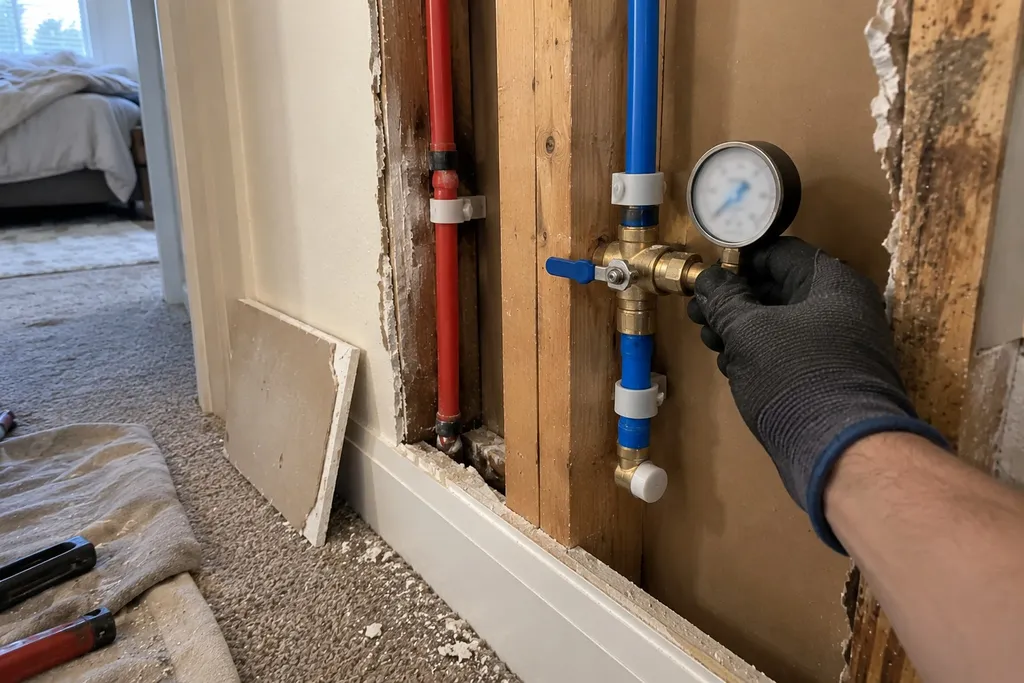
Moving a water line changes how water flows through your home. That's why a reroute often needs a plumbing permit and an inspection. A lot of people see permits as red tape, but for this kind of job they work in your favor. A permit means someone who doesn't get paid for the job takes a look at it. That's a second set of eyes on pipes you'll likely never see again once the drywall goes back up.
The rules depend on the size and type of the job, so we won't guess at them here. In Troutdale, the local building department can tell you whether your project needs a permit. Your plumber should be able to tell you too. Either way, settle this before work starts. Don't leave it for after.
Skipping a needed permit can cause trouble later. When you sell your home, a buyer's inspector may ask about plumbing work that has no record. An insurance company may have questions after a leak in a line nobody signed off on. A permit and a passed inspection give you a paper trail that shows the work was done the right way.
Pressure testing is how you find out a new line is sound before it disappears behind a wall or above a ceiling. The plumber fills the new pipe and raises it above normal pressure. Then they leave it there for a while and watch a gauge. If the needle holds steady, the joints are tight. If it drops, there's a leak somewhere, and it's easy to find and fix while everything is still open.
This matters more on a reroute than on a simple repair. A reroute often has fittings in spots you'll never see again, like inside a wall cavity or up in the attic. A slow drip in one of those places can soak insulation or rot wood for months before you notice a stain. Testing at higher pressure than your home normally runs puts extra stress on every joint, so a weak one shows itself now instead of a year from now.
You don't need to know plumbing to check that these steps happen. Just ask a few plain questions:
- Does my job need a permit, and who's pulling it?
- Will the new line be inspected before the walls are closed?
- Will you pressure test the new pipe, and can I see the gauge?
- What happens if the test or inspection finds a problem?
- What's your CCB number, so I can look you up?
That last one is worth asking any contractor. Oregon's Construction Contractors Board lets you look up a license number and see whether the business is active and bonded. Ours is CCB# 257405. Go ahead and check it. A good plumber won't mind any of these questions, and should be glad you asked.
Common Questions
Frequently Asked Questions
How long does a pipe rerouting job usually take?
+
Many reroutes can be done in about a day, especially when the new path runs through an open attic or crawlspace. Jobs that need to pass through several finished walls take longer, since more access openings have to be cut, tested, and patched. The real timeline depends on how long the new line needs to be and how many tie-in points it has.
What kind of pipe material is used for a reroute?
+
PEX is common for rerouting because it bends around corners and fits through tight spots with fewer fittings, which means fewer places that can leak later. Copper is also used depending on your home's existing setup. Your plumber should walk you through which material fits your specific path before work starts.
Will rerouting a pipe mean tearing up my walls or floors?
+
Usually not the whole wall or floor, just small access openings where the pipe needs to pass through or tie in. A run through an open attic may need very few cuts, while a path through finished walls between floors needs more. Ask ahead of time who handles patching the drywall and paint once the pipe work is finished.
Do I need a permit for pipe rerouting in Troutdale?
+
It depends on the size and type of your project, so check with the Troutdale building department or ask your plumber before work begins. A permit means an inspector who isn't paid for the job takes a second look at pipes you'll likely never see again once the walls are closed. Settling this before the work starts avoids problems later, like questions from a home buyer's inspector or an insurance company.
Troutdale, Oregon
Related Troutdale Services
Need Plumbing Help?
Get Help Today from
Bigfoot Plumbing
Troutdale, Fairview, Wood Village, Gresham and the homes east toward Corbett. Call the Troutdale number and talk to someone who does this for a living.
10% Off for Veterans · First Responders · Seniors