
Reverse Osmosis System Installation
Reverse Osmosis System Installation in Troutdale: Is It the Right Fix for Your Water?
Honest, reliable plumbing for Troutdale, Oregon & the surrounding Pacific Northwest
CCB# 257405
Licensed · Bonded · Insured
20 Yrs
Experience
Family
Owned & Operated
Troutdale, OR
East County Crew
What's Covered on This Page
- Reverse Osmosis Solves Taste and Odor, Not Whole-Home Hardness
- Whole-House Water Filtration Is the Better Call for Well Water Problems
- What Happens During a Reverse Osmosis Installation Visit
- Code-Compliant Drain Connections Protect Your Water Supply
- What Drives Reverse Osmosis Installation Cost
- How long does a reverse osmosis installation take?
- Will reverse osmosis remove fluoride or other specific contaminants from my tap water?
- Can I still use my garbage disposal with a reverse osmosis system installed?
- How often do I need to replace the filters and membrane?
Need Reverse osmosis system installation?
Reverse Osmosis System Installation
Reverse Osmosis Solves Taste and Odor, Not Whole-Home Hardness
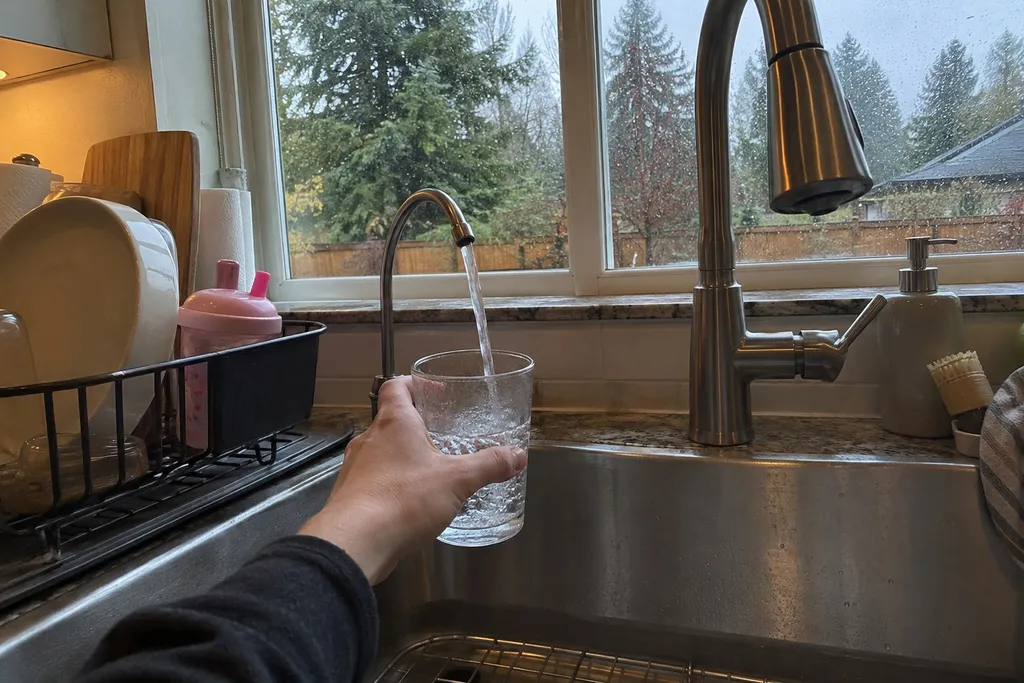
Here's the honest version before you spend a dime. Reverse osmosis is a point-of-use system. It usually sits under your kitchen sink and feeds its own small faucet. Water gets pushed through a very fine membrane, plus a few filter stages, and the clean water collects in a little storage tank. That makes it really good at one job: giving you better water for drinking, coffee, ice and cooking.
It's not built to treat every drop that comes into your house. It makes a few gallons at a time, slowly. Your showers, washer, dishwasher and water heater never see that water.
- Water that tastes flat, metallic or off. RO is a strong fit here.
- A chlorine or chemical smell in your glass. The carbon stages in most RO systems handle this well.
- Worry about dissolved contaminants in drinking water. RO removes a wide range of them, which is why many families pick it for kids or for baby formula.
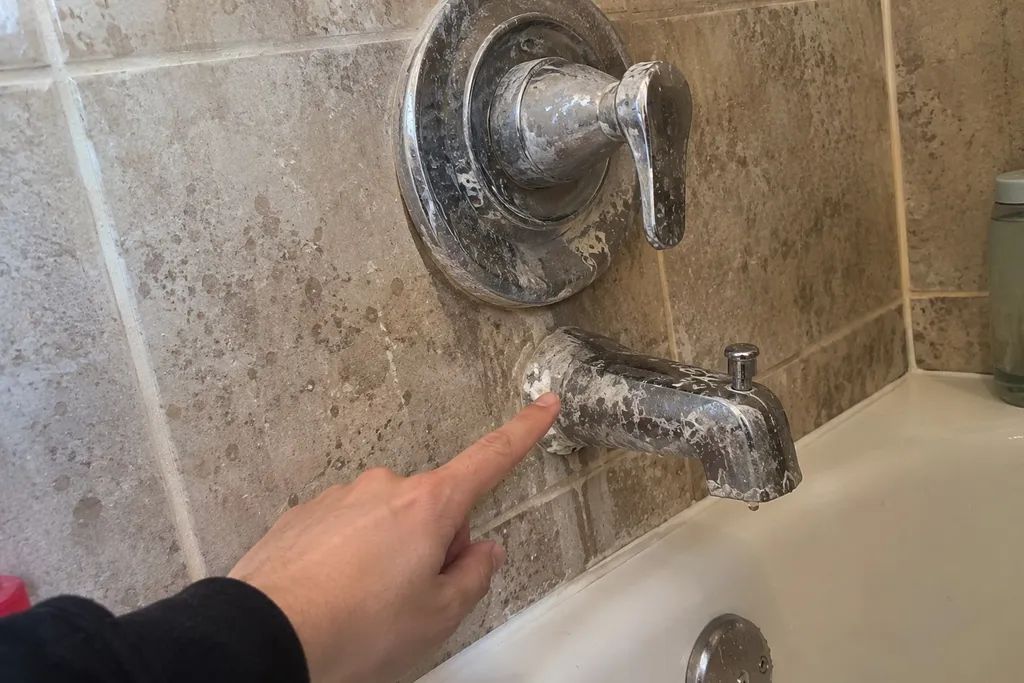
- White crust on shower doors, faucets and tile. RO won't help, because that water never passes through it.
- Scale in your water heater or dry, itchy skin after a shower. RO won't help here either. You need a whole-home approach.
If your trouble shows up all over the house, a point-of-use system is the wrong tool. We also do whole-house water filtration installation, and that's the better conversation when the problem is in every room and not just in your glass. Hard water that leaves scale behind is usually handled by a softener, not by RO.
There are a few trade-offs to know about too. RO pulls out minerals along with the stuff you don't want, so some folks think the water tastes a little plain at first. The process also sends some water down the drain while it makes clean water. And the filters and membrane need changing on a schedule, so it's not a set-it-and-forget-it item.
And sometimes you don't need a system at all. If your water tastes fine, smells fine and your city's water quality report looks clean, you can skip it. A basic pitcher or fridge filter might be all you need for a slight chlorine taste. That's a real answer, and we'd rather tell you that than sell you something you'll resent paying for.
A quick way to sort it out: fill a clear glass from the kitchen tap and a second one from a bathroom sink. Smell them and taste them. Then look at your shower glass and faucet bases. If the problem lives in the glass, RO makes sense. If it lives on the fixtures, look at a whole-home fix instead. If it's both, you might want both, but start with the problem that bugs you most.
After 20 years in this trade, Kevin's view is simple. The right system is the one that fixes the problem you have. We'll tell you which one that is, even if it's the smaller job or no job at all.
Reverse Osmosis System Installation
Whole-House Water Filtration Is the Better Call for Well Water Problems
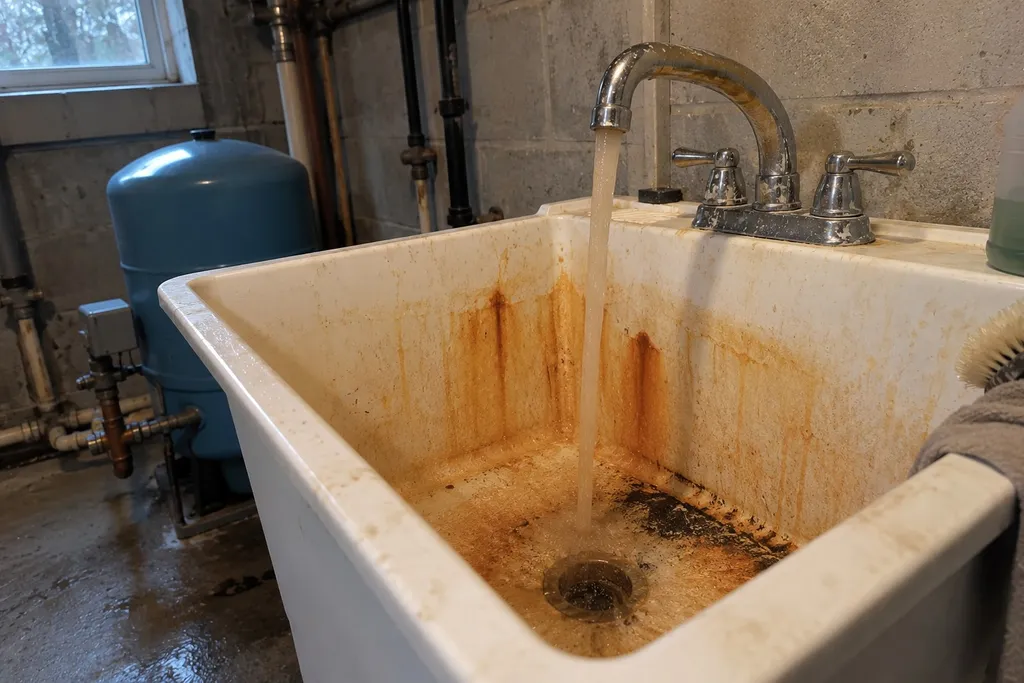
If your home in or around Troutdale runs on a private well, an RO system alone usually isn't the place to start. Well water problems tend to show up everywhere water goes, not just in your drinking glass. Some of the most common well water troubles are the same things that wear out an RO membrane fast.
Here's what well water trouble often looks like around the house:
- Orange or reddish stains in the toilet bowl, tub or sink. That's often iron.
- Black or brownish stains, or dingy laundry. That can point to manganese.
- A rotten egg smell when you run the hot water or step into the shower. That's usually sulfur.
- Grit or cloudy water after the pump kicks on. That's sediment.
- Water that looks fine but has never been tested.
None of those stay put at the kitchen sink. Iron stains your shower. Sulfur stinks up the whole bathroom. Sediment can wear on faucets, valves and your water heater. A whole-house filtration system treats the water where it enters your home, so every tap, appliance and fixture gets the benefit.
There's a second reason, and it's about protecting your money. An RO membrane is fine and delicate. Raw well water full of iron, sediment or hardness can clog it and coat it much sooner than it should. You'd end up changing filters and membranes more often, paying for parts, and still living with stained fixtures. That's a frustrating way to spend on water treatment.
So what's the smart setup for a well? For a lot of families, it's two layers. Whole-house filtration goes in first to handle the big stuff like sediment, iron and odor for the whole home. Then, if you still want extra-clean water for drinking and cooking, an RO system goes under the kitchen sink. The water reaching the membrane is already cleaner, so the RO system can do its one job well and its parts aren't working overtime.
You might not need both. Once whole-house filtration is in, some folks find their tap water tastes great and decide to skip RO. That's a perfectly good outcome. Others want the extra step for coffee, baby formula or peace of mind. Either way, you're making that call with clean water already flowing through the house, not hoping one under-sink unit can carry the whole load.
We install both whole-house water filtration and reverse osmosis systems, so we don't have a reason to push you toward one over the other. With your water test results in hand, we'll walk you through which one fixes your problem, and whether you need the second one at all. That's how we'd want it done for our own family.
Reverse Osmosis System Installation
What Happens During a Reverse Osmosis Installation Visit
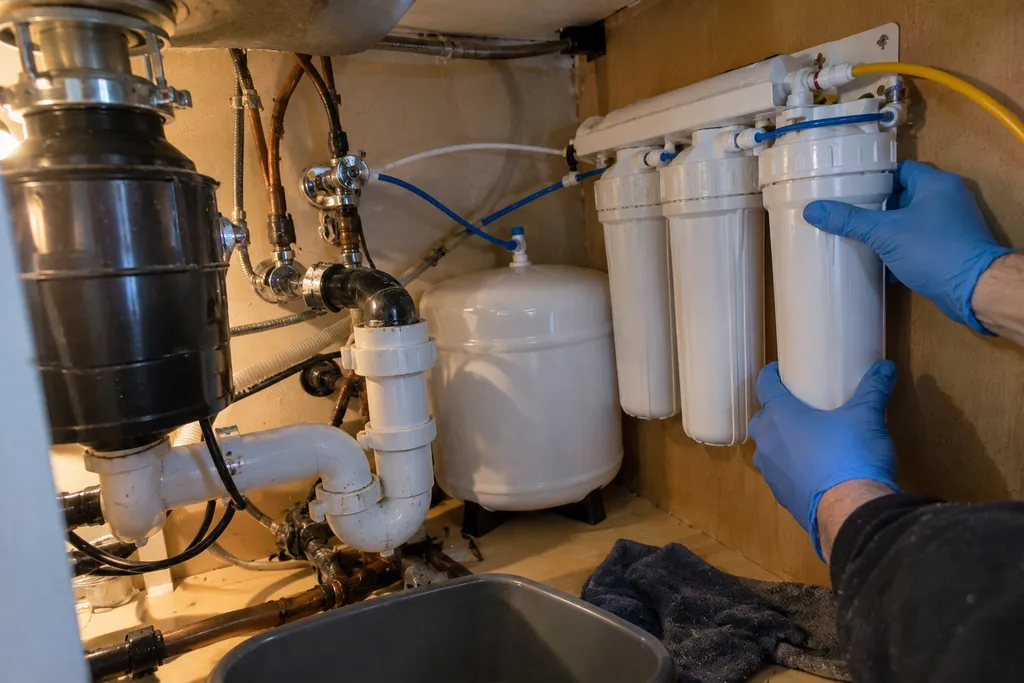
Once you know RO is the right fit for your drinking water, the install itself is pretty simple. It all happens under your kitchen sink and at the countertop. Here's what a good install covers, so you know what to look for and what to ask.
It starts with a quick check that RO still makes sense for your home. A good plumber asks what's bugging you about your water and looks at your water report or well test if you have one. If the problem really lives in the showers and on the fixtures, this is the moment to say so, before anything gets drilled.
- Space under the sink. The filter housings and the small storage tank need room, often off to one side of the cabinet. A garbage disposal, pull-out trash bin or crowded pipes can change where things go.
- Water pressure. RO needs decent pressure to push water through the membrane. If yours runs low, the system makes water slowly and wastes more. That's worth fixing first. We also handle low water pressure repair and water pressure regulator replacement if that turns out to be the real issue.
- The cold water line. The system gets its feed from the cold supply under the sink, so the shut-off valve there should be in good shape. Old valves that drip or won't close all the way are worth replacing while the cabinet is open.
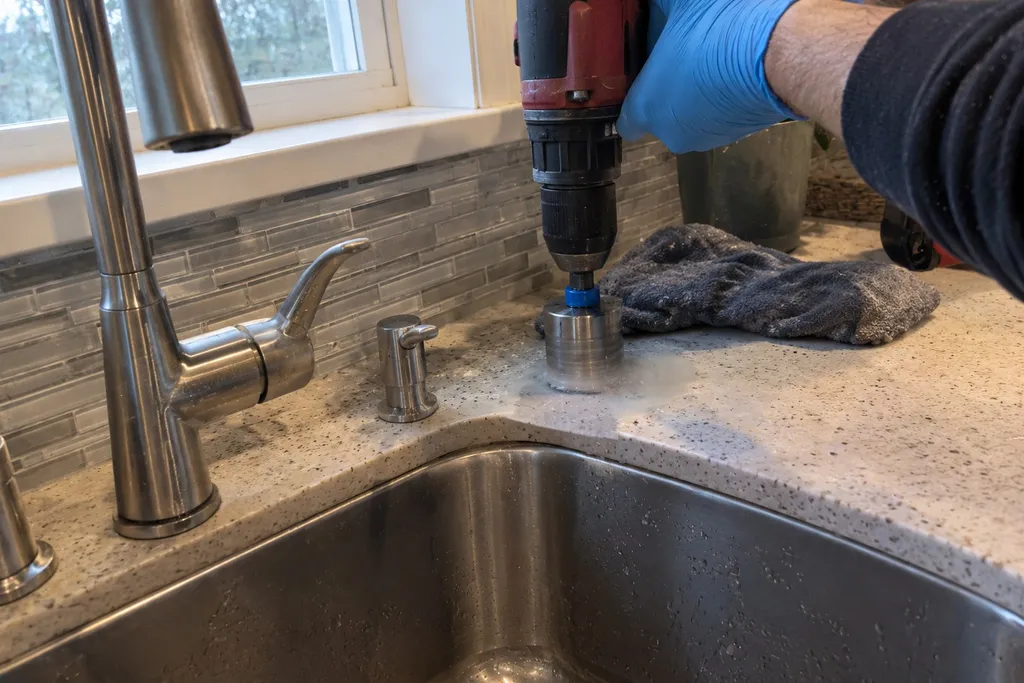
- Your countertop. The RO faucet needs a hole. Sometimes an unused sprayer or soap dispenser hole works. If not, a new hole gets drilled. Laminate is easy. Granite and quartz take the right bit and a careful hand.
Then the actual install. The feed line taps into the cold water supply. A drain line connects to the sink drain above the trap, so the reject water has somewhere to go. Some faucets include an air gap, which helps keep drain water from backing up into the system. The filters, membrane and tank get hooked together, and the faucet goes in. If you want filtered water run to the fridge or ice maker, that line can be added at the same time.
The last part matters just as much. A new system needs to be flushed before you drink from it. Most makers say to fill the tank and drain it at least once to clear out the carbon fines and preservatives. Every fitting should be checked for drips, and checked again after the system has built up pressure. A slow leak under a sink can sit unnoticed for weeks and quietly ruin a cabinet floor.
Before you're left on your own, you should know where the shut-off is, what each filter does, and roughly when each one needs changing. That's the part that keeps your water tasting good a year from now.
To get ready, clear out everything under the kitchen sink and find your water report or well test results. Know your countertop material, and decide whether you want that fridge line added. That's it.
Bigfoot Plumbing is family-owned, licensed, bonded and insured in Oregon under CCB# 257405, with 20 years of plumbing experience behind every job. We'll give you a straight answer about what your sink and your water need, and nothing you don't.
Reverse Osmosis System Installation
Code-Compliant Drain Connections Protect Your Water Supply
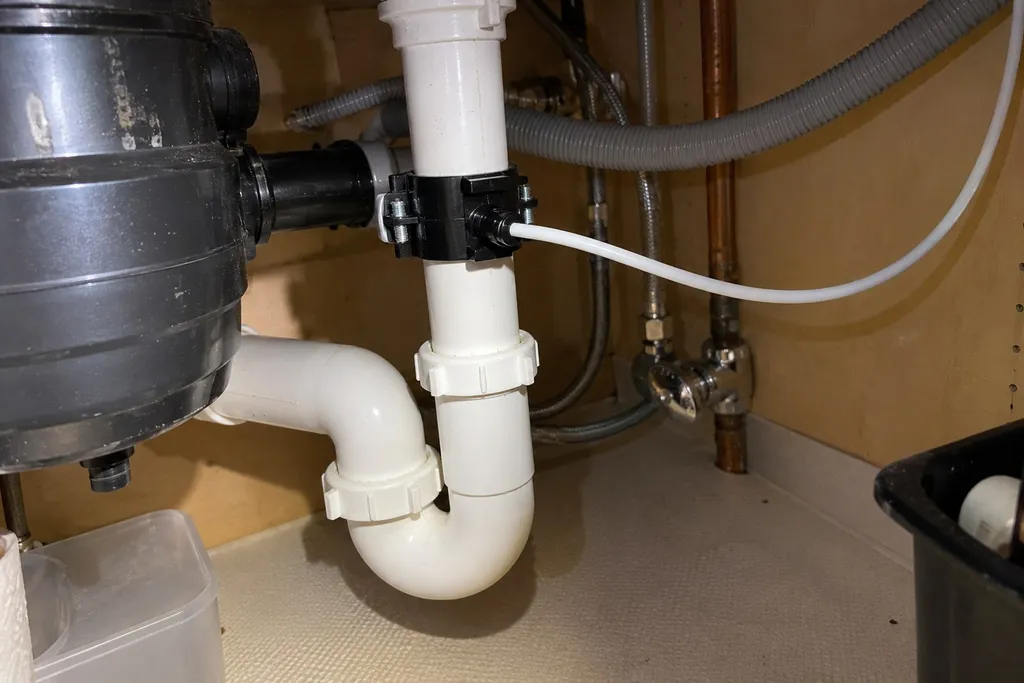
The drain line is the smallest part of an RO system. It's also the part most likely to cause real trouble when it's done wrong. Your clean drinking water and your kitchen's dirty drain water sit just inches apart under the sink. A good drain connection keeps them that way.
RO works by splitting water into two streams. Clean water goes to your tank. The leftover water carries everything the membrane rejected, and it goes down the drain. That reject water is the dirtiest water in the system. Your sink drain also carries food scraps, grease and dishwater. If either one finds a way back toward the membrane, the system you paid for to protect your water starts working against you.
Plumbing codes treat this seriously for a reason. Anything connected to your drinking water has to be protected from drain water flowing backward into it. That's what backflow protection means. With RO, that protection comes from where the drain line joins the pipe and, on many systems, from an air gap at the faucet. An air gap leaves a small open space the water has to fall across, so nothing can be pulled back up the line.
Here's what a careful drain connection looks like:
- The drain fitting sits on the straight pipe above the trap, not below it. The water sitting in the trap is what blocks sewer smells, so it has to stay in place.
- It's kept away from the garbage disposal outlet and the dishwasher hose. Ground-up food and hot dishwater shouldn't spray right at the RO drain opening.
- The drain tubing runs smooth and downhill, with no sags or loops where water can sit and go stale.
- The fitting is snug and sealed, with no weeping when the sink fills and drains.
Most of these problems don't show up on day one. They creep in. You might hear a gurgling sound under the sink every time the system runs. You might notice your RO water starts tasting musty, even after a filter change. Or you find a soft, stained spot on the cabinet floor right under the drain fitting. Any of those is worth a look, because it often points back to the drain hookup.
Can you install a kit yourself? Plenty of handy homeowners do, and the instructions usually walk you through it. If you go that route, take your time with the drain fitting. Drill the hole in the right spot, keep it clear of the disposal, and check for drips over the next few days. If you'd rather not drill into your drainpipe or your countertop, or you just want it done right the first time, that's a good job to hand off.
We set up the drain side with the same care as the water side, because both end up in your family's glass. If your sink drain is slow or the trap is in rough shape, we'll tell you before we tie anything into it.
Reverse Osmosis System Installation
What Drives Reverse Osmosis Installation Cost
There's no single price tag for an RO install. Some kitchens take an easy hookup. Others need a few fixes first. Here's what moves the cost up or down, so you know what you're paying for before anyone touches your sink.
The system itself is the biggest piece. A basic under-sink unit with a storage tank costs less than one with more filter stages, a tankless design, a booster pump or a stage that adds minerals back for taste. More parts aren't always better. Pick the system that matches what your water test shows, not the one with the longest feature list. If you've already bought a kit, ask if the plumber will install it, and how that changes the labor charge.
Your kitchen shapes the labor. These are the things that can add time or parts:
- Countertop material. Using an existing sprayer hole is quick, and laminate is easy to drill. Stone takes more time and care.
- A crowded cabinet. A disposal, pull-out trash bin or tangled pipes can make it harder to fit the tank and filters.
- A fridge line. A short run next to the sink is simple. A run across the kitchen, through a floor or down into a basement takes more tubing and more time.
- Repairs found along the way. A worn shut-off valve, low water pressure or a tired sink trap all need fixing before the system goes in.
If you're on a well, plan for the bigger picture. As covered above, raw well water can wear out an RO membrane fast. Pretreatment may come first, and that's a separate cost from the RO install.
Don't forget what it costs to own one. Filters and the membrane need changing on a schedule, so ask what replacement parts cost and how often you'll need them. A cheap system with pricey, hard-to-find filters can cost you more over a few years than a better one with common parts. RO also sends some water down the drain as it works, which adds a little to your water bill.
Most plumbers price this work one of two ways. A flat price covers the whole job, so you know the total up front. Time and materials bills for the hours worked plus parts. Either can be fair. What matters is that you understand it before the work starts. Ask these questions before you hire anyone:
- Does the quote include the system, or just labor?
- What's included if I want a fridge line run?
- If you find a problem under the sink, will you tell me and price it before fixing it?
- What do replacement filters and membranes cost, and how often do I change them?
- Are you licensed, bonded and insured in Oregon?
We'll give you a clear price before we start and explain each part of it. If we spot something under your sink that needs work, we'll show you and let you decide. Bigfoot Plumbing offers 10% off for veterans, first responders and seniors, so mention it when you call if that's you.
Common Questions
Frequently Asked Questions
How long does a reverse osmosis installation take?
+
A straightforward under-sink install in a kitchen with an existing sprayer hole and good water pressure can go in during a single visit. It takes longer if your countertop needs drilling through granite or quartz, or if a fridge line is added across the kitchen. It also takes longer if we find a worn shut-off valve or low water pressure that needs fixing first. Clearing out your under-sink cabinet ahead of time helps keep things moving.
Will reverse osmosis remove fluoride or other specific contaminants from my tap water?
+
Reverse osmosis removes a wide range of dissolved contaminants, which is why it's a popular choice for drinking water used in baby formula or coffee. Since every home's water is different, the best way to know exactly what's in yours is a water test or your city's water quality report. We'll look at that report with you before recommending a system, so you're not guessing what you're paying to filter out.
Can I still use my garbage disposal with a reverse osmosis system installed?
+
Yes, but the RO drain line needs to stay clear of the disposal outlet and dishwasher hose. Ground-up food or hot dishwater sprayed near the RO drain fitting can cause backups or odors over time. A careful install keeps the drain tubing on the straight pipe above the trap, away from the disposal, so both systems work without interfering with each other.
How often do I need to replace the filters and membrane?
+
Filters and the membrane need changing on a regular schedule, though it varies by system and your water quality. Ask about replacement costs and change intervals before you buy, since a cheap system with hard-to-find filters can cost more over a few years than a better one with common parts. We'll walk you through your system's specific filter schedule during the install so you know what to expect.
Troutdale, Oregon
Related Troutdale Services
Need Plumbing Help?
Get Help Today from
Bigfoot Plumbing
Troutdale, Fairview, Wood Village, Gresham and the homes east toward Corbett. Call the Troutdale number and talk to someone who does this for a living.
10% Off for Veterans · First Responders · Seniors