
Recirculation Pump Installation
Recirculation Pump Installation in Troutdale: Pick the Right System for Your Home
Honest, reliable plumbing for Troutdale, Oregon & the surrounding Pacific Northwest
CCB# 257405
Licensed · Bonded · Insured
20 Yrs
Experience
Family
Owned & Operated
Troutdale, OR
East County Crew
What's Covered on This Page
- Return Line or No Return Line: The Decision That Drives Your Installation
- Matching a Recirculation Pump to Your Water Heater Type
- What Happens During Installation
- Permits and Older Homes Near Downtown Troutdale
- How Installation Pricing Is Structured
- Is a recirculating hot water pump worth it?
- Can you add a recirculating pump to a tankless water heater?
- Can a recirculating pump work without a return line?
Need Recirculation pump installation?
Recirculation Pump Installation
Return Line or No Return Line: The Decision That Drives Your Installation
A recirculation pump keeps hot water moving so it's waiting near your faucets instead of sitting in the tank. That water has to get back to the water heater somehow. How it gets back shapes the whole job.
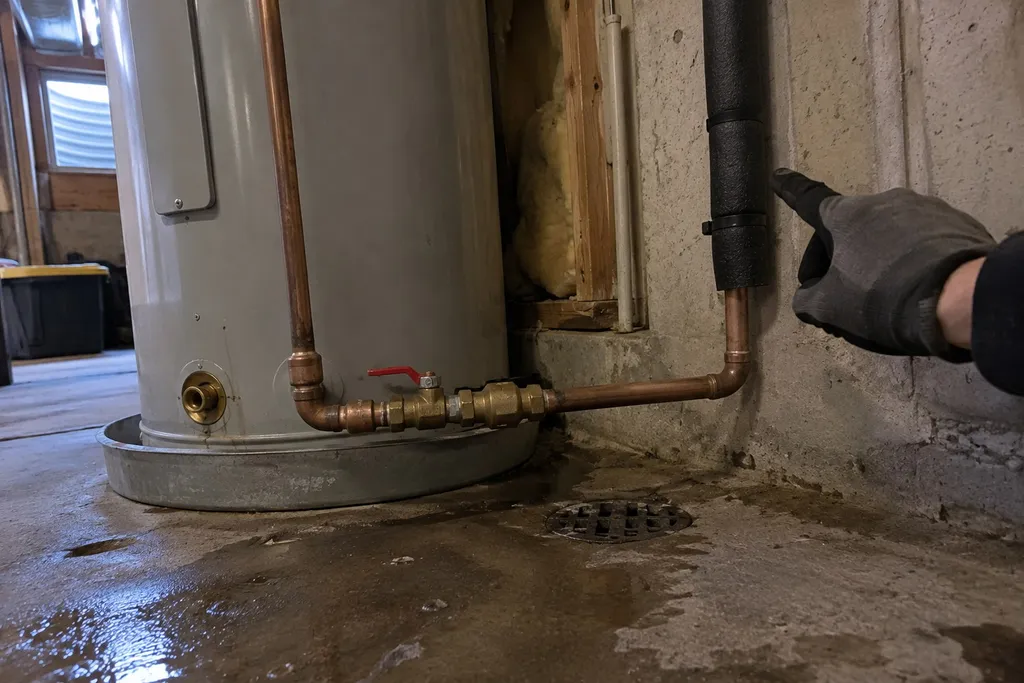
Some homes were built with a third pipe that runs from the farthest fixture back to the water heater. That's a dedicated return line. Most homes don't have one. Before we talk pumps, timers, or anything else, we figure out which kind of house you've got.
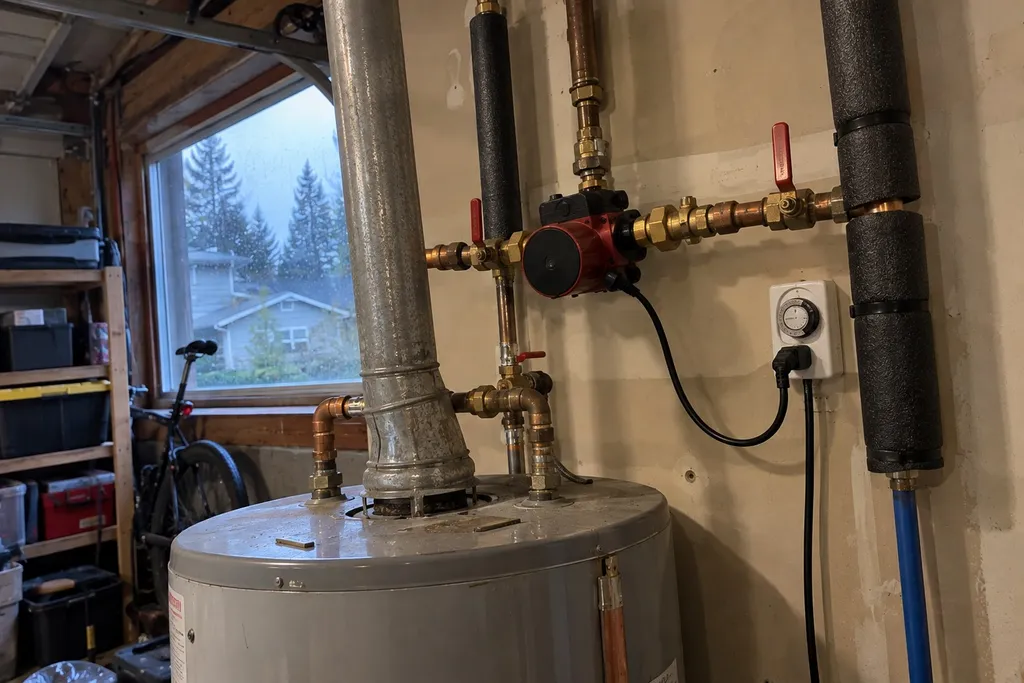
You can often check this yourself. Look at the top of your water heater. You'll usually see a cold pipe coming in and a hot pipe going out. If there's a third pipe tied in near the bottom, or a small loop of pipe that doesn't seem to go anywhere, you might already have a return line. If you only see the two, you probably don't.
- Dedicated return line: The pump usually mounts right at the water heater and pushes hot water around the loop and back. You get hot water fast at every fixture on that loop, and your cold lines stay cold. If the line is already there, this is often the simplest and cleanest install.
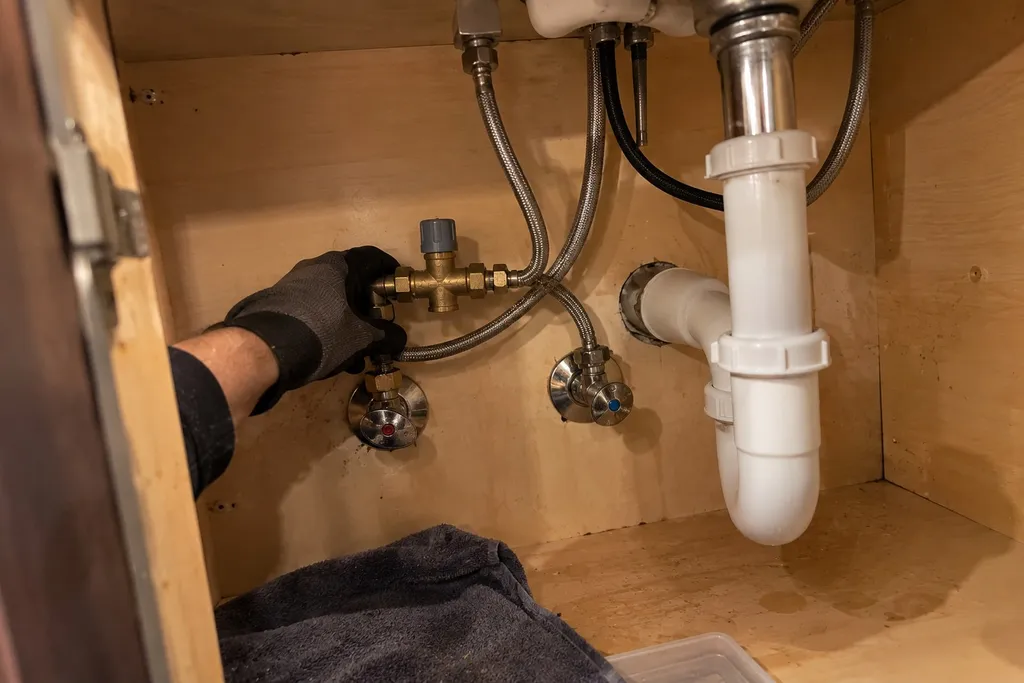
- No return line: A setup can use your cold water pipe as the path back to the heater. A small valve goes under the sink farthest from the water heater, and the pump moves water through it. There's no new pipe to run and no walls to open.
- Adding a new return line: This gives you the best long-term result, but it means running pipe through walls, floors, or a crawlspace. It makes the most sense when those spaces are already open.
Here's the honest tradeoff with the no-return-line setup. Because warm water is moving through the cold pipe, the first few seconds from the cold tap at that far sink can come out lukewarm. Most folks hardly notice. But if you like an ice-cold glass of water straight from the tap, you should know about it before we put it in. We'd rather tell you now than have you surprised later.
This choice is also the biggest thing driving what you'll pay. A home with an existing return line usually needs the least labor. The cold-line setup adds a valve at the far fixture but skips new piping. Running a new return line costs the most, because of the pipe, the access work, and the time it takes to patch things up afterward. When you get a quote from any plumber, ask which of these three setups they're pricing. That way you're comparing the same job.
Timing matters too. If you're already planning a repipe or a water heater installation, that's the best moment to add a return line, since the walls or the heater area are already open. If not, the cold-line option gets you most of the comfort without the mess.
With 20 years in plumbing, our job is to look at your actual pipes and give you a straight answer about which setup fits. We won't push you into new piping you don't need.
Recirculation Pump Installation
Matching a Recirculation Pump to Your Water Heater Type
Once you know how hot water will get back to the heater, the next question is what kind of heater it's going back to. A recirculation pump doesn't work alone. It works with your water heater, and each type handles that extra job a little differently. Picking the right controls for your heater matters as much as picking the pump.
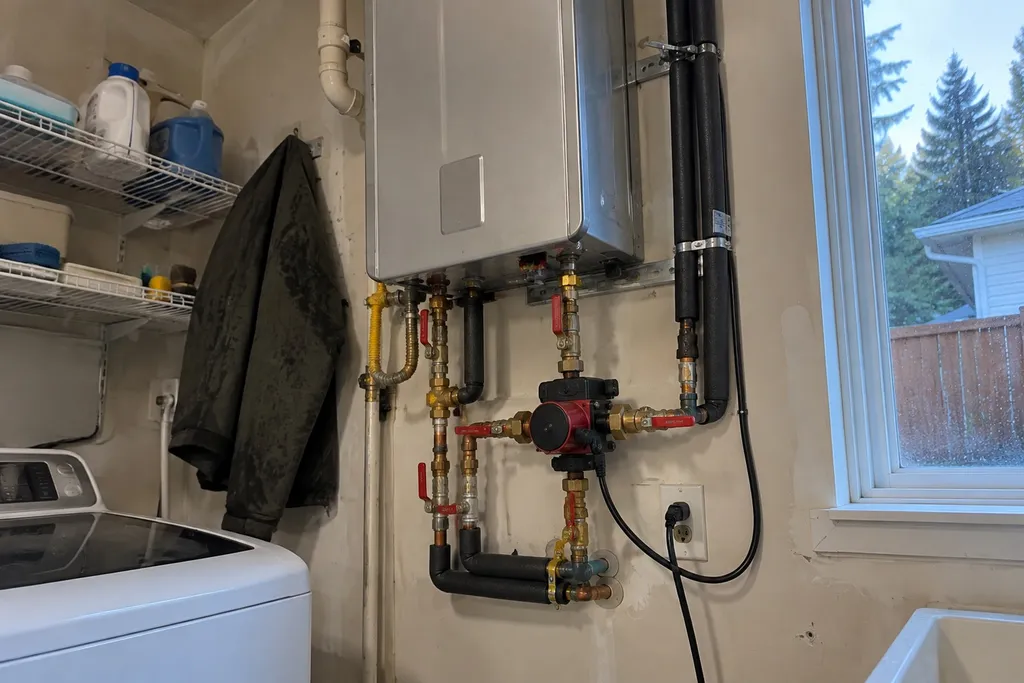
Not sure what you have? Look at the unit. A tall round tank with a gas vent or an electric cover panel is a standard tank heater. A flat box hung on the wall is tankless. A tank with a fan and a grille on top is a heat pump water heater.
- Standard tank heater, gas or electric: This is the easiest match. The tank already holds a supply of hot water, so the pump just keeps it moving through the pipes. The main thing to watch is heat loss. Water moving all day through pipes loses heat along the way, and the heater has to make up for it. A timer that runs the pump during your busy hours, like mornings and evenings, keeps that waste down.
- Tankless heater: A tankless unit only fires up when enough water is flowing through it. Some pumps don't push enough water to turn it on. Others turn it on and off over and over, which is hard on the heater. Some tankless models have recirculation built in or are made to work with a certain setup, so we check what your unit is built for first. On-demand control, where you press a button or the pump senses use, is usually a better fit than running it all day.
- Heat pump water heater: These heaters save energy by heating water slowly. A pump that runs nonstop keeps pulling cooled water back into the tank. That can make the heat pump work harder, and it may even kick on the backup electric heating, which costs more to run. With a heat pump unit, short run times on a timer or on-demand control help you keep the savings you bought it for.
Here's a simple example. Say your morning shower takes a full minute to warm up, and you have a tankless heater in the garage. If someone adds a pump that runs all day without checking the heater, you could end up with water that still runs cold at first, or a heater that clicks on and off far too often. Same pump, wrong match.
Age counts too. If your water heater is old, leaking, or already giving you trouble, it may not make sense to add a pump to it right now. In that case, it's often smarter to deal with the heater first through a water heater installation and plan the pump as part of that job. If you're thinking about a switch to tankless water heater installation or heat pump water heater installation, tell us before the pump goes in so everything is set up to work together from day one.
We'll look at your heater's type, age, and condition along with your pipes. Then we'll tell you straight which controls make sense and whether the timing is right. If the honest answer is to wait, that's what you'll hear from us.
Recirculation Pump Installation
What Happens During Installation
Most people want to know two things before install day. How long will the water be off, and will there be a mess? For the two common setups, a pump at the heater with an existing return line or a cold-line setup with a valve under the far sink, it's usually a pretty tidy job. Running a new return line takes longer, because it involves opening walls, floors, or a crawlspace.
Here's what a typical installation looks like, step by step.
- Check before cutting anything. The plumber confirms which setup fits your home, looks over the water heater, and finds where the pump will get power. Most pumps plug into a regular outlet. If there isn't one close by, that needs to be worked out first.
- Shut things down safely. The water supply to the heater gets turned off and the pressure is let out of the lines. The heater's power or gas is set so it won't fire while the work is going on.
- Mount the pump. With a return line, the pump usually goes near the water heater and ties into the loop. Shutoff valves on each side let the pump be serviced or swapped later without draining the whole system.
- Add the far-sink valve if needed. In a cold-line setup, a small valve goes under the sink farthest from the heater, between the hot and cold supply lines. It sits under the cabinet, so you won't see it day to day.
- Set the controls. This is where the timer or on-demand setting gets dialed in to fit your heater and your family's routine, like mornings before work and evenings after dinner.
- Bring the water back and get the air out. The lines are refilled slowly and air is pushed out so the pump doesn't run dry or rattle.
- Test it at the far fixture. The real test is the sink or shower that used to take forever. You should see hot water show up much faster than before. Every new joint gets checked for leaks.
Your part is easy. Clear a little space around the water heater and empty out the cabinet under the far sink if you're getting the cold-line setup. Plan on going without water for part of the visit. If someone in the house needs a shower before work, it helps to get that done first.
Before the job is done, you should know how to use what you paid for. Ask to see the timer or on-demand control, how to change the times, and where the shutoff valves are. If your hours change, like a new work schedule or kids heading back to school, you can adjust the settings yourself without a service call.
One thing worth asking any plumber up front is whether a permit is needed for your setup, especially if new pipe is being run. That's a fair question, and a good plumber won't dodge it.
Bigfoot Plumbing is licensed, bonded, and insured in Oregon, CCB# 257405, and backed by 20 years of plumbing experience. We'll treat your home like our own, and we'll leave the area under your sink and around your heater the way we found it.
Recirculation Pump Installation
Permits and Older Homes Near Downtown Troutdale
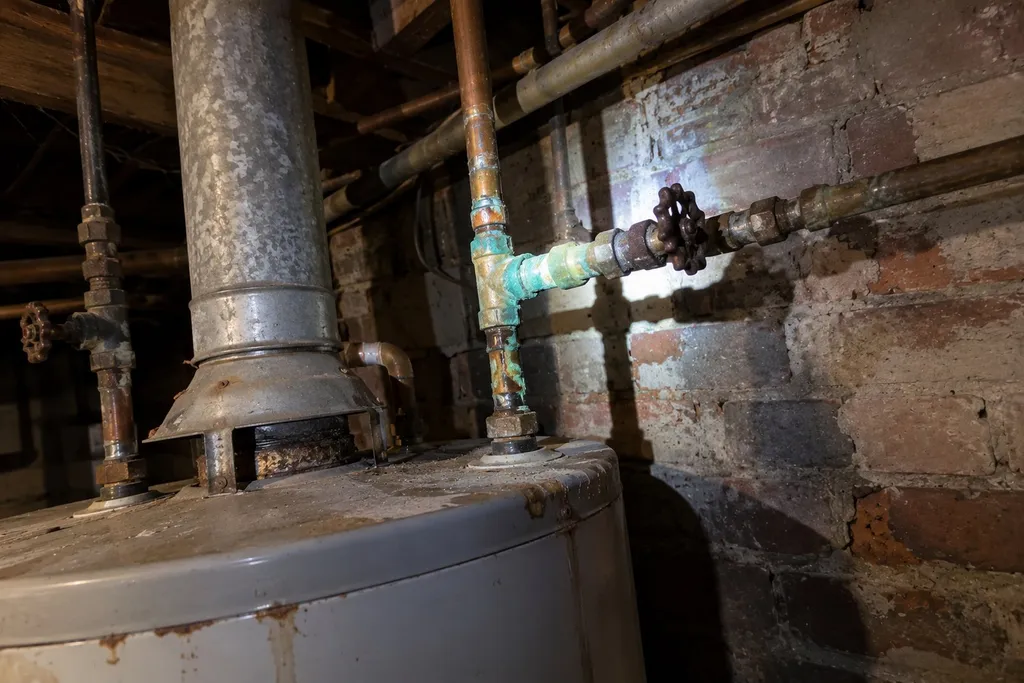
Our shop is on the Historic Columbia River Highway in downtown Troutdale, so this is our own neighborhood. Wherever you live, two things can change a simple pump install into a bigger job: the permit question and the condition of your pipes.
Let's start with permits. Whether you need one depends on the scope of the work, and the rules are set by your local building department. Running a new return line through walls or a crawlspace is new piping, so it's the setup most likely to need a permit. A pump tied into an existing loop, or a cold-line valve under a sink, is a smaller job. Even then, it's worth confirming before work starts, not after. If a permit is needed, it should be part of your quote from the start so the price doesn't change on install day.
Pipe condition is the other big one. A recirculation pump keeps warm water moving through your lines for hours a day. Healthy pipes handle that just fine. Tired pipes may not. In an older home, here's what's worth a look before a pump goes in:
- Old galvanized steel pipe. It rusts from the inside, narrows over time, and can shed flakes that a small pump doesn't like.
- Thin or worn copper. Steady hot water flow can speed up wear in copper that's already near the end of its life and lead to pinhole leaks.
- Stuck or crusty shutoff valves. If the valves near the heater won't close all the way, they need attention before the water can be shut off safely.
- No outlet near the water heater. Most pumps plug into a regular outlet, and older utility spaces don't always have one close by.
- Tight crawlspaces or closed-in walls. These make running a new return line slower and harder.
Here's a common picture. Your far bathroom takes forever to get hot. The pipes under the sink have a little green crust on the fittings, and the shutoff valve won't budge. A pump would fix the wait. It would also push warm water through those tired fittings all day. In a case like that, the honest move is to deal with the weak spots first.
That doesn't always mean a big project. Sometimes it's just a couple of new valves. If your pipes are near the end of their life, repiping may be the better long-term plan, and adding a return line at the same time costs far less than doing it later. If you're already seeing damp spots or a water bill that's crept up, leak detection should come before any pump. Adding steady flow to a leaking system only makes the leak worse.
We'll tell you plainly whether your pipes are ready for a pump. If they're in good shape, we'll say so and get you set up. If they aren't, we'll show you what we found and let you decide. No pressure and no extra work you don't need. Bigfoot Plumbing is family-owned, licensed, bonded, and insured in Oregon (CCB# 257405), with 20 years of plumbing experience behind every job. Veterans, first responders, and seniors get 10% off.
Recirculation Pump Installation
How Installation Pricing Is Structured
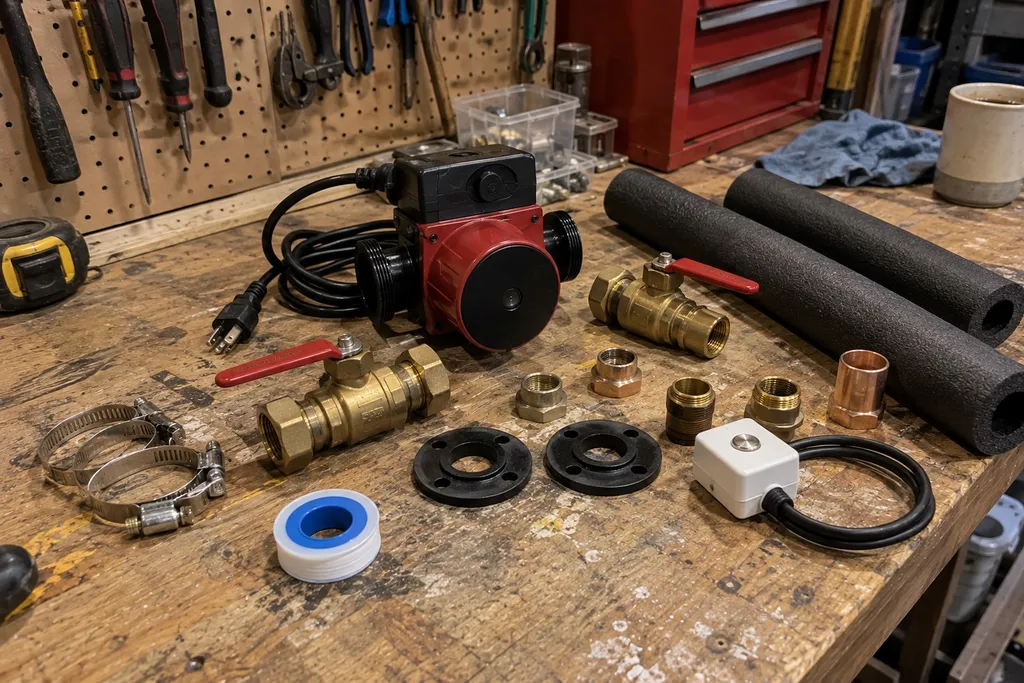
You already know the setup you pick drives most of the cost. Here's the rest of the picture, so a quote makes sense when it lands in your hands.
Most plumbers price this job in one of two ways. A flat price covers the whole job for one set number, no matter how long it takes. Time and materials means you pay for the hours worked plus the parts used. Flat pricing is easier to plan around. Time and materials can come out lower on a simple job, but it can climb if the plumber hits a surprise. Either way is fair if it's explained up front. Just ask which one you're getting.
A good quote should spell out what's included. Watch for these line items:
- The pump itself and the type of control, such as a basic timer, an on-demand button, or a motion or sensor setup. Fancier controls cost more up front.
- Valves and fittings, including the shutoff valves on each side of the pump and the far-sink valve if you're getting the cold-line setup.
- Power for the pump. If there's no outlet near your water heater, you may need an electrician to add one. That's often a separate bill, so ask about it early.
- Access and patching if new pipe is being run. Find out who closes up the walls or ceiling afterward and whether that's in the price.
- Any fixes found during the check, like a stuck valve or a corroded fitting. These should be listed on their own, not tucked into one big number.
A few things can push the price up. A tankless heater may need a pump made to work with it. Tight spaces take more time. Old pipes may need work first. A few things can bring it down, too. Adding the pump while you're already replacing a water heater or repiping saves a second trip and a second shutdown. The labor overlaps, so you're not paying twice to drain the system and open things up.
Don't forget the running cost. A pump that runs all day uses a bit of electricity, and your water heater has to replace the heat lost in the pipes. A timer or on-demand control keeps both low. Some homeowners save on the water bill too, since nobody's running the tap for a minute waiting for it to warm up. Ask your plumber how the control will be set and what that means for your monthly bills, not just install day.
When you compare quotes, line them up item by item. If one is much lower, check what's missing. Maybe it skips the shutoff valves, or leaves out the patching, or quotes a different setup than the others.
With 20 years in plumbing, we'd rather you understand your price than just sign it. We'll walk you through what's in our quote and why. If something isn't needed, we'll tell you so. Veterans, first responders, and seniors get 10% off.
Common Questions
Frequently Asked Questions
Is a recirculating hot water pump worth it?
+
Yes, if you're tired of waiting for hot water at a far sink or shower. It saves the water you'd normally run down the drain while waiting, and it can shave a minute or more off your wait depending on how far that fixture sits from your water heater. The real payoff depends on which setup fits your home, since a home with an existing return line gets the most benefit for the least work.
Can you add a recirculating pump to a tankless water heater?
+
Yes, but the pump has to match how your tankless unit works. A tankless heater only fires up when enough water is flowing, so a pump that doesn't push enough flow, or one that cycles the heater on and off too often, can be hard on the unit. Some tankless models are built with recirculation in mind or need a specific setup, so checking your unit's specs before installing is a must.
Can a recirculating pump work without a return line?
+
Yes, a cold-line setup lets you add a pump without running any new pipe. A small valve goes under the sink farthest from the water heater, and the pump uses your existing cold water line as the path back. The tradeoff is that the first few seconds from that cold tap can run lukewarm, since warm water is passing through it. Most people barely notice, but it's worth knowing before you decide.
Troutdale, Oregon
Related Troutdale Services
Need Plumbing Help?
Get Help Today from
Bigfoot Plumbing
Troutdale, Fairview, Wood Village, Gresham and the homes east toward Corbett. Call the Troutdale number and talk to someone who does this for a living.
10% Off for Veterans · First Responders · Seniors